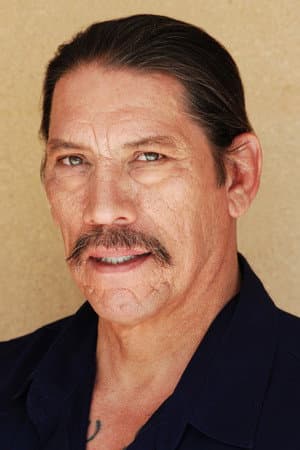
Danny Trejo has spent decades playing the kind of hard-edged character who makes an impression before he says a word. That screen persona - tattooed, unsmiling, and usually carrying something sharp - is so familiar that it can bend the meaning of a project simply by showing up in it. Which may help explain the strange online afterlife of "Oops! How Danny Trejo Accidentally Made a Pro-ICE Movie," a headline that reads like satire but has been circulating as though it were a straightforward news event. The premise is simple enough: a film intended to be critical of immigration enforcement, the thinking goes, was somehow turned into its opposite because Trejo appeared in it. No film has been matched to that claim, and beyond Trejo's own involvement, nothing about it can be confirmed.
That the story travels at all says less about any single movie than about how audiences read a face. Trejo's career has been built on roles that trade in menace and authority, and viewers bring those associations with them into every new project. A performer with that kind of baggage can tilt a scene without the script asking him to. If a filmmaker casts Trejo as an enforcer and expects the audience to recoil, some portion of that audience will instead cheer - not because of what the character does, but because of who is doing it. The result can be a message that arrives backwards, with the intended warning read as a celebration.
The Brand Problem With Borrowed Toughness
This is a familiar trap in movies that want to have it both ways. A film can condemn violence while lingering on it, or criticize a system while casting it in the most magnetic available face. Critics have made that argument for years about pictures that dress up state power in cool, competent cinematography and then act surprised when viewers take the wrong lesson. Trejo is an unusually potent example because his image is so fixed. He is not a blank slate an actor can fill with ambiguity; he is a recognizable symbol, and symbols are hard to argue with once they are on screen.
There is also the matter of how online discourse rewards irony. A headline that frames a career as an accident, complete with the mock-apology "Oops!", invites sharing before it invites scrutiny. Readers who already distrust Hollywood's politics will find in it a convenient parable: the industry tried to make one kind of movie and made another by mistake. Readers on the other side may treat it as a cautionary tale about casting. Either way the joke does the work, and the absence of a real film to point to rarely slows it down.
What Is Actually Known
What is known is narrow. Danny Trejo is a working actor with a long filmography and a public reputation that precedes him. No verified project corresponds to the headline, and nothing about its production, its release, its cast, or its reception can be stated as fact. That gap matters. A story can be repeated thousands of times without ever acquiring a subject, and this one appears to have done exactly that - spreading as a wry observation about an actor's image rather than as a report about a particular movie.
It is worth saying plainly what the anecdote gets right, even if the specifics are unverifiable. Casting is never neutral. The history an actor carries into a role is part of the text, and filmmakers who ignore that history do so at their own risk. A performer beloved for playing dangerous men cannot easily be repurposed as a warning about dangerous men; the affection follows him in. That is not a scandal. It is craft, and it is also a lesson in how little control a director has once the camera rolls and the audience starts remembering.
For Trejo, the episode is unlikely to change much. He has weathered many roles and many readings of those roles, and he has never seemed especially interested in managing his own symbolism. If anything, the headline confirms the durability of his image: it is vivid enough to anchor a joke about a movie that does not exist. That is a strange kind of fame, but it is fame nonetheless - the kind that attaches to a face rather than a title, and outlasts whatever project happens to be in theaters.
Source: The Hollywood Reporter