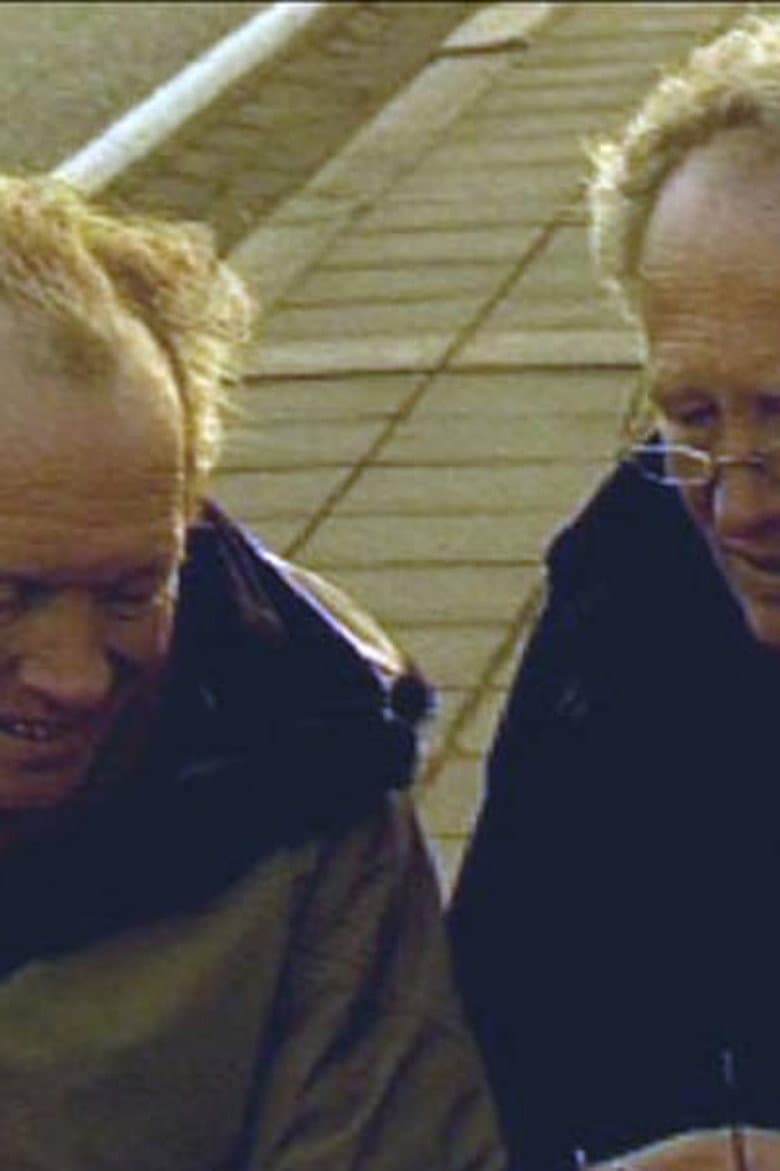
Jean-Pierre and Luc Dardenne, the Belgian filmmaking duo whose spare, morally searching dramas have defined European art cinema for more than four decades, have been named recipients of a European Lifetime Achievement Award. The honor recognizes not a single film but a body of work built with remarkable consistency, one that has moved from the social-issue documentaries of the 1970s and 1980s into a run of fiction features that twice carried off the Palme d'Or at Cannes. The brothers, who have always worked outside the conventional studio system and largely in their home region of Wallonia, are being celebrated less for spectacle than for persistence: a refusal to abandon a fixed set of concerns, among them work, poverty, dignity and the difficulty of choosing to do right.
That such an award should go to a pair of filmmakers who have never chased the international mainstream is itself telling. European cinema's institutions have long prized authors who sustain a career on their own terms, and few have done so as stubbornly as the Dardennes. Their films are typically short, shot on location with non-professional or little-known performers, and built around ordinary people under pressure. In an era when festival lineups are increasingly shaped by streaming economics and franchise spin-offs, the brothers remain a reference point for a certain idea of what European film is supposed to be: formally rigorous, socially engaged, and resistant to easy consolation.
A Career Built on Restraint
The Dardennes came to feature filmmaking after years of documentary work, and that training never left them. Their camera stays close, often over the shoulder, following characters through corridors, workplaces and housing estates. Dialogue is sparse; exposition is rare. What drives the stories is decision - whether a young man will sell a stolen item, whether a doctor will cover for a patient, whether a woman will fight to keep her job. The approach won them a devoted following among critics and programmers, and it gave their actors a distinctive kind of prominence: several performers, unknown before working with them, went on to substantial international careers on the strength of those roles.
The brothers' profile rose sharply on the festival circuit in the late 1990s and has remained high since. Their films have been regular fixtures at Cannes, and their standing there is such that each new work arrives with the weight of expectation rather than the novelty of discovery. Yet the Dardennes have resisted the temptation to scale up. They have kept budgets modest, crews small and locations local, arguing in interviews over the years that constraint is not a limitation but a method - that a cinema of close observation requires a production culture that does not inflate.
A European Honor With Wider Resonance
The lifetime award places the brothers in a lineage of European filmmakers honored for the arc of a career rather than a single achievement. It also lands at a moment when European funders and festivals are debating how to protect auteur-driven filmmaking against rising costs and shifting distribution models. The Dardennes are, in that sense, a convenient emblem: they have shown that a durable international reputation can be built without large-scale financing, provided the work is distinctive enough and the institutions that champion it remain committed.
Their influence is visible well beyond Belgium. A generation of filmmakers across the continent has absorbed the Dardennes' handheld intimacy and their interest in labor and migration, sometimes explicitly and sometimes as a default visual grammar for social realism. Film schools teach their films; festivals program retrospectives; actors cite the experience of working with them as formative. The lifetime award formalizes what the industry has largely accepted for years - that the brothers are among the most consequential European filmmakers of the past half-century, and that their importance lies as much in the model they represent as in any individual title.
What comes next is uncertain. The brothers have never announced retirement plans, and they have continued to develop projects at a steady pace. But a lifetime award inevitably invites reflection, and the reflection here is straightforward: two filmmakers from a small Belgian city, working with modest means and an unfashionable seriousness, produced a body of work that has shaped how European cinema talks about work, money and moral responsibility. That is a rare thing to be able to say of anyone. The award, whenever and wherever it is presented, will be less a closing statement than a confirmation of something already plain to anyone who has watched their films closely.
Source: The Hollywood Reporter