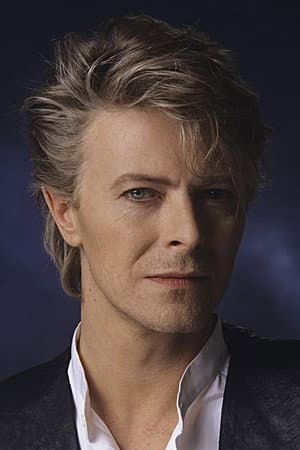
Berlin is once again preparing to host David Bowie, or at least his enduring presence, as the city readies an immersive event built around the artist's long and complicated relationship with the German capital. The project, announced for the coming months, will place visitors inside the sound, style and history of Bowie's Berlin years rather than present a conventional exhibition of artifacts behind glass. Organizers describe the experience as a walk-through environment that combines archival material, spatial audio and commissioned installations, though a firm opening date has not been confirmed.
The news lands with particular resonance in a city that shaped some of Bowie's most celebrated work. Between 1976 and 1978, he lived and recorded in West Berlin, a period that produced the albums widely known as the Berlin Trilogy: "Low," "Heroes" and "Lodger." Working closely with Brian Eno and producer Tony Visconti, Bowie drew on the city's divided geography, its experimental music underground and the cold atmosphere of the Wall. The records that emerged were restless and inventive, and they permanently changed the course of his career after years of Los Angeles excess.
A City That Shaped the Music
The Berlin years were about more than recording sessions. Bowie arrived in a city that was politically charged and artistically porous, and he moved through it with a low profile that seems almost unimaginable for a star of his magnitude. He shared an apartment in Schöneberg with Iggy Pop, who was also recording there, and the two were regulars in the city's clubs and bars. The period is remembered as one of mutual creative rescue: both artists were looking for a way out of personal and professional turmoil, and Berlin provided the distance they needed.
The immersive event is expected to lean on that atmosphere. Rather than a chronology of hits, the experience appears designed to evoke the texture of the city as Bowie encountered it, from the industrial edges of the recording studio to the nightlife that fed the music. For audiences who never saw him perform, the appeal lies in that sensory reconstruction; for longtime fans, the draw is the chance to revisit a chapter that has become almost mythic in rock history.
What an Immersive Format Can Offer
Immersive productions have become a familiar format in recent years, with cities competing to stage large-scale experiences built around major cultural figures. The approach carries risks. When an artist's work is as distinctive as Bowie's, there is a fine line between honoring the material and reducing it to spectacle. The most successful examples tend to treat the subject's own aesthetic as the guiding principle rather than as decoration.
Bowie's estate has been notably careful about how his legacy is presented since his death in 2016, and any project carrying his name will be judged against that standard. The Berlin connection gives this event a stronger foundation than most. The music made there was itself an experiment in atmosphere and dislocation, which makes it unusually well suited to a spatial, environmental treatment.
A Legacy That Keeps Returning
Bowie's relationship with Berlin extended well beyond those two years. He returned to the city for performances and spoke often about the creative freedom he found there. The Wall's fall in 1989 gave the trilogy a new resonance, and the song "Heroes," recorded near the Wall with Visconti, became an enduring anthem of defiance far beyond its origins. Berlin has long claimed him as part of its cultural identity, and the city has marked his presence with plaques and tributes in the decades since.
Details about ticketing, venue and the precise scope of the installations remain limited. What is clear is that the event will be positioned as a cultural attraction for both residents and the international visitors who continue to make the pilgrimage to the addresses associated with those recordings. The organizers have signaled that music will be central, with the listening experience treated as the spine of the show rather than a backdrop.
For USA Film News readers, the project is a reminder that Bowie's influence keeps circulating through new formats, long after the albums themselves were made. Berlin, which gave him room to reinvent himself, is now the setting for another kind of reinvention: a pop legacy translated into an environment that visitors can step inside. Whether that translation succeeds will depend on how faithfully it captures the strangeness and ambition of the original moment, rather than simply the familiar silhouette.
Source: The Hollywood Reporter