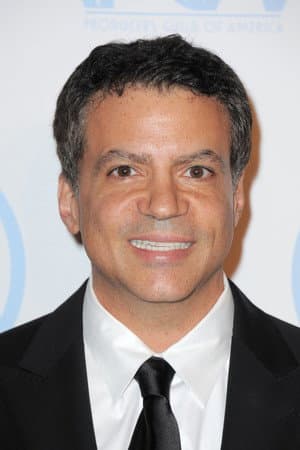
Michael De Luca and Pamela Abdy are set to leave their posts as co-chairs of Warner Bros. Pictures, closing out a tenure that began with considerable fanfare and will end against the backdrop of the studio's absorption into Paramount. The departures, confirmed Friday, mark the first major executive shake-up since Paramount's acquisition of Warner Bros. Discovery cleared its final regulatory hurdles, and they signal that the new ownership intends to install its own leadership atop one of Hollywood's most storied film divisions.
De Luca and Abdy arrived at Warner Bros. in 2022, recruited from MGM, where they had overseen a revival of that studio's film operation. Their mandate at Warner was broad: stabilize a film slate that had been battered by the pandemic, refill a pipeline depleted by the studio's day-and-date streaming strategy, and restore relationships with the talent community after the upheaval of the WarnerMedia era. The two executives were unusually complementary in style - De Luca, a veteran producer with credits stretching back to the 1990s indie boom, brought relationships and a producer's instinct for material; Abdy, a longtime studio executive, brought production discipline and a sharp eye for commercial projects.
A Turbulent Four Years
Their tenure produced genuine wins. Warner Bros. reclaimed the top spot in domestic market share in 2023 on the strength of "Barbie," which became a cultural phenomenon and one of the highest-grossing films in the studio's history. The studio also scored with "Wonka," "Dune: Part Two," and a steady stream of horror titles from its New Line label. Industry observers credited the pair with reviving the studio's release calendar after years of disruption.
But the job came with structural frustrations that were never fully resolved. Warner Bros. Discovery's leadership, first under David Zaslav, repeatedly prioritized debt reduction and cost-cutting over the film division's expansion. Greenlight decisions that once rested with the co-chairs increasingly required sign-off from above, according to people familiar with the operation. The pair also inherited a slate assembled before their arrival, meaning their true imprint on the studio's output was only beginning to surface in the past year.
The merger with Paramount added another layer of uncertainty. Whenever two major studios combine, overlapping film divisions become a prime target for consolidation, and the writing was on the wall once the deal closed. Paramount's leadership has signaled it will take a hands-on approach to integrating the two film operations, and the co-chair structure - already an awkward fit inside a corporate hierarchy - was unlikely to survive the transition.
The Deeper Shake-Up
The exits are bigger than two résumés. They represent the end of a brief experiment in which Warner Bros. tried to run its film division with a leadership team drawn from both the producer and executive ranks, a model that depended on autonomy the studio's corporate parent was never fully willing to grant. Under the new Paramount umbrella, the expectation is a more conventional structure: a single film chief reporting directly into the merged company's leadership, with a mandate to squeeze efficiencies out of two overlapping production and marketing operations.
That prospect has already unsettled the talent community. Agents and producers who spent the past four years rebuilding ties with De Luca and Abdy now face a reset, and the uncertainty is compounded by questions about which upcoming Warner Bros. titles will survive the integration intact. The studio has a deep bench of projects in various stages of production, and a change in leadership typically triggers a reassessment of everything not yet locked.
For De Luca and Abdy, the departure closes a chapter that was always going to be judged against forces beyond their control. They inherited a studio in transition, operated under a parent company focused on its balance sheet, and now become the first casualties of a merger they had no role in shaping. Both are expected to return to producing, and neither is likely to struggle for options; De Luca in particular has maintained the kind of relationships that make him a perennial candidate for both studio posts and indie partnerships.
Warner Bros., meanwhile, enters its next era without the leadership team that was supposed to define it. The studio's identity - its filmmakers, its franchises, its place in a consolidating industry - now rests with executives who have yet to be named. For a company that has been bought, sold, and restructured more than almost any other in Hollywood, that is a familiar position. What is less familiar is the speed with which this particular chapter has closed.
Source: Variety