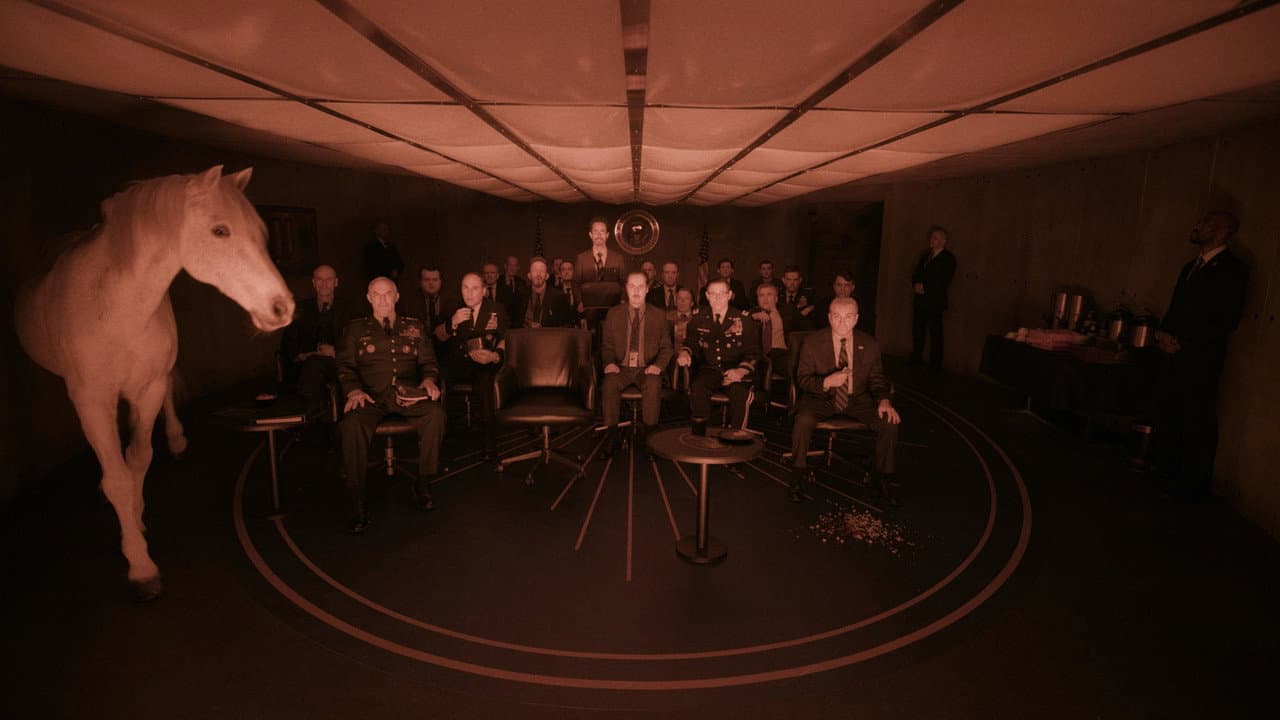
The financial picture for Tom Cruise's latest star vehicle has darkened considerably in the space of a single week. "Digger," the Alejandro G. Iñárritu-directed comedy-drama that pairs the world's most famous movie star with one of cinema's most celebrated auteurs, is now projected to lose approximately $245 million, according to revised industry estimates. The grim math follows a brutal second-weekend decline of 60 percent at the domestic box office, a drop that has effectively erased any hope of the film clawing its way back to profitability during its theatrical run.
The film, which opened on September 28, 2026, arrived with enormous expectations. Cruise stars as Rockwell, described in the official synopsis as "the most powerful man in the world," who embarks on a frantic mission to prove he is humanity's savior before the disaster he has unleashed destroys everything. The premise promised a satirical, high-stakes thrill ride, and the combination of Cruise's global drawing power with Iñárritu's Academy Award-winning pedigree seemed, on paper, like a can't-miss proposition. Instead, "Digger" has become the year's most conspicuous example of the gap between pre-release buzz and real-world audience appetite.
A Second-Weekend Collapse Across the Board
A 60 percent fall in weekend two is severe for any wide release, but the context makes it worse. Big-budget tentpoles typically aim to hold steady in the 45-to-55 percent range during their sophomore frame, buoyed by word of mouth and repeat viewers. "Digger" managed neither. The film's CinemaScore and audience polling data were not provided in the verified figures, but the sheer velocity of the drop tells its own story: moviegoers who did turn out in week one were not sufficiently enthusiastic to bring friends, family, or coworkers back for a second look.
The collapse also cuts across demographic lines, suggesting the film failed to connect with any single core audience. Cruise's traditional action fanbase may have been put off by the film's tonal ambitions, while art-house crowds drawn to Iñárritu's name may have balked at the price of admission for what is, at 129 minutes, a substantial theatrical commitment. The result is a movie that appears to have satisfied neither camp fully.
A Cast Full of Heavy Hitters
What makes the financial failure more striking is the depth of talent involved. Alongside Cruise, the ensemble includes Riz Ahmed as Ganesh, John Goodman as President Compson, Sandra Hüller as Emma, Michael Stuhlbarg as Vice President, Jesse Plemons as Kenny, Robert John Burke as General Fitzgerald, and Emma D'Arcy as Lina. That is a murderer's row of respected character actors and rising stars, the kind of cast that usually signals a prestige project with awards-season ambitions.
Critical reception, at least as measured by the TMDb aggregate rating of 7.543 out of 10, suggests the film is not a disaster on artistic terms. But a respectable user rating has not translated into ticket sales. The disconnect points to a broader problem facing original, mid-to-high-budget filmmaking in 2026: even a well-reviewed movie with a movie star and a famous director can struggle to pull audiences away from streaming platforms and franchise sequels.
The Economics Behind the $245 Million Hole
To understand how a single film can lose a quarter of a billion dollars, it helps to understand the basic math of modern Hollywood. A production of this scale, with a director of Iñárritu's reputation and a cast this large, carries substantial above-the-line costs. Marketing a global release across multiple territories adds tens of millions more. Theatrical exhibitors keep roughly half of ticket revenue, meaning a film must earn well over twice its combined production and marketing budget simply to break even.
The projected $245 million loss reflects the gap between those costs and the film's likely final theatrical gross. It does not account for eventual streaming, digital rental, or physical media revenue, which can soften the blow over time. But those ancillary windows have grown less lucrative in recent years, and a 60 percent second-weekend plunge usually signals that the film's commercial life will be short and shallow.
What This Means for Cruise and Iñárritu
For Cruise, "Digger" represents a rare misstep in a career defined by relentless consistency. The actor has spent much of the past decade anchored to a single mega-franchise, and his periodic attempts to stretch into different registers have met with mixed commercial results. This project was clearly intended as a change of pace, a chance to work with a director known for films such as "Birdman" and "The Revenant." That it has become one of the costliest flops of his career will not sink him, but it may make financiers more cautious about backing his non-franchise ambitions.
For Iñárritu, the stakes are different. The director has long alternated between large-scale productions and more intimate, personal work. "Digger" was his most expensive English-language project to date, and its failure could push him back toward the smaller canvases where he has historically done his best-received work. Whether that represents a retreat or a return to form depends on one's perspective.
The Wider Fallout
The industry will be watching closely to see how the loss is absorbed. If "Digger" was financed through a combination of studio money and outside equity, the write-down will ripple through investor confidence in star-driven original films. If it was largely a studio gamble, executives may become even more reluctant to greenlight anything that is not based on pre-existing intellectual property.
For now, "Digger" stands as a cautionary tale about the limits of star power in a fractured media landscape. A movie can have the biggest actor in the world, an acclaimed director, a talented supporting cast, and a respectable audience score, and still lose a quarter of a billion dollars. That is the reality of 2026's theatrical marketplace, and it is a reality that Hollywood will have to confront long after "Digger" leaves theaters.
Source: Variety