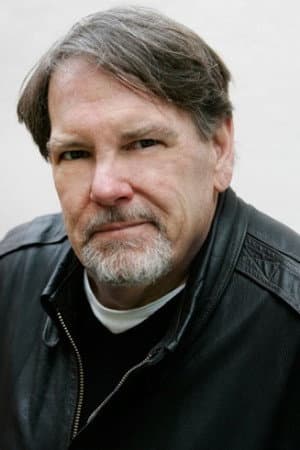
After more than half a century of shaping the Canadian film industry from the inside out, the producer, director, and mentor known across the business as the Don of Hollywood North has taken his final bow. The filmmaker, a fixture of Vancouver's production scene since the earliest days of the city's emergence as a stand-in for everywhere from Tokyo to Toledo, died this week, according to his family. He was in his late eighties. No cause of death was released.
For those who knew him, the loss is less that of a single filmmaker than of an entire chapter in Canadian cinema. He built his reputation not on a signature visual style but on an uncanny instinct for what a production needed and when it needed it, a skill that made him one of the most trusted figures in the country's service-production boom and, later, one of its most quietly influential champions of homegrown storytelling.
A career built on the ground floor
He arrived in Vancouver in the late 1960s, when the city's film infrastructure amounted to little more than a handful of rented warehouses and a lot of optimism. What followed was a gradual, almost stubborn ascent. He worked his way through nearly every job a set has to offer, from location scouting to second-unit work, before stepping behind the camera in his own right. His early features were modest affairs, made for sums that would not cover a single day on a modern studio shoot, but they earned him a reputation for discipline and for finishing what he started - a rarer virtue in the business than it sounds.
That reliability made him a natural bridge between the American productions that began arriving in British Columbia in the 1980s and the local crews those productions depended on. He was, by several accounts, the person studios called when they needed a city to look like somewhere else and needed it to look that way on schedule. He took those calls, and then used the leverage they gave him to help build something more permanent: training programs for young technicians, advocacy for provincial tax incentives, and an informal apprenticeship network that quietly seeded the careers of a generation of Canadian directors, editors, and cinematographers.
The mentor behind the credits
If his own filmography never quite matched the scale of his influence, that was a trade he seemed to accept without complaint. He is remembered at least as warmly for the people he mentored as for the films he made. A younger director who worked under him in the 1990s described him as a man who never gave an answer when he could ask a question instead - a habit that could be maddening on a tight schedule and invaluable over a career.
He was, by all accounts, a gregarious figure with a sharp tongue and a longer memory, fond of long dinners, blunt assessments, and the kind of loyalty that ran both directions. Those who crossed him rarely forgot it. Those he championed rarely felt anything but protected. In a business that runs on relationships, he kept more of them alive, and for longer, than almost anyone of his generation.
An industry transformed
The industry he leaves behind looks almost nothing like the one he entered. Vancouver now ranks among the busiest production centers on the continent, its soundstages booked solid and its crews recruited internationally. Much of that growth was structural - exchange rates, tax policy, proximity to Los Angeles - but much of it was also the accumulated result of individuals who decided to stay and build rather than leave for work elsewhere. He was among the first of those, and he remained among the most persistent.
That persistence extended past the point where many of his peers retired. He continued to read scripts, take meetings, and offer opinions, welcome or otherwise, well into his later years. Those who worked with him recently describe the same essential qualities that built his early career: a refusal to waste anyone's money, a preference for practical solutions, and an unfashionable belief that a finished film is worth more than a perfect one.
What he leaves behind
No funeral arrangements have been announced. Survivors include members of his immediate family and a professional family that spans several generations of Canadian filmmaking.
It is a measure of his career that the tributes arriving this week come from technicians as often as from directors, from location managers as often as from producers. He was never a household name outside the industry, and he seemed content with that. But within the industry - the crews, the stages, the sprawling network of people who make films in a rain-soaked city that has spent decades pretending to be somewhere else - his fingerprints are everywhere.
The Don of Hollywood North has taken his final bow. The sets he helped build keep running.
Source: The Hollywood Reporter