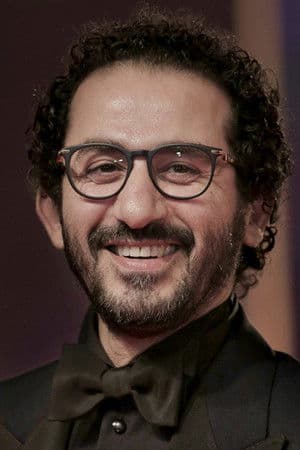
The Egyptian filmmaker behind "His Weakest Creatures" says he set out to give audiences in his country something they can rarely find at the multiplex: a reason to feel hopeful. The director's feel-good crime comedy, led by Ahmed Helmy and Hend Sabry, arrives as a deliberate counterweight to the grim and often cynical fare that dominates Egyptian screens, and he is candid about the intent behind it.
Speaking about the project, the director framed the film as an attempt to meet a public mood head-on. Egyptians, he suggested, have had little cause for levity in recent years, and a crime comedy that resolves with warmth rather than punishment is his way of answering that. The genre trappings are familiar - a caper, a tangle of characters, a plot that turns on small-time scheming - but the emotional engine, he insisted, is optimism. The film's title itself carries that tension, hinting at vulnerability and moral frailty while the story ultimately extends a measure of grace to the people at its center.
A Star Pairing Built on Chemistry
The film's commercial prospects rest heavily on its two leads. Ahmed Helmy is among the most recognizable comic performers in Egyptian cinema, a star whose name has long been associated with broad, crowd-pleasing entertainment. Casting him at the center of a crime comedy is, in that sense, a natural fit - he brings an everyman quality that makes a hapless scheme gone wrong feel sympathetic rather than threatening.
Hend Sabry, his co-star, brings a different register. A performer with a long and varied career across film and television, she is known for dramatic range as much as for lighter work, and her presence opposite Helmy gives the pairing a texture beyond simple comedic sparring. The director has spoken about the two as a unit, describing their on-screen rapport as the film's load-bearing element. Much of the comedy, and much of the hope he wants audiences to leave with, plays out in the exchanges between them rather than in set pieces alone.
That emphasis on partnership rather than solo star turns is unusual for Egyptian commercial cinema, which has historically been built around a single marquee name. The director's approach here suggests an interest in making the comedy relational - two people navigating a mess together - and in trusting audiences to respond to that rather than to a lone comedian's improvisations.
A Gentler Kind of Crime Story
Crime comedy as a form tends toward escalation, and the genre's satisfactions often come from watching characters dig themselves deeper. "His Weakest Creatures" appears to take a different route. The director has positioned the film as a feel-good entry in the category, one that uses the machinery of criminal misadventure to arrive at something closer to redemption than comeuppance.
That choice carries its own risk. Audiences accustomed to sharper, more cynical humor may find warmth harder to sell, and a filmmaker who announces hope as his goal invites scrutiny of whether the film earns it. The director seems aware of this, framing his optimism not as naivety but as a considered response to a viewing public that he believes is tired of gloom. His argument is essentially that escapism need not be empty - that a comedy can acknowledge hardship while still refusing to leave its characters, or its audience, in despair.
The film's setting and milieu are rooted in contemporary Egyptian life, though the director has been careful not to treat the story as reportage. It is, by his account, a fiction built to lift spirits rather than to document hardship, and he resists the idea that lighter entertainment is somehow lesser than socially serious drama. Both, he suggests, have their place, and his is to provide relief.
Why the Director Is Speaking Out
It is notable that the director has chosen to talk about intention so openly. Commercial filmmakers in the region seldom outline their thematic aims in advance, preferring to let the work speak. His willingness to describe "His Weakest Creatures" as a vehicle for hope amounts to a small statement of purpose - a claim that popular cinema has a role in shaping how a society feels about itself, not merely in filling seats.
Whether audiences embrace that proposition remains to be seen. What is clear is that the film arrives with a star pairing built for broad appeal and a director willing to stake its identity on a single, unapologetic idea. In a market crowded with crime capers that end in ruin, "His Weakest Creatures" is betting that Egyptian viewers would rather leave the theater believing that people, even the weakest among them, can find their way out.
Source: Variety