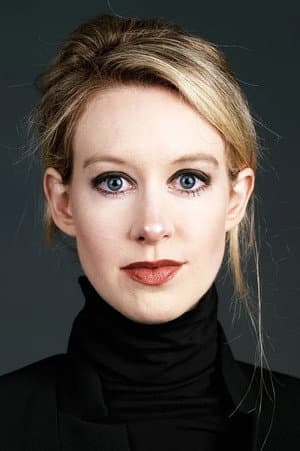
Nathan Fielder says the subjects at the center of his latest project remain in the dark about it. The comedian and filmmaker told reporters that Elizabeth Holmes and her husband, Billy Evans, have not watched "You Can See Everything," the documentary-style film that draws on their lives, and that his lines of communication with the couple have gone quiet.
According to Fielder, the breakdown in contact happened at some point after the project was completed. He described the situation as one in which the relationship simply stopped functioning as it once had, leaving the film to stand on its own without further input from the two people it examines. Fielder did not offer a detailed timeline of when the last conversation took place, nor did he specify whether Evans or Holmes ever responded to requests to view the finished work.
The filmmaker's comments add another layer to a project that has already drawn intense curiosity. "You Can See Everything" arrives after years in which Fielder built a reputation for blurring the boundary between comedy, documentary, and elaborate social experiment. His earlier television work frequently placed real people in carefully constructed scenarios, and audiences have come to expect that any Fielder release will be accompanied by questions about how much its participants knew and when they knew it. This film, by his own account, is no exception.
A Couple at the Center of a Media Storm
Holmes remains one of the most recognizable figures in recent American business history. She founded the blood-testing company Theranos and for a time was celebrated as a visionary entrepreneur before the company collapsed amid revelations about its technology. She was later convicted on fraud charges and sentenced to prison. Her relationship with Evans, whom she married in 2019, became a subject of public fascination as her legal troubles unfolded, and the two have since built a life that has drawn attention from journalists, filmmakers, and the merely curious.
That background is part of what makes Fielder's film notable. A project centered on Holmes and Evans inevitably invites scrutiny, not only for what it shows but for how it came to exist. Fielder has not disclosed how he secured access to the couple or what form that access took. His statement that communication has since deteriorated suggests the relationship between subject and filmmaker was, at best, fragile.
Fielder's Signature Approach Meets Unusual Subject Matter
Fielder first gained widespread attention through "Nathan for You," a series in which he offered absurd business advice to real small-business owners. He followed that with "The Rehearsal," a show that explored the lengths people will go to in preparing for difficult conversations. Both projects were praised for their formal inventiveness and criticized, at times, for the ethical questions they raised about consent and manipulation. Fielder has generally avoided offering tidy explanations of his methods, preferring to let the work provoke discussion on its own.
"You Can See Everything" places him in a different register. Rather than working with ordinary people navigating small crises, he is dealing with two individuals whose lives have already been dissected in books, podcasts, and a high-profile television adaptation. The challenge of saying something new about such well-documented figures is considerable.
What Comes Next
For now, Fielder's revelation that Holmes and Evans have not seen the film raises as many questions as it answers. Did they agree to participate with the understanding that they would review the final cut? Did they sign releases? Have they commented publicly on the project at all? Fielder has not addressed those specifics, and representatives for the couple have not issued a statement.
What is clear is that the film will be viewed through the prism of that silence. A documentary about subjects who decline to engage with its finished form carries its own kind of statement, whether intentional or not. Fielder, for his part, seems content to let audiences draw their own conclusions.
"You Can See Everything" is now in release, and Fielder's remarks about the severed communication are likely to follow it through the remainder of its run. Whether Holmes and Evans ever sit down to watch it remains an open question, one that may prove as intriguing to audiences as anything that appears on screen.
Source: The Hollywood Reporter