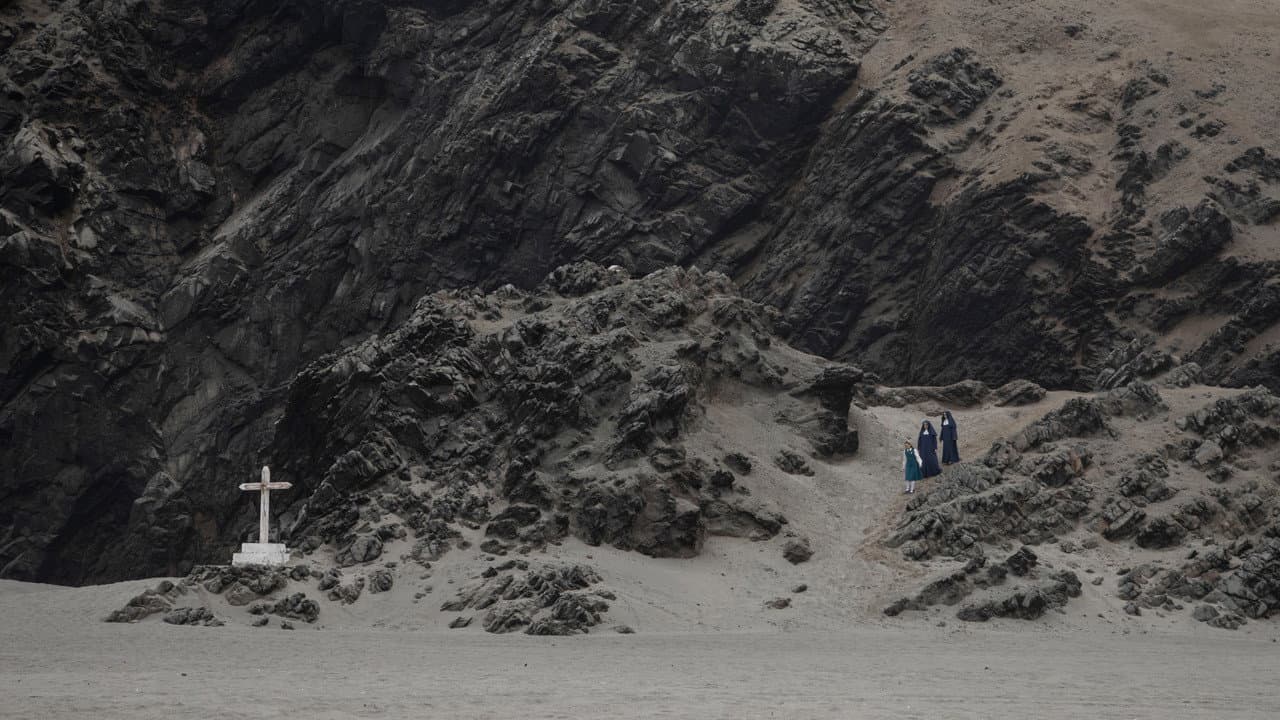
Peruvian director Enrica Pérez’s psychological drama “On Top of the Cliff” has claimed the top prize at the Tallinn Black Nights Film Festival, capping a striking festival run for a film that has drawn attention for its unnerving blend of religious devotion and adolescent obsession. The feature, set in a Catholic girls’ boarding school in 1950s Lima, took the festival’s Grand Prix, according to the award announcement, and arrives in theaters just days after its November 17 release.
The win marks a major international recognition for a film that operates at the intersection of coming-of-age drama and slow-burn thriller. “On Top of the Cliff” runs 112 minutes and is performed entirely in Spanish, with a cast led by Bianca Buchelli as Ana, the 16-year-old protagonist whose pursuit of holiness drives the story into increasingly dangerous territory.
A Story of Faith, Jealousy and Discipline
The film unfolds at a Catholic girls’ boarding school perched on a cliff above the Pacific Ocean, a setting that lends the narrative both spiritual elevation and a sense of vertigo. Ana, 16, is consumed by an obsessive quest for holiness, secretly mortifying her body in ways the school never sanctions. Her standing as a leader among the students begins to erode with the arrival of Rebecca, a rebellious foreigner played by Renata Canales.
What begins as fascination curdles into jealousy, and the film traces how desire and faith collide inside an institution built on discipline. That discipline, the synopsis suggests, takes on a dangerous charge as Ana’s inner life spirals. The premise places the movie in a lineage of stories about repression and piety, but Pérez’s approach - rooted in the specific texture of mid-century Lima and a cloistered school - gives it a distinct identity.
The supporting cast includes Liliana Trujillo as Sister Leticia, Manuela Biedermann as the Mother Superior, Amaranta Kun as Sister Teresa, Abigail Dalens as Lily, Luciana Giraldo as Polly and Uma Mikati as Caridad. The ensemble of young performers and authority figures mirrors the film’s central tension between youthful yearning and institutional control.
Festival Recognition and Release Timing
The Tallinn Black Nights Film Festival, held annually in Estonia’s capital, has become a significant launchpad for international arthouse cinema, and a top prize there can reshape a film’s trajectory in European and North American markets. For “On Top of the Cliff,” the award lands almost simultaneously with its theatrical release, giving distributors a timely hook.
The film is categorized as both drama and thriller, a pairing that reflects its dual nature: a character study of a teenager in crisis and a suspenseful descent into obsession. Its Hollywood industry designation places it within a production landscape that increasingly looks to Latin American stories for prestige material.
Pérez, who is Peruvian, has built a reputation for intimate, psychologically grounded work, and this project appears to extend that focus into darker terrain. The director has not yet commented publicly on the Tallinn win, and no further festival bookings have been confirmed.
A Quiet Awards Season Contender?
Ratings data for the film remains sparse, with TMDb currently listing a 0/10 score based on an insufficient sample - a common situation for titles still in the early stages of release. That absence of audience metrics makes the Tallinn prize the most concrete signal of the film’s reception so far.
Whether the Grand Prix translates into broader commercial traction is an open question. Religious-school dramas with unsettling undertones have occasionally broken through to wider audiences, but they more often thrive on the festival circuit and in specialty theaters. “On Top of the Cliff” seems designed for the latter path, with its Spanish-language dialogue, period setting and deliberately uncomfortable subject matter.
For now, the film’s immediate future rests on how critics and specialty audiences respond during its opening weeks. The Tallinn jury’s endorsement gives it a strong calling card, and the timing - a November 17 release followed swiftly by a major festival honor - suggests a campaign built around prestige rather than mass appeal.
What is clear is that “On Top of the Cliff” has found its first significant champion in Tallinn. Whether that momentum carries through awards season in the United States remains to be seen, but the film now enters the conversation with a top festival prize behind it and a director whose unflinching approach to adolescent faith and desire is likely to provoke discussion wherever it screens.
Source: The Hollywood Reporter