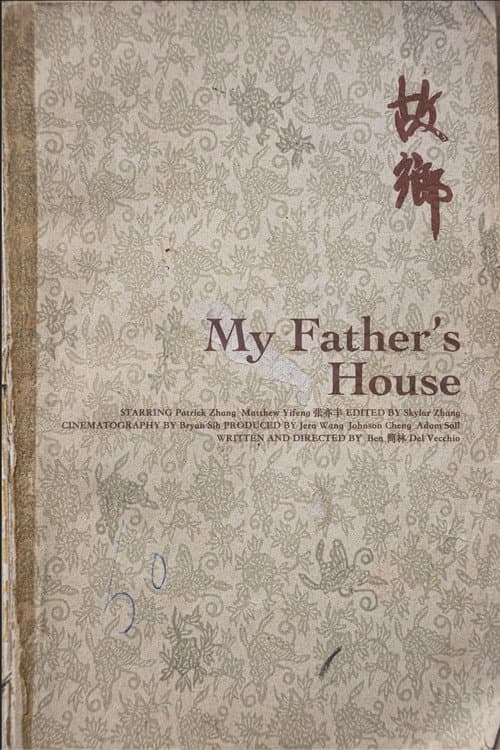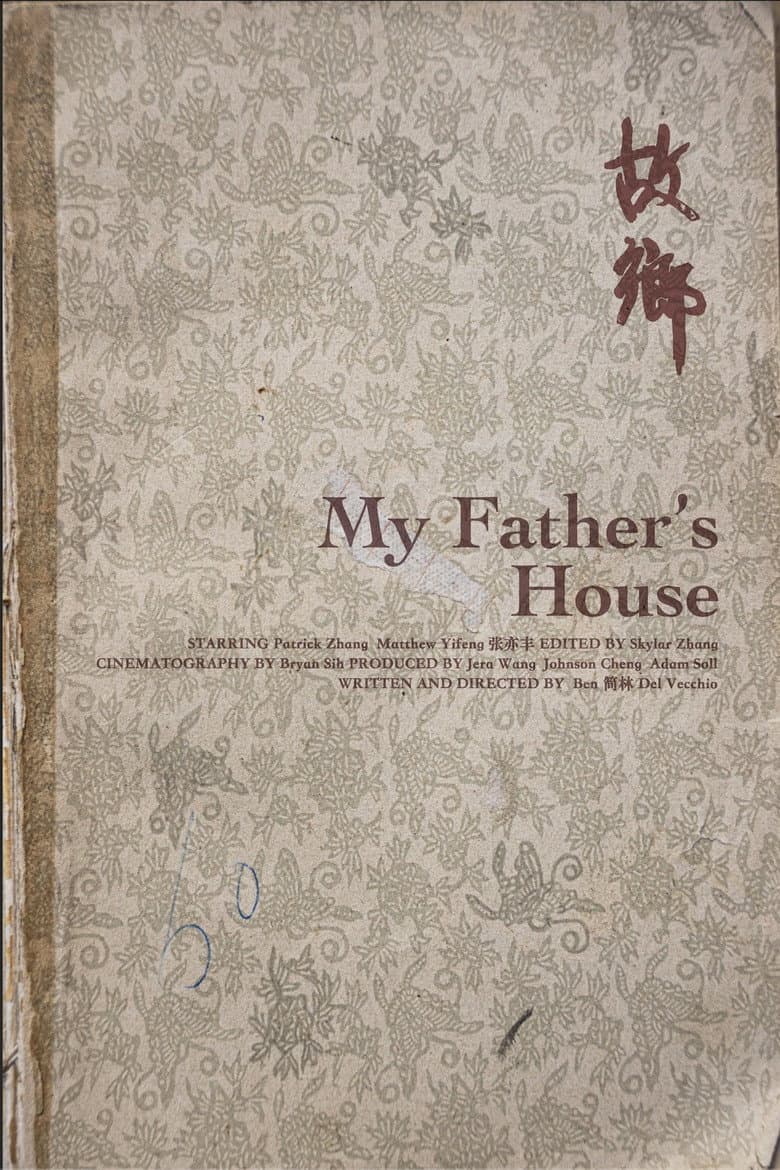
A 20-minute film built on the collaboration of former cult members and seasoned actors is arriving under the title Father's House, directed by Ben Del Vecchio. The short follows Jo, played by Patrick Zhang, as he returns home long after the death of the father he had been estranged from. Matthew Yifeng plays Leslie. The project, an English-language Hollywood production, is described by its makers as a cinematic experiment aimed at examining the mechanisms by which controlling groups hold sway over their members.
The premise is spare: a son comes back to a house whose central figure is gone, and must reckon with what remains. According to the filmmakers, that narrative frame was designed in close consultation with people who have lived inside high-control communities, and the production paired those consultants with established performers to test how such dynamics might register on screen. The result runs 20 minutes. No release date has been announced, and the film's TMDb rating currently stands at 0 out of 10, reflecting an absence of audience votes rather than any critical verdict.
A Two-Hander at the Center
Zhang carries the film as Jo, the returning son, while Yifeng appears as Leslie. The cast list is deliberately small, which the filmmakers say suited a story that keeps its focus on the psychological terrain between people rather than on external plot mechanics. Del Vecchio directed, and the production leaned on the two leads to anchor scenes shaped in part by the input of former members.
"For 'Father's House,' former cult members and lauded actors collaborated to explore mechanisms of control in a cinematic experiment," reads the film's official description, which frames the project as an inquiry into how influence is exerted and sustained rather than as a conventional drama about a family. The distinction matters to the people behind it: the aim, they say, was not to dramatize a particular group or recount a single survivor's story, but to isolate the recurring techniques - the pressures, the small coercions, the way belonging can be weaponized - that former members describe across very different organizations.
Why the Method Matters
Bringing survivors into the creative process is not unheard of, but doing so on a narrative film with professional actors is less common. The people involved describe the collaboration as a two-way street: the former members supplied lived detail about how control feels from the inside, and the actors supplied the craft to render that detail without turning it into caricature. Del Vecchio's approach, as characterized by those close to the production, was to keep the setting ordinary - a house, a homecoming, a father who is no longer there - so that the underlying machinery of control could surface through behavior rather than exposition.
That choice gives the film its title a double edge. A father's house is a place of inheritance and return, but in the hands of a filmmaker studying coercion, it is also a structure with rules, a threshold, and an authority that persists even after the authority figure has died. Jo's long absence from that house, and his father's death before the return, set up exactly the kind of unresolved dynamic the project set out to probe.
A Short Format, a Focused Inquiry
At 20 minutes, Father's House sits in the short-film space rather than the feature market, a format the filmmakers treat as an advantage. Compressed running times leave little room for backstory, which suits a story about what people carry with them and what they cannot leave behind. It also allows the experiment to remain just that - a controlled study, presented cinematically, rather than a sprawling narrative that would require invention beyond what survivors were willing to share.
Whether the experiment lands with audiences remains to be seen. With no release details confirmed and no ratings activity on record as of early November, the film is, for now, a project known mainly through its method and its participants. Distributors and festival programmers have yet to weigh in publicly.
What is clear is the intent. Father's House is being positioned as a collaboration between those who have experienced coercive control and those trained to perform it, with Del Vecchio directing Zhang and Yifeng through a story about a son, a dead father, and a house that may still be holding him. For a film that runs 20 minutes, it is carrying an unusual amount of lived testimony behind it - and a deliberate bet that a small, quiet story can say something large about how control works.
Source: The Hollywood Reporter