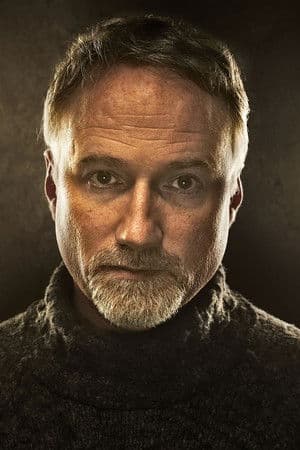
David Fincher has revealed that his involvement in Quentin Tarantino's long-gestating "Cliff Booth" project went well beyond friendly advice: he says he removed roughly 60 pages from Tarantino's script. The director's comments, which surfaced this week, offer the clearest picture yet of how far along the project has traveled - and how much of Tarantino's famously expansive writing was trimmed along the way. For a filmmaker known for precision and economy, the edit is being read as a natural extension of his working style rather than a rejection of Tarantino's voice.
The project itself has been one of the most closely watched open questions in Hollywood since Tarantino first floated the idea of continuing the story of Cliff Booth, the stuntman and confidant played by Brad Pitt in "Once Upon a Time in Hollywood." Tarantino has described the material as a film rather than a traditional sequel, and details about casting, financing and release plans have remained scarce. Fincher's remarks, however, confirm that the screenplay has undergone substantial revision - enough that six dozen pages of material are no longer in the version he described.
A Trim, Not a Rewrite
The distinction matters. Fincher did not frame his contribution as reshaping the story's themes or dialogue; he characterized it as a cut, the kind of surgical reduction that removes excess without altering the core. Anyone familiar with Fincher's filmography - from "Se7en" to "Zodiac" to "The Killer" - knows that he favors lean, propulsive storytelling, and 60 pages is a significant amount by any measure. On the page, that volume of material would translate to a substantial stretch of screen time, suggesting the script Fincher worked from was considerably longer than a typical feature screenplay.
Whether that reduction happened as part of an official collaboration or as informal feedback remains unclear from Fincher's account. Tarantino has a well-documented history of sharing drafts with trusted peers, and the two directors have moved in overlapping circles for years, united by a mutual appreciation for craft and a shared tendency toward obsessive preparation. Tarantino has also spoken publicly about the difficulty of letting go of written material, so the willingness to accept an edit of this scale is notable in itself.
Tarantino's Scripts Are Rarely Short
Fincher's figure also fits a pattern. Tarantino's screenplays have long been famous for their length and digressive richness, and the final shooting scripts for films like "Once Upon a Time in Hollywood" and "The Hateful Eight" were notably longer than most Hollywood fare. Cutting 60 pages from a Tarantino draft is not the same as cutting 60 pages from an average screenplay; it means excising entire sequences, subplots, or extended conversations. That Fincher would make such a cut - and that it would be described as accepted - signals a shared understanding of what the "Cliff Booth" story needs to be.
There is also a practical dimension. Longer scripts mean longer shoots and larger budgets, and a project built around a supporting character from a 2019 film carries its own commercial risk. A tighter screenplay would ease both the production burden and the marketing story, though no financing or distribution details have been confirmed.
What Comes Next
Fincher did not characterize the project as being in active production, and the timing of any next steps remains unknown. Tarantino has spent recent years discussing the shape of his final films, and "Cliff Booth" has long occupied a place in that conversation without ever moving firmly into a schedule. Fincher's comments suggest the script is in a more finished state than fans might have assumed, but a trimmed screenplay is still a long way from a greenlit production.
The revelation will nonetheless intensify interest in the project. Pitt's performance as Cliff Booth was among the most celebrated of his career, and Tarantino has never returned to a character or a world in this way. The idea of two of American cinema's most distinctive directors tinkering with the same material is almost a story in itself, and it adds a layer of intrigue to a film that has so far existed mostly in interviews and speculation.
For now, the 60-page cut stands as the most concrete detail about the "Cliff Booth" script to emerge. Fincher's account suggests a project that is being handled with care and precision behind the scenes - and one that, at least in one director's hands, was too long for its own good.
Source: The Hollywood Reporter