

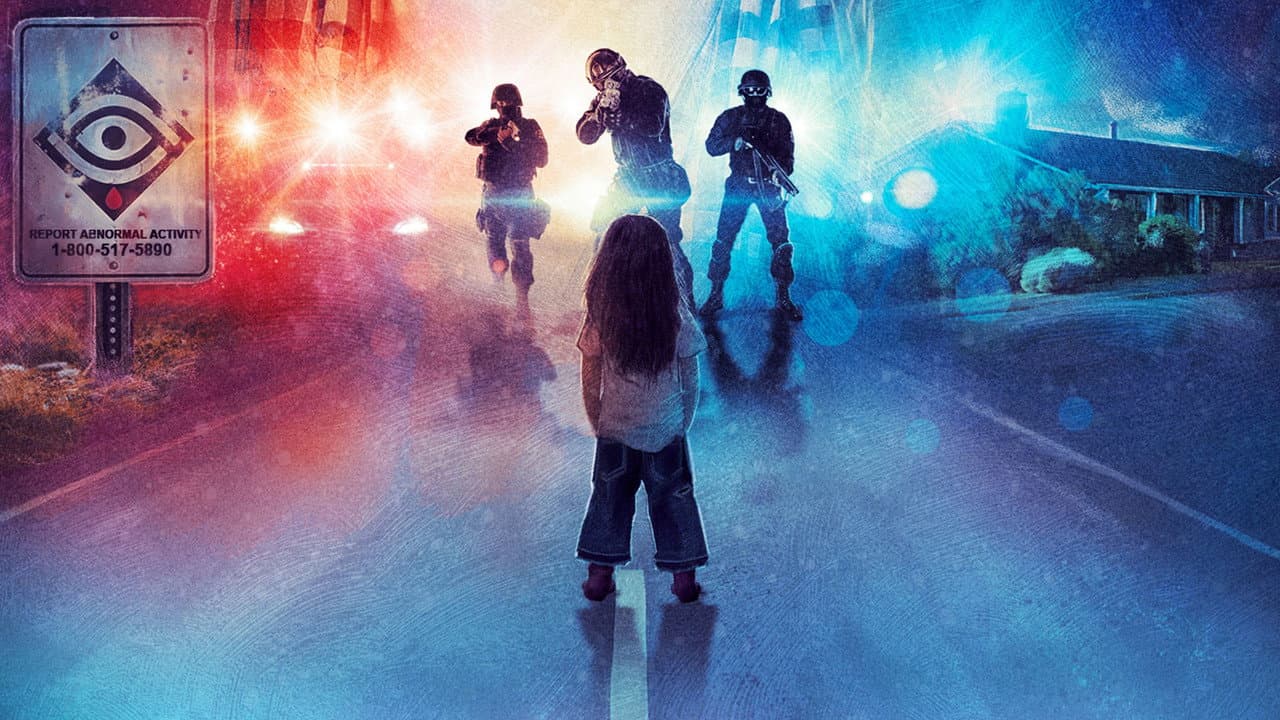

Seven years after it premiered at Fantastic Fest, "Freaks" remains the calling card that moved Zach Lipovsky and Adam B. Stein from micro-budget genre tinkerers to in-demand Hollywood directors. The science fiction thriller, which released on September 12, 2019, and runs 105 minutes, arrived with a deceptively simple premise: a 7-year-old girl named Chloe, played by Lexy Kolker, is kept locked inside her father's house and taught that the world beyond the door is overrun by dangerous "Abnormals." When a stranger played by Bruce Dern coaxes her outside, the film peels back that lie layer by layer. The result earned a 6.7/10 rating on TMDb, a devoted cult following, and, more importantly for its filmmakers, a career.
"That film changed our lives," the directing duo has said of the project, a sentiment that tracks with the trajectory of two filmmakers who spent years making shorts and digital content before "Freaks" gave them a calling card that Hollywood could not ignore.
A Confined Story With an Expanding World
What distinguishes "Freaks" from the glut of dystopian sci-fi is its discipline. For much of its runtime, the film stays inside a single house, filtering an entire collapsed society through the perspective of a child who has never been allowed to see it. Chloe's father, played by Emile Hirsch, is neither fully villain nor straightforward protector; his control over his daughter is both loving and suffocating, and the film's central tension comes from watching her decide which version of reality to trust.
That structure let Lipovsky and Stein do more with less. The pair wrote and directed the film together, with Lipovsky also credited as director on the released feature. Their background in visual effects and short-form work shows in the film's tight construction: the house itself becomes a character, and the reveal of what "Abnormals" actually are lands as both a genre payoff and a moral argument about who gets to decide who counts as dangerous.
The cast around Kolker gives the film its weight. Hirsch plays the father with a frayed intensity, Grace Park appears as Agent Ray, Amanda Crew plays Mary, and Dern's Mr. Snowcone provides the story's strange, unsettling portal to the outside. Ava Telek, Michelle Harrison, and Matty Finochio round out a supporting ensemble that keeps the film's small world feeling populated.
Seven years on, "Freaks" is remembered less for its box office than for what it proved: that a contained, high-concept science fiction film with a child at its center could still feel urgent, and that its directors could handle both intimate character work and large-scale genre machinery.
From Festival Buzz to Studio Assignments
The film's premiere at Fantastic Fest in 2019 turned "Freaks" into one of the festival's word-of-mouth titles, and the ensuing release gave Lipovsky and Stein a level of industry attention that independent genre filmmakers rarely secure. The pair's ability to deliver a polished, effects-heavy feature on a modest budget made them attractive to studios looking for directors who could handle spectacle without losing the thread of a story.
That reputation has since carried them into major franchise work, the kind of assignment that rarely goes to filmmakers without a proven feature under their belt. For a duo whose earlier credits leaned heavily on shorts and digital experiments, "Freaks" functioned as a feature-length audition that Hollywood actually watched.
It also solidified their identity as a filmmaking team rather than two separate directors. The film's tone, balancing dread with a child's-eye wonder, became their signature, and it is the quality that producers have repeatedly tried to buy ever since.
Why the Film Still Travels
Part of "Freaks" durability comes from how well its central metaphor has aged. The film is about a parent who teaches a child to fear the outside world, and about a child who eventually has to test that teaching for herself. It is not a subtle allegory, but it is an effective one, and it plays differently depending on the year you watch it.
The film also benefits from a performance that could have sunk the whole enterprise. Kolker carries most of the movie, and the camera rarely leaves her face. If the audience does not believe Chloe, the twists do not work. They do, which is why the film's reputation has grown rather than faded.
For Lipovsky and Stein, "Freaks" is now the line in their filmography that separates the before and the after. It is the movie they made when nobody was watching, and it is the movie that made people start watching. Whatever they direct next, the question that follows them is the one the film answers so confidently: can they take a small idea and make it feel enormous? They already have.
Source: The Hollywood Reporter


