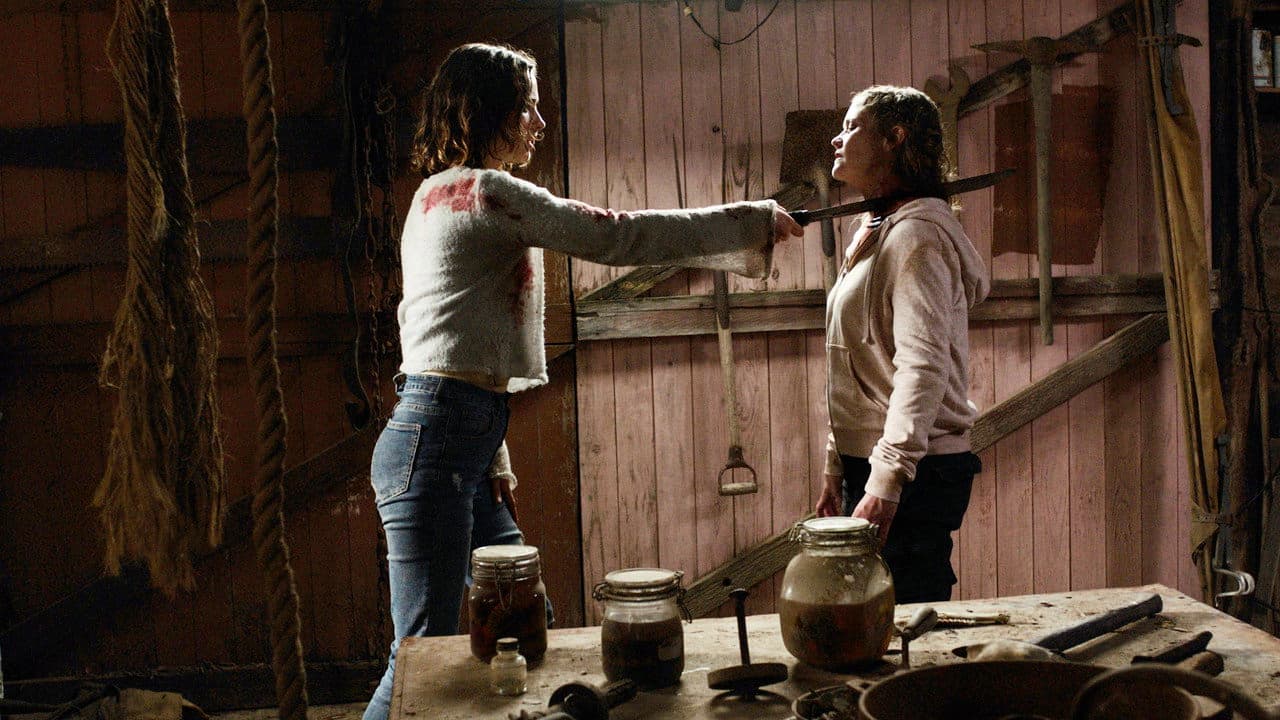



The filmmakers behind Lebanon's Oscar submission "Furies" are framing the horror-action thriller as more than a genre exercise, describing cinema itself as an act of resilience and catharsis. The film, directed by Tony D'Aquino, follows a young woman who confronts her deepest fears alongside seven other unwilling participants in a lethal contest that permits only one survivor. Its selection as Lebanon's entry to the Academy Awards has turned a modestly scaled 82-minute feature into a focal point for conversations about what national cinema can accomplish under pressure.
The English-language production, listed under the Hollywood industry banner, pairs a stripped-down survival premise with the visceral momentum of the horror, action and thriller genres. Airlie Dodds leads the ensemble as Kayla, the protagonist at the center of the deadly game. She is joined by Linda Ngo as Rose, Taylor Ferguson as Sheena, Ebony Vagulans as Maddie, Danielle Horvat as Jess, Tom O'Sullivan as Derek, Jessica Baker as Jackie and Kaitlyn Boyé as Alice. The film had its release on April 12, 2019.
A Genre Framework Carrying Weightier Themes
Positioning "Furies" as both a lean suspense machine and a statement about endurance places it in a tradition of genre filmmaking that uses violent, high-stakes scenarios to examine psychological survival. The premise of eight captives forced into a contest with a single winner gives the filmmakers a confined structure within which to explore fear, complicity and the will to keep going. The film's backers argue that this framework is precisely what allows the material to resonate beyond straightforward shocks.
The runtime of 82 minutes suggests a tightly paced construction, with little room for digression between the setup of the game and its escalation. D'Aquino's direction, supported by a cast largely composed of performers in the early stages of their careers, leans on the ensemble dynamic among the eight participants rather than a single star-driven showcase. Dodds's Kayla serves as the audience's entry point into the ordeal, while the supporting roles supply the shifting alliances and rivalries that such a premise demands.
Reception and the Road to the Oscars
Public response to "Furies" has been mixed rather than triumphant. The film holds a TMDb rating of 5.481 out of 10 and an IMDb score of 5.4 out of 10, figures that place it in middling territory among viewers. Those numbers matter for context: an Oscar submission is not automatically a critical darling, and Lebanon's selection of a horror title with modest audience scores signals a deliberate choice about which kind of film the country wishes to present on the international stage.
Awards submissions frequently serve as statements of national identity as much as evaluations of artistic merit, and the decision to put forward a genre film with an English-language script and Hollywood industry ties complicates any simple reading of the selection. The film's champions appear to embrace that complexity, arguing that a story about people forced to fight for survival speaks to broader experiences of endurance. The exact composition of the Academy's international feature race and the film's standing within it are not yet settled.
What the Filmmakers Want Audiences to Take Away
The central claim from the creative team is that "Furies" operates on two levels at once: as a compact thriller engineered for tension and as a meditation on resilience. That dual ambition is common among filmmakers working in horror, a genre that has long provided cover for pointed social and psychological commentary. Whether audiences primed for a survival game will read the film that way is another question, and the middling ratings suggest the reception has not been uniform.
For Lebanon, the submission carries symbolic weight regardless of how the Academy vote ultimately falls. The film's creators have been vocal that the act of making and circulating cinema under difficult circumstances is itself meaningful, and they describe the medium as a vehicle for processing collective hardship. That argument does not depend on a trophy; it depends on the film reaching viewers and prompting them to consider what survival costs.
"Furies" remains a small film by the standards of the international awards circuit, with a brief runtime, an ensemble of emerging performers and a premise built for intensity rather than scale. What it lacks in budget it aims to replace with focus. As the awards season unfolds, the conversation around the film will likely center less on its review scores than on the question its makers keep raising: whether a story about people fighting to stay alive can function as its own form of defiance.
Source: Variety