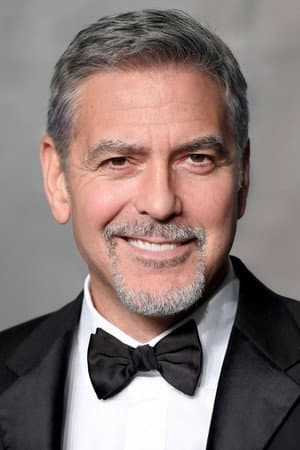
George Clooney has spent much of the past decade working to keep a spotlight on people who pursue justice at considerable personal cost, and he wants audiences to understand why that mission has taken on a new urgency. Speaking about the Albies, the annual awards ceremony organized by the Clooney Foundation for Justice, the actor and humanitarian said the recognition exists because the work it honors is not reliably rewarded anywhere else.
"It feels like it's in short supply," Clooney said of justice, explaining the rationale behind the event.
The Albies, named for Justice Albie Sachs, the South African jurist who helped shape his country's post-apartheid constitutional order, are presented each year in New York during the United Nations General Assembly. The ceremony, hosted by the Clooney Foundation for Justice, which Clooney founded with his wife, human rights lawyer Amal Clooney, has become a fixture on the fall calendar, drawing figures from law, activism, government and entertainment into the same room.
An Award Built Around Risk, Not Celebrity
What distinguishes the Albies from the standard awards-season ritual is who stands at the center of the evening. Honorees are typically lawyers, journalists, prosecutors and grassroots advocates who have taken on authoritarian governments, entrenched corruption or organized crime - people whose names are rarely known outside their own countries and whose work can carry consequences that range from harassment to imprisonment. The foundation has framed the awards as a way to provide visibility and protection to individuals whose efforts might otherwise go unnoticed and unsupported.
In past years, the ceremony has recognized defenders of press freedom, lawyers representing political prisoners, and investigators pursuing accountability for atrocities. Each winner receives not only public recognition but also a financial component intended to sustain their work, an acknowledgment that moral support alone rarely keeps a legal defense team operating under pressure.
Clooney's comments reflect a theme he has returned to repeatedly in interviews and speeches: that the machinery of justice requires constant maintenance, and that it falters when the people who operate it are left isolated. His argument, in essence, is that the Albies function as a counterweight to that isolation. International attention can make it harder for governments to retaliate against recipients, and the presence of high-profile guests serves as a signal that the world is watching.
The Foundation's Broader Record
The Clooney Foundation for Justice has built a portfolio that extends well beyond a single gala. Its TrialWatch initiative monitors court proceedings around the world, dispatching observers to proceedings that raise concerns about fairness and documenting abuses for international audiences. Other programs have supported education for refugee children and funded legal representation for vulnerable defendants. The Albies sit atop that structure as the organization's most public-facing moment each year, translating legal advocacy into a format that media outlets will cover.
George Clooney's dual role - Hollywood star and human rights advocate - has long given the foundation a level of attention that purely legal organizations struggle to generate. He has been candid that celebrity opens doors, and that the Albies leverage that access deliberately. The guest list typically mixes actors, musicians and business leaders with the legal and diplomatic figures whose work is being honored, a blending that the hosts evidently see as strategic rather than merely social.
Justice as an Ongoing Project
The phrase Clooney chose - that justice is in short supply - carries an implicit argument about the present moment. Around the world, courts face political interference, journalists operate under legal threat, and human rights organizations report shrinking space in many regions. Against that backdrop, an evening devoted to celebrating individuals who continue the work anyway becomes something more than a ceremony. It is, in the foundation's framing, an act of solidarity with people who have few other allies with international platforms.
Whether the Albies ultimately shift outcomes in the cases their honorees pursue is difficult to measure. What the foundation can point to is a record of sustained attention: recipients who continue their work, cases that remain visible, and an annual gathering that keeps the subject of accountability in the news cycle at least once a year.
Clooney's explanation of the awards is notably stripped of sentiment. He does not describe justice as an inevitable arc or a settled achievement. He describes it as scarce - something that has to be produced, defended and, when possible, celebrated in public so that the people producing it are not forgotten. For a project built around legal risk and political pressure, that may be the most honest framing available.
Source: The Hollywood Reporter