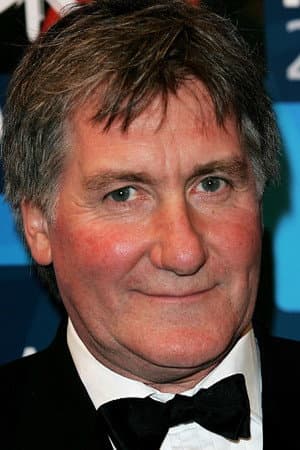
George Fenton, the British composer whose elegant, emotionally precise scores earned him five Academy Award nominations across a career that spanned concert halls, television and some of the most acclaimed films of the 1980s and 1990s, has died at the age of 76. News of his death was confirmed by his family, though no cause was immediately released.
Fenton was nominated for the Oscar for Best Original Score for "Cry Freedom" in 1988, "Dangerous Liaisons" in 1989, "The Fisher King" in 1992 and "Anna and the King" in 2000. He also received a nomination for Best Original Song for "Everlasting Love" from the 1989 film "Chances Are," a track he wrote with John C. Shearman.
A Career Built on Versatility
Born in London, Fenton studied at the Guildhall School of Music and Drama before launching a career that would prove unusually difficult to categorize. He first made his mark in British television, writing music for acclaimed drama productions during the 1970s, and his work in that medium remained a through line for the rest of his life. His scores for the landmark nature documentaries helmed by David Attenborough - including "The Blue Planet," "Planet Earth" and "Frozen Planet" - introduced his music to a global television audience far larger than any single feature film could claim.
In cinema, Fenton proved equally at home with sweeping historical drama and intimate character study. His work on "Gandhi" in 1982 helped establish his reputation in Hollywood, and he reunited with that film's director, Richard Attenborough, on several later projects. The partnership between composer and director became one of the most durable in British film, yielding scores that favored melody and emotional clarity over bombast.
His nomination for "Cry Freedom," Attenborough's 1987 drama about the South African anti-apartheid activist Steve Biko and the journalist Donald Woods, showcased his ability to write music that carried moral weight without tipping into sentimentality. Two years later came "Dangerous Liaisons," Stephen Frears's sharp-edged adaptation of the Choderlos de Laclos novel, where Fenton's score traced the seductive cruelty of its aristocratic characters with a delicacy that many critics considered essential to the film's success.
A Songwriter's Instinct Alongside a Dramatist's Ear
The "Chances Are" nomination demonstrated a different facet of Fenton's talent. Writing for a romantic comedy-fantasy was a departure from his usual dramatic territory, but the song became one of the more memorable film themes of its era and confirmed that his melodic gifts translated readily to popular forms.
Fenton's association with director Terry Gilliam on "The Fisher King" brought another nomination, for a score that balanced the film's fantastical imagery with its street-level grit. His final Oscar nomination, for "Anna and the King," the 1999 adaptation of the Anna Leonowens story, arrived at the end of a decade in which he had worked almost continuously.
Beyond his personal nominations, Fenton was a frequent collaborator with directors who returned to him again and again - a sign, colleagues said, of both his reliability and his willingness to serve a film rather than his own ego. He was known for spending long hours in the editing room, adjusting cues to picture, and for his insistence that a score should illuminate what an audience already feels rather than instruct it.
A Legacy Across Screens Large and Small
Fenton's filmography reflects an unusually broad range: historical epics, contemporary thrillers, literary adaptations, and documentaries. He wrote music for "The Madness of King George," "Groundhog Day" and "You've Got Mail," among dozens of other features. His television work extended well beyond the Attenborough natural-history series, encompassing drama, documentary and concert commissions.
In later years, Fenton devoted more of his time to concert music and to conducting his own film scores live with orchestras, a practice that grew increasingly popular with audiences. He remained active in the profession well into his seventies, and his death drew immediate tributes from composers, directors and musicians who cited his craftsmanship as a model.
He is survived by his family. Funeral arrangements have not yet been announced.
Source: The Hollywood Reporter