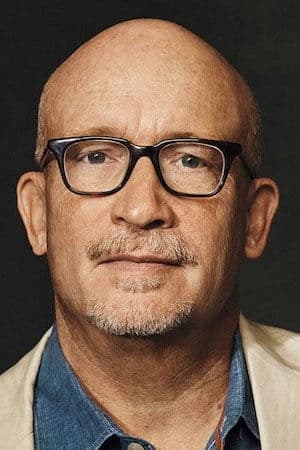
VENICE, September 8, 2026 - Alex Gibney's latest documentary, a probing and unflinching look at Elon Musk, has sent ripples through the Venice Film Festival, earning a warm but visibly shaken reception at its world premiere on Monday night. The acclaimed filmmaker, known for his investigative deep dives, has delivered a portrait that eschews hagiography for a complex, often discomforting examination of the world’s most controversial tech mogul.
The premiere at the Sala Grande concluded with sustained applause, a clear sign of professional respect for Gibney’s craft. Yet the mood in the lobby afterward was less celebratory than haunted. Festival-goers, critics, and industry insiders emerged with a collective sense of unease, struggling to reconcile the film’s stark imagery with the mythology that surrounds its subject. Gibney, who has chronicled everything from Enron’s collapse to the fall of Theranos, appears to have found in Musk a subject whose contradictions may be too vast for a simple narrative.
While the film has not been officially titled in festival materials beyond its descriptive premise, its content is unmistakably Gibney: archival footage, candid interviews, and a relentless narrative drive that seeks to understand how a man celebrated for electric cars and space rockets also became a polarizing figure in global politics and public discourse. The screening unfolded like a procedural investigation, tracing Musk’s trajectory from early PayPal days through SpaceX’s launches, Tesla’s rise, and his eventual purchase of the platform formerly known as Twitter.
What unsettled audiences most, according to early reactions, was Gibney’s refusal to take a side. The film does not simply frame Musk as a visionary or a villain. Instead, it presents a fractured human being whose genius is inseparable from his volatility. One scene reportedly juxtaposes awe-inspiring footage of a Starship test flight with on-screen text of Musk’s own provocative social media posts, forcing viewers to sit with the dissonance. Another segment draws on interviews with former employees and associates, who speak with a mixture of admiration and alarm about Musk’s management style and his increasingly public political interventions.
Gibney, who was present for the premiere, did not shy away from the film’s challenging nature in his brief introduction. He framed the project not as an attack but as an act of inquiry, suggesting that understanding Musk is essential to understanding the 21st century itself. The documentary, he implied, is a mirror held up to an era of technological worship, fractured truth, and outsized personalities who command the global stage.
The Venice reception is notable for its nuance. While some critics have praised the film as Gibney’s most urgent work in years, others have noted that its subject remains an elusive figure even after two hours of scrutiny. Musk himself did not attend the premiere, and it remains unclear whether he has seen the film or responded to its content. Gibney, however, has a history of courting controversy with his subjects, and the documentary is likely to reignite debates about the ethics of portraying living figures.
For the festival, the premiere serves as a reminder of documentary cinema’s power to disrupt comfort zones. Venice has long been a platform for provocative nonfiction, from Laura Poitras’s examinations of surveillance to the political polemics that often dominate the awards conversation. Gibney’s film fits squarely into that tradition, offering not escapism but a difficult conversation about power, money, and the fragility of the human ego when amplified by billions of dollars and millions of followers.
The documentary’s visual language has also drawn attention. Gibney employs a mix of sleek corporate footage, grainy personal videos, and stylized graphics to create a sense of digital overload, mirroring the cacophony of Musk’s public persona. Sound design, too, plays a role, with the hum of factory floors and the roar of rocket engines providing a constant reminder of the industrial scale of Musk’s ambitions. It is a technically accomplished work, but one that never lets the viewer forget the ethical questions at its core.
Industry observers note that the film's success at Venice could position it strongly for award-season consideration. Festival premieres in early September often set the tone for documentary honors, and Gibney’s pedigree - an Oscar winner for Taxi to the Dark Side - adds weight to the project. Distributors are reportedly circling, though no official acquisition has been announced. The premiere’s strong word-of-mouth suggests the film will not linger in obscurity.
Outside the screening room, the conversation was electric. Attendees debated the film’s final act, which reportedly leaves the viewer with more questions than answers, refusing to offer a tidy resolution. Gibney seems to argue that Musk is not a problem to be solved but a phenomenon to be observed, a lens through which we might examine our own complicity in the cults we build around billionaires. It is a bold choice, and one that unsettled Venice even as it applauded the filmmaker’s nerve.
As the festival continues, Gibney’s documentary stands as a landmark moment in a year already rich with nonfiction storytelling. Whether it will spark direct response from Musk or shift public perception remains to be seen. For now, the film’s impact is measured in the hushed conversations of festival-goers who left the theater not with answers, but with the unsettling feeling that they had just watched the portrait of an era - and of a man who may be its most vivid, and disturbing, symbol.
Source: The Hollywood Reporter