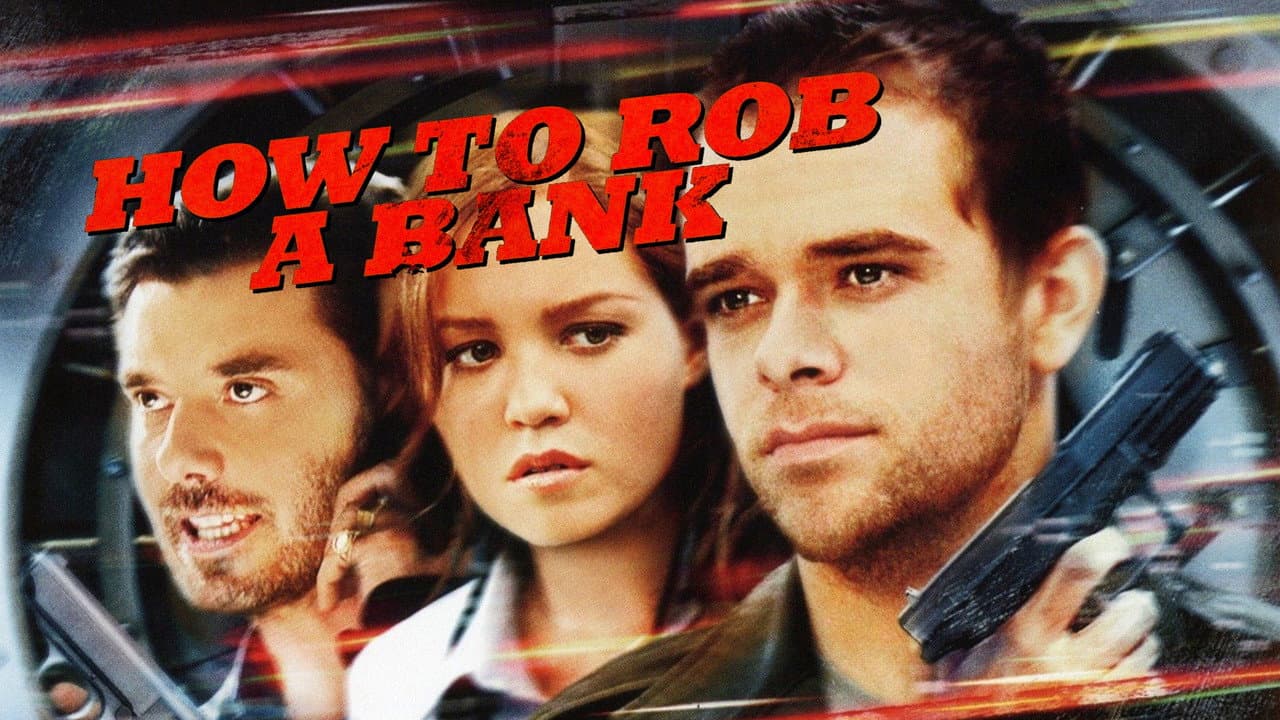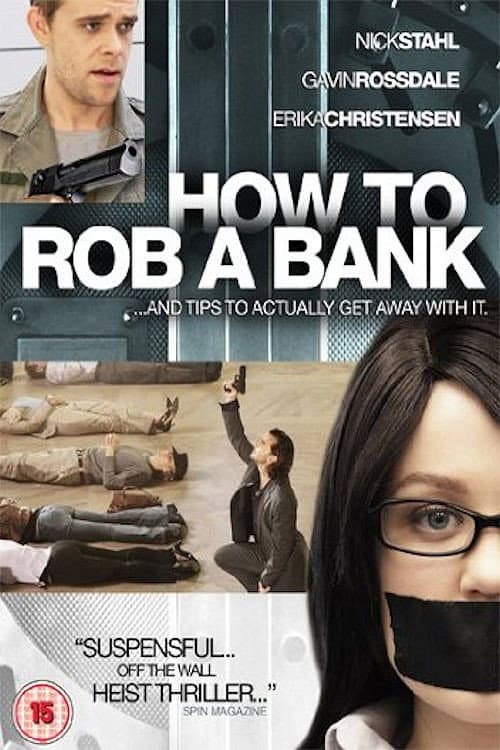
The action-comedy “How to Rob a Bank” has been screening for invited audiences ahead of its wide rollout, and the first reactions suggest a modest, briskly paced caper that leans on its two leads rather than on spectacle. The film, directed by Andrews Jenkins and running a tight 81 minutes, places a slacker and a bank employee at the center of a hostage crisis, where the pair end up arbitrating a standoff neither of them planned to be part of. Early viewers describe a contained, single-location thriller with comic edges - the kind of mid-budget genre exercise that Hollywood once churned out regularly and now releases more cautiously.
Nick Stahl plays Jinx, the drifting protagonist, opposite Erika Christensen as Jessica, the bank employee drawn into the chaos. Gavin Rossdale appears as Simon, with Terry Crews as Officer DeGepse and David Carradine as Nick. Leo Fitzpatrick rounds out the principal ensemble as a gunman, while Adriano Aragon and Britt Delano appear in supporting turns. The cast is the element reaction-watchers return to most often; Stahl’s low-key screen presence and Christensen’s grounded turn are cited as the movie’s steadiest assets, and Carradine’s brief appearances lend the proceedings a wry, lived-in weight.
The premise is deliberately small. A robbery goes sideways, and the people least equipped to resolve it - a loafer with no stake in the outcome and a teller with everything to lose - become the de facto negotiators. Jenkins keeps the action inside the bank and its immediate surroundings, and at just over eighty minutes the film has little room for detours. That discipline reads as a virtue in the reactions so far: viewers note that the story starts quickly, establishes its players without much fuss, and gets to the standoff inside the first act.
A Comedy That Plays It Straight
The tonal balance has drawn the most discussion. “How to Rob a Bank” is classified as action, comedy and crime, but early audiences describe the humor as dry and situational rather than broad. The comedy comes from the mismatch between the ordinary people in the room and the high-stakes situation around them, not from set pieces built for laughs. Some viewers found that restraint effective, arguing that the film trusts its performers to carry the lighter moments. Others wanted sharper jokes and felt the comic beats landed softly against the tension of the hostage scenario.
That split is familiar territory for heist-adjacent comedies, which often struggle to satisfy audiences who arrive wanting either a thriller or a laugh riot. Here, the reactions suggest a film that sits deliberately between the two, more interested in the awkward human negotiation at its center than in gunplay or getaway chases.
Familiar Ground, Executed Efficiently
Several early viewers drew comparisons to the single-location crime pictures that populated studios’ release slates in the 1990s and 2000s - talky, cast-driven movies that could be shot on a contained budget and sold on personality. “How to Rob a Bank” fits that mold closely. It is an English-language Hollywood production, and its scale is modest by design.
The reaction consensus, insofar as one exists, is that the film delivers competent genre work without aspiring to more. Praise centers on the ensemble, the clean setup and the economical running time. Criticism focuses on familiar plotting and a shortage of surprises; few viewers reported being bored, but few reported being bowled over either. The TMDb rating currently sits at 5.8 out of 10, a middling figure consistent with the mixed-but-not-hostile tone of the early responses.
What the Reactions Mean for Release
First reactions at this stage rarely predict a film’s commercial fate, but they do shape expectations. For “How to Rob a Bank,” the takeaway is a movie positioned as a lean, cast-forward diversion rather than an event release. The presence of Crews and Carradine gives it recognizable faces for casual viewers, while Stahl and Christensen carry the dramatic load. Rossdale’s role as Simon adds a bit of crossover curiosity for music fans.
The film’s 81-minute runtime is likely to be framed as a selling point in the weeks ahead - a quick, self-contained story that asks little of its audience beyond a willingness to watch a standoff unfold among people who would rather be anywhere else. Whether that proves enough to distinguish it in a crowded action market remains an open question.
For now, the early word paints a clear picture: a small-scale crime comedy that knows exactly what it is, executes its premise cleanly, and relies on its cast to smooth over a familiar blueprint. Audiences who favor character-driven standoffs over large-scale action will find more to like than those hoping for a sharper comedic edge. “How to Rob a Bank” arrives with its modest ambitions intact and its limitations plainly visible - a combination that, on the evidence of these first reactions, will win it a measure of affection without generating much heat.
Source: The Hollywood Reporter