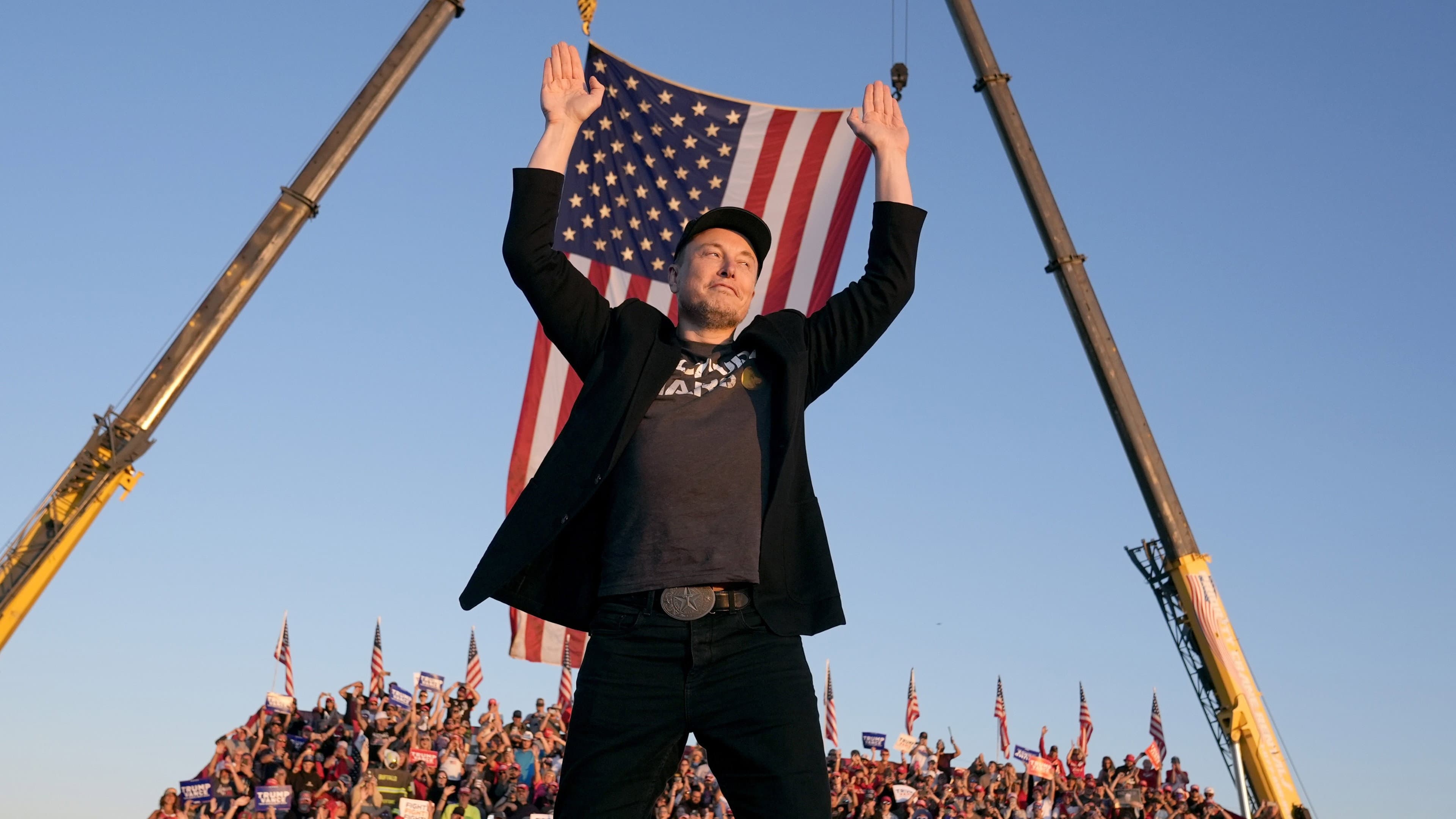
The International Documentary Film Festival Amsterdam has locked in the two flagship competitive strands that anchor its annual edition, unveiling the selections for the International Competition and the Envision Competition while folding two high-profile late additions into the program. Among the titles joining the slate are "Musk," a documentary probing the world's most controversial tech entrepreneur, and "You Can See Everything," a film whose inclusion had been anticipated on the festival circuit for weeks.
IDFA, as the Dutch festival is universally known, has long served as the documentary world's most important launchpad. Its International Competition typically gathers between a dozen and fifteen titles from across the globe, all receiving their European or world premieres, while the Envision Competition, introduced in 2020, is dedicated to formally adventurous and boundary-pushing nonfiction work. Together the two sections function as a weather vane for where the art form is heading - what subjects filmmakers are willing to tackle and what aesthetic risks they are ready to take.
"Musk" arrives at a moment when its subject needs no introduction. The film is described as an intimate, unflinching portrait of the billionaire whose companies have reshaped electric vehicles, private spaceflight and social media, and whose public persona has grown only more polarizing. According to the festival, the documentary was shot over a period of years and gains unusual access to its protagonist, tracing his business gambles alongside the personal cost of relentless ambition. It is the kind of film IDFA loves: a figure everyone thinks they already understand, examined until the familiar image cracks.
"You Can See Everything" takes a different route. The film is a meditation on visibility and surveillance, asking what it means to live in a world where being watched has become the default condition rather than the exception. Festival programmers have placed it in the Envision Competition, signaling that its formal approach - long observational passages, an unsettled camera, a refusal of easy narration - is as central to the work as its subject matter. It is a title that has circulated in industry whispers for months, and its confirmation here cements IDFA's reputation for catching films before the rest of the market does.
The two lineups, taken together, reveal a festival tilting toward work that is politically urgent without being polemical. Several of the International Competition entries grapple with displacement, labor and the legacy of conflict, though the festival has been careful to frame the selection as a portrait of a moment rather than a statement of intent. The Envision slate leans harder into experimentation, with films that blur the line between documentary and essay, and at least one project that incorporates archival material in ways that challenge conventional notions of authorship.
Documentary's commercial fortunes have shifted considerably in recent years, with streamers retreating from the space even as theatrical audiences for nonfiction have grown in select markets. IDFA's role has consequently expanded. A premiere here can still determine whether a film finds a distributor, a broadcast partner or an audience at all. That pressure is felt most acutely in the Envision Competition, where formally difficult work often struggles to travel, and where a festival slot can be the difference between a career and a dead end.
For the filmmakers behind "Musk," the calculus is somewhat different. A documentary about a figure of that magnitude arrives with built-in attention, and the conversation around it will inevitably drift toward questions of access and editorial independence - whether a subject so powerful can ever be portrayed without compromise. IDFA has not disclosed how the film was financed or whether its subject cooperated, details that will likely shape how critics receive it.
What the twin announcements confirm is that IDFA remains committed to programming in dialogue with the present. The festival has never been content to function as a museum of the documentary form; its competitive sections are meant to argue about what the form can do next. With "Musk" and "You Can See Everything" now in the mix, this year's edition has two ready-made conversation starters - one about power, one about the gaze - and a lineup that positions Amsterdam once again at the center of the nonfiction conversation.
Further titles, including the remaining competitive selections and the festival's non-competitive sidebar programs, are expected to be announced in the coming weeks.
Source: The Hollywood Reporter