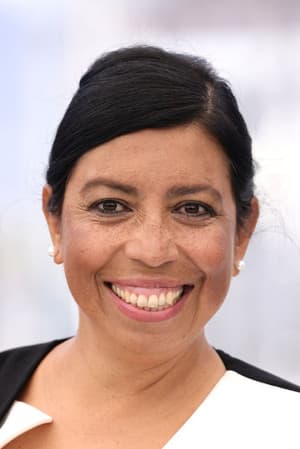
The International Documentary Film Festival Amsterdam will turn its spotlight on two filmmakers whose work has reshaped how audiences think about memory, migration, and the archival image itself. IDFA is set to honor Mexican director Tatiana Huezo with a retrospective program, while also mounting a dedicated focus on the trailblazing American filmmaker William Greaves, continuing the festival's long tradition of pairing contemporary voices with overlooked pioneers of the nonfiction form.
For Huezo, the recognition arrives at a moment when her profile has never been higher. The Salvadoran-born, Mexican-raised filmmaker first drew widespread international attention with "The Tiniest Place," her quietly devastating portrait of a Salvadoran village rebuilt by survivors of the country's civil war. The film announced a sensibility that has defined her career since: an insistence on listening, a refusal to turn suffering into spectacle, and a visual patience that lets trauma surface on its own terms rather than through narration or exposition.
A Career Built on Listening
Huezo followed that debut with "Tempestad," a meditation on violence and incarceration in Mexico told through the interwoven testimonies of two women, and then with "Prayers for the Stolen," her narrative fiction debut about girls coming of age in a region dominated by drug cartels. That film, adapted from Jennifer Clement's novel, earned Huezo a place in the Cannes Film Festival's Un Certain Regard section and went on to represent Mexico at the Academy Awards. Her documentary work has consistently returned to the theme of displacement, and to the question of what it costs to simply stay in a place that has become dangerous.
IDFA audiences know Huezo well. Her films have screened at the festival repeatedly, and her approach - often built around long, unbroken takes of women speaking directly into the camera - has become a reference point for a younger generation of Latin American documentarians. The retrospective will give Amsterdam viewers a chance to trace the arc of that development in one place, from her earliest shorts through her most recent features.
William Greaves, Finally Getting His Due
The Greaves program is a different kind of tribute: a rescue mission as much as a celebration. Greaves, who died in 2014, spent more than half a century working in film and television, and his career defies easy summary. Born in Harlem and trained as an actor at the renowned Actors Studio in New York, he appeared on stage and in films before deciding that the stories he wanted to tell would never be told by others. He moved behind the camera and built a body of work that includes documentaries, television series, and one of the most radically experimental nonfiction films ever made in the United States.
That film, "Symbiopsychotaxiplasm: Take One," shot largely in Central Park in the late 1960s, layered multiple simultaneous crews filming the same fictional scene, a documentary crew filming them, and Greaves himself filming the whole apparatus. The result was a self-interrogating, frequently hilarious inquiry into what a film is and who controls it. It was barely seen for decades before being restored and re-released to critical acclaim, and it now sits comfortably alongside the era's most adventurous avant-garde cinema.
Greaves was also a workhorse in the best sense. He directed episodes of the landmark public television series "Black Journal," chronicling Black American life and politics for a national audience at a time when mainstream networks largely ignored those stories. His documentary portraits of figures such as Ida B. Wells and Frederick Douglass brought overlooked histories to wide view, and his editing and production work on projects including "The Weavers: Wasn't That a Time!" demonstrated a restless, genre-crossing intelligence.
Bridging Eras and Traditions
The pairing of Huezo and Greaves is not as unlikely as it might first appear. Both filmmakers have built careers around questions of authorship and power - who gets to speak, who holds the camera, and what happens when those two positions are forced into the same frame. Huezo's subjects confront the camera directly, claiming the space of the image; Greaves turned that same space into a laboratory, exposing the machinery behind it. Placed side by side at IDFA, their work should produce a productive friction.
IDFA has long positioned itself as more than a marketplace or a prize-granting body. Its annual role as a launchpad for documentary premieres and a meeting point for the international nonfiction community gives it a particular responsibility to shape the canon, not merely reflect it. Retrospectives and focus programs like these are how a festival argues for what matters, and this year's selections make a clear case: documentary's future is inseparable from its past, and the filmmakers who pushed hardest against convention are the ones worth returning to.
Details of screening schedules and the full scope of both programs are expected to be announced closer to the festival's opening. For now, the announcement alone signals that Amsterdam intends to make memory - personal, political, and cinematic - the through-line of its next edition.
Source: The Hollywood Reporter