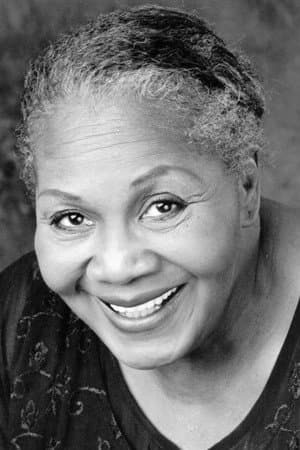
Irma P. Hall, the veteran stage and screen actress whose late-career breakthrough in "Soul Food" and scene-stealing turn in "The Ladykillers" made her one of the most recognizable character actors of her generation, has died at 91. Her death was confirmed Thursday, though no further details were immediately available.
To audiences, Hall was the warm, formidable grandmother who anchored family dramas and the unflappable foil who held her own opposite some of Hollywood's biggest stars. To those who worked with her, she was a classically trained performer who spent decades on the stage before the camera came calling - and who treated every role, however small, as a chance to do something honest.
A Chicago-Born Performer Who Found Her Calling in the Theater
Born in 1935 in Chicago, Hall grew up in the city's South Side and was drawn to performance at an early age. She studied at the University of Illinois and later earned a master's degree from Texas Christian University, where she also taught acting. She was a fixture in regional theater for years, performing with the Dallas Theater Center and other companies, and she helped found a theater workshop in Dallas aimed at giving young performers their first opportunities.
Her commitment to teaching never faded, even as her film career took off. Hall would often say in interviews that acting and instruction were inseparable for her - that watching a student discover a role taught her as much as any director's note.
On screen, her early work was steady and unglamorous: guest spots on television dramas, small parts in made-for-TV projects, and supporting turns in films such as the 1991 comedy "Only the Lonely." She kept her expectations modest. The phone kept ringing, she told interviewers later, and that was enough.
A Breakthrough at an Age When Hollywood Usually Loses Interest
That changed with "Soul Food" in 1997, in which Hall played Mother Joe, the matriarch whose Sunday dinners hold a fracturing family together. The role was a gift for an actress of her experience - part cook, part diplomat, part conscience - and she played it with a quiet authority that made the film's emotional stakes feel like lived experience rather than scripted conflict. The performance won her widespread notice and established her as a sought-after figure for maternal and grandmotherly roles.
Not that she was content to repeat herself. In 2004, she appeared in the Coen brothers' "The Ladykillers" as Marva Munson, a churchgoing widow who becomes the unwitting landlady of a crew of thieves. Marva was suspicious, deeply religious, and entirely unimpressed by the men conspiring beneath her roof, and Hall turned the part into a comic force of nature. She shared the screen with Tom Hanks and a cast of schemers, and reviewers singled her out as the film's heart. At the 2005 Cannes Film Festival, she received a special jury prize for the performance - an honor that noted her comic timing in a role that could easily have been a stereotype.
She proved equally at home in tougher material. Her turn in "A Family Thing," opposite Robert Duvall and James Earl Jones, earned her a Screen Actors Guild nomination and critical praise for its restraint. For many in the industry, that nomination was a vindication of a long apprenticeship that Hollywood had finally begun to recognize.
A Career That Rewarded Patience
Hall's late-career success became a small cautionary tale for an industry that often writes off women - particularly Black women - past a certain age. She rarely took the bait of complaint. In interviews, she said she was grateful for the roles that came, and she noted with amusement that her busiest years arrived after she turned sixty.
She worked steadily into the 2010s, appearing in films including "Collateral" and "The Great Debaters," and on television in series such as "Desperate Housewives." Younger actors who shared scenes with her often described her as a mentor on set - someone who knew every crew member's name and who insisted that a scene be truthful before it was funny.
Tributes and a Legacy Beyond the Screen
News of her death prompted tributes from collaborators and admirers who remembered her as much for her generosity as for her talent. Directors recalled her professionalism; former students recalled her insistence that a performer earn an audience's attention rather than demand it.
Hall is survived by members of her family, including extended relatives and the many performers she taught over the years. Funeral arrangements were not immediately announced.
For an actress whose breakthrough came after decades of largely unheralded work, the legacy seems secure in the most practical sense: audiences may not have known her name, but they knew her face, her voice, and the way she could make a room feel like home or a comedy feel like grace.
Source: The Hollywood Reporter