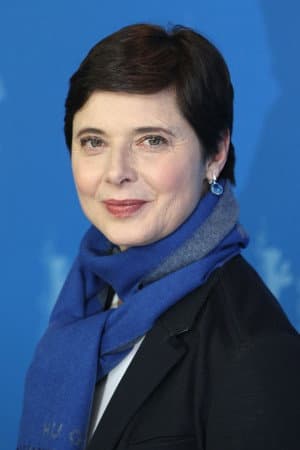
Rossellini on Empty Cinemas & Staying in US
Isabella Rossellini addresses empty local cinemas and explains why she won't leave the U.S. yet, despite calling the political climate 'very bad'.
Advertisement
Isabella Rossellini addresses empty local cinemas and explains why she won't leave the U.S. yet, despite calling the political climate 'very bad'.
Isabella Rossellini, whose iconic performances in films like Blue Velvet cemented her place in cinema history, is speaking candidly about the current state of movie theaters and the political climate in the United States. In a recent conversation, the actress expressed concern over what she describes as "empty local cinemas," while also revealing that - despite characterizing the nation's political situation as "very bad" - she has no immediate plans to relocate from America.
The 74-year-old actress, a veteran of both European and American cinema, did not mince words when addressing the struggles facing smaller, independent theaters. Rossellini’s remarks tap into a growing anxiety within the industry about the long-term viability of grassroots film exhibition. She pointed to a noticeable decline in audience turnout for local venues, a trend that has plagued the sector since the pandemic, as streaming services and big-budget franchise releases continue to dominate consumer attention. For Rossellini, the emptiness of these spaces is more than a business problem; it represents a cultural loss, stripping communities of shared, collective experiences that only a dark room and a big screen can provide.
Her comments arrive amid a broader industry reckoning, where the major studios have pivoted to favoring blockbuster spectacles that can guarantee opening-weekend numbers. This focus often leaves little room for the mid-budget dramas and art-house fare that were the lifeblood of local theaters. Rossellini, who has built a career oscillating between mainstream Hollywood productions and avant-garde European works, is uniquely positioned to observe this shift. She has long championed the importance of diverse voices and intimate storytelling, making the hollowed-out multiplexes especially disheartening for her.
However, the most striking element of her recent remarks was her reasoning for staying put in the U.S. despite her grim assessment of the political landscape. While Rossellini did not elaborate on the specific policies or events that prompted her "very bad" characterization, her words reflect a widespread unease among artists and cultural figures navigating an increasingly polarized environment. The entertainment industry has not been immune to political turbulence, with film sets and awards stages frequently becoming platforms for political discourse. For an actress who has lived across Italy, France, and the U.S., the decision to remain is hardly a passive one.
Rossellini’s rationale for staying, as she explained it, is rooted in a sense of professional obligation and personal attachment rather than political satisfaction. She suggested that leaving would feel like a disconnection from the very audience and creative community she has worked alongside for decades. The actress, who has in recent years diversified her career into documentary narration, sustainable farming advocacy, and modeling, appears to view her American presence as a form of commitment - an act of bearing witness, perhaps even a stand, in a period of uncertainty. She acknowledged that the situation is far from ideal, yet framed her choice to remain as a practical, albeit temporary, decision.
This stance mirrors a sentiment voiced by several high-profile figures in the arts, who have debated whether to exit the country or to stay and push against the tide. Rossellini’s position is nuanced: she does not dismiss the seriousness of the political moment, nor does she romanticize the state of the cinematic landscape. Instead, she offers a pragmatic perspective - an artist who has seen political upheavals and industry shifts before, and who understands that walking away is not always the most effective form of protest or the most fulfilling path.
For now, her immediate focus remains on her ongoing projects and her affiliation with the film community, even as she watches the seats around her go unfilled. Her candidness serves as a reminder that the health of cinema and the health of democracy are often intertwined. An empty theater, much like a disengaged citizenry, signals a failure of collective attention and shared values. Rossellini’s comments, delivered with the same directness that has defined her public persona for decades, offer a bittersweet assessment: she mourns what is being lost but refuses to abandon the space where it might be reclaimed.
As the summer of 2026 unfolds, her remarks are likely to resonate with industry insiders and moviegoers alike who are wrestling with the same questions. Is the art of cinema destined to become a niche hobby, or can local theaters rally a new generation of audiences? And in politically turbulent times, does an artist’s physical location still matter? Rossellini has made her answer clear - at least for now, she is staying, and she is watching the empty screens with a mixture of melancholy and defiance.
Source: The Hollywood Reporter
Advertisement
Advertisement