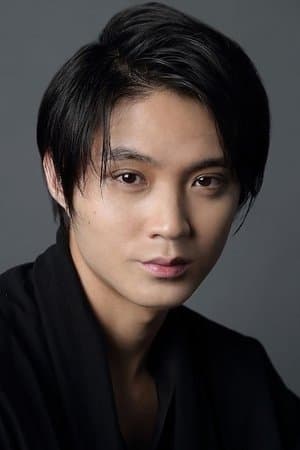
Hayato Isomura, one of Japan's most in-demand young actors and a breakout fixture of Netflix's "Alice in Borderland," has spent much of the past year operating in territory that his advisers once told him to avoid. In a wide-ranging conversation ahead of his latest public appearance in Tokyo, the actor reflected on the role that came with warnings attached, his recent turn as a judge for a Tokyo ethical film award, and his growing conviction that Japanese cinema cannot sustain its current momentum without help from the government.
Isomura, who built a devoted international following through the dystopian survival series, said the part he was cautioned against taking came at a point when his career was beginning to accelerate. People around him worried the material was too risky, too easily misread, or simply not the kind of project that a young actor on an upward trajectory should be seen in. He took it anyway.
"I was told this could damage the image people had of me," Isomura said, recalling the conversations. "But if I only accept roles that feel safe, I'm not really acting. I'm managing a brand."
That instinct has defined his choices since. Rather than consolidating his success with the kind of mainstream parts that would have been the obvious next step, Isomura has gravitated toward filmmakers with difficult questions on their minds. He credited that period with teaching him that discomfort on set is often a sign he is doing the work properly, and he suggested that the roles he was warned away from have ultimately opened more doors than they closed.
An ethical award, and an ethical question
The Tokyo ethical film award offered a different kind of education. Serving on the judging panel put Isomura on the other side of the table, watching dozens of submissions that wrestled with moral questions, social responsibility, and the ways a film can implicate its own audience. He described the experience as unexpectedly humbling.
"When you sit there and have to explain to a room why one film matters more than another, you start to understand how fragile the whole thing is," he said. "Every decision is a value judgment. You can't hide behind taste."
He noted that judging forced him to articulate standards he had previously applied by instinct, and that he came away with a sharper sense of how Japanese filmmakers are addressing questions the wider society has been slow to confront. While declining to single out particular entries for praise, he said the breadth of submissions left him more hopeful about the country's independent scene than he had been going in.
A call for government backing
That hope, however, sits alongside a blunt diagnosis. Isomura argued that Japanese cinema's cultural reach abroad has not been matched by structural support at home, and that the country risks squandering a moment of international attention if the government does not step in with meaningful funding.
"Japanese films are being watched everywhere right now, and we act as if it happened by accident," he said. "It didn't. It happened because a lot of people worked themselves into the ground for very little."
He pointed to the precarity facing young filmmakers and crew members, many of whom cannot build stable careers even when their work travels well overseas. Public investment, he said, would not simply mean bigger production budgets but a fairer system - support for development, training for below-the-line workers, and a safety net that allows risk-taking without ruin.
"In other countries, film is treated as part of the national culture, and they fund it accordingly," he added. "In Japan we talk about it as if it's a private hobby. That's a choice, and we can choose differently."
For Isomura, the stakes extend beyond economics. He said "Alice in Borderland" taught him that contemporary Japanese storytelling can reach a global audience on its own terms, and that the industry should treat that reach as an obligation rather than a happy coincidence.
"There's a version of the next ten years where Japanese cinema becomes one of our great exports and one of our great cultural ambassadors," he said. "And there's a version where we look back and wonder why we didn't pay attention when everyone was watching."
Isomura, for his part, seems determined to keep pushing at the edges of what he is expected to do - even, and perhaps especially, when the people around him urge caution.
"I'd rather regret a role than regret playing it safe," he said.
Source: Variety