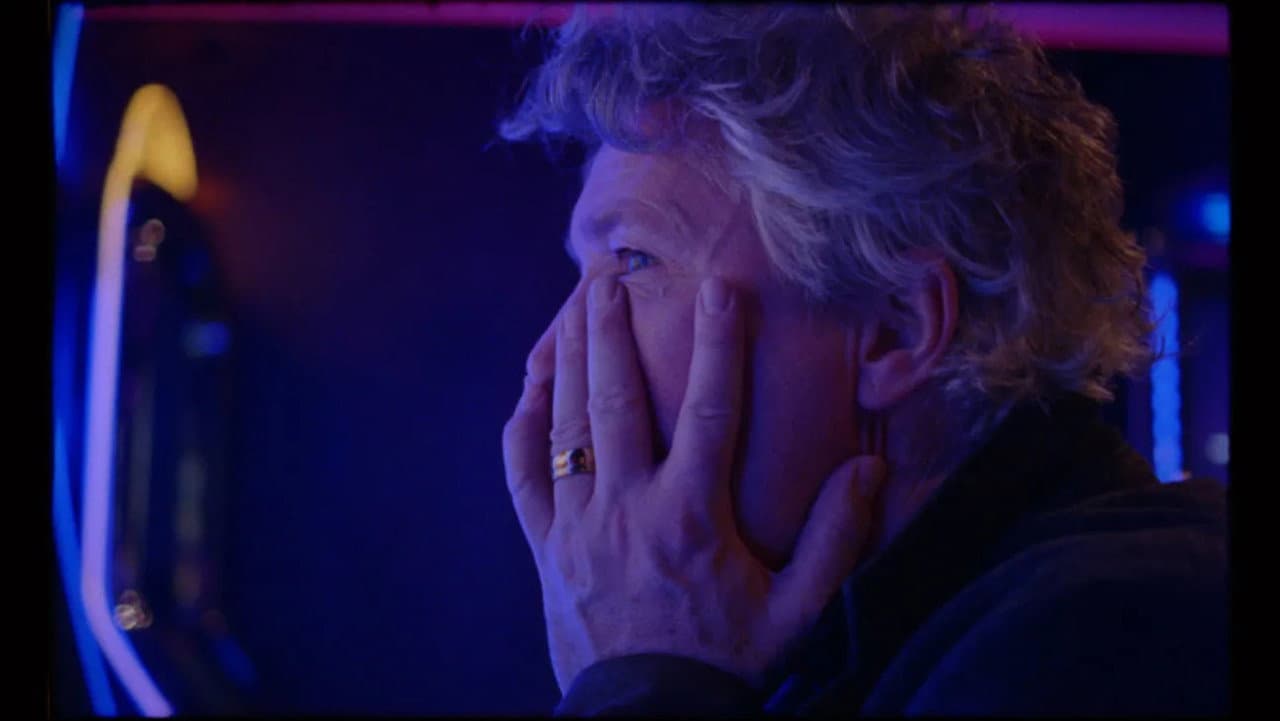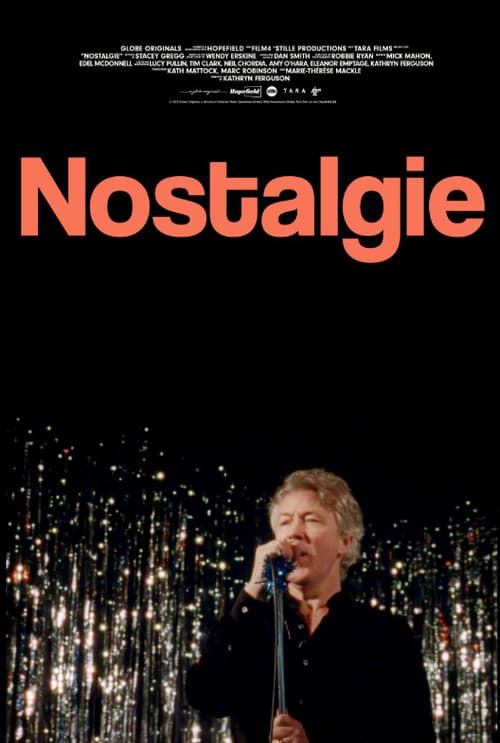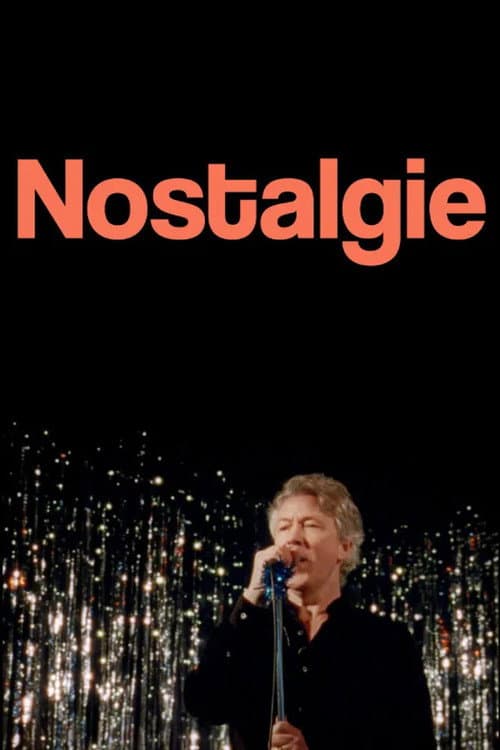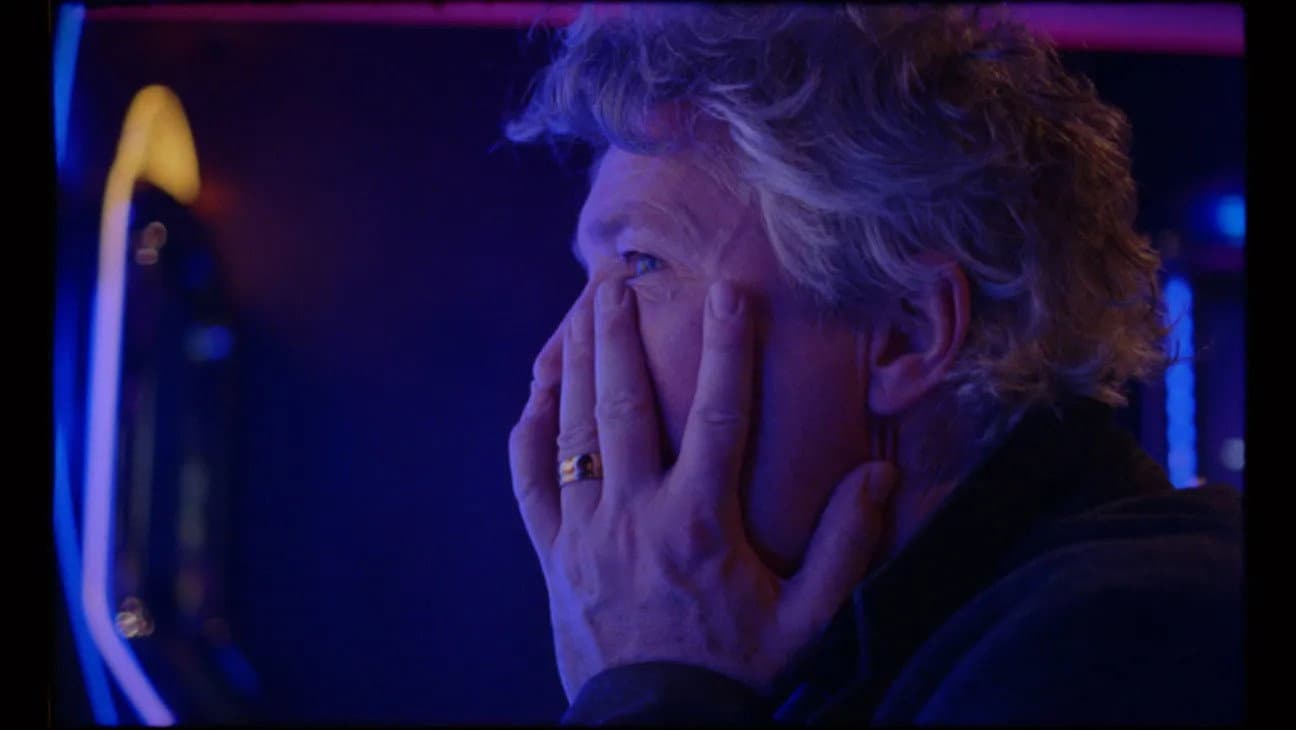
Jamie Dornan has signed on to executive produce "Nostalgie," the Kathryn Ferguson-directed drama starring Aidan Gillen as a former pop idol coaxed back into the spotlight, USA Film News has learned exclusively.
The 19-minute film, which runs as a taut character study, centers on a 1980s popstar whose retirement from music is interrupted by an unexpected invitation to perform. The offer pulls him into a moral dilemma, and the story unfolds almost entirely in that uncomfortable space between the phone call and the decision.
"Nostalgie" is in English and was produced within the Hollywood studio system. It was released on October 17, 2025. That timing matters, because the project arrives already finished and in circulation, meaning Dornan's involvement is not a production-era hire but a post-release endorsement from an actor-producer with a growing appetite for material that lives in the grey areas of fame.
Dornan has spent the past decade moving deliberately between studio franchise work and smaller, more writer-driven projects, and his name on "Nostalgie" reads as a vote of confidence in Ferguson's approach rather than a bid to reshape the film. As executive producer, his role is not specified in the announcement, but on a film of this scale, such a credit typically signals advocacy as much as financing: a recognizable name lending weight to a short-form drama that might otherwise pass quietly through the festival and streaming pipeline.
Ferguson, the director, has built her reputation on intimate, performance-led work, and "Nostalgie" gives her an unusually confined canvas. Nineteen minutes is barely enough time for a single conversation to breathe, let alone for a character to reverse a lifetime of retreat. That constraint appears to be the point; the film's premise turns on a man who has spent years constructing a life without an audience, and the story asks whether the invitation is a second chance or a trap dressed up as one.
Gillen, who plays Drew, is best known to international audiences for long-running television roles, but his career has been defined by men who carry their compromises lightly on the surface. Drew, a popstar whose best years are behind him and whose worst ones may be ahead, fits that profile. The cast around him is filled out with names familiar to viewers of independent British and Irish cinema: Jessica Reynolds as Delphine, Sean Kearns as Marty, Michael Smiley as Jimmy, Seamus O'Hara as Steak, Pat Lynch as Raymond, known as "The Brigadier," and Ciaran Flynn as Young Drew. The presence of a younger version of the lead suggests the film moves between eras, using the 1980s as more than a backdrop; the decade is the source of Drew's fame and the reason the invitation carries such weight.
The film is a drama, though the subject matter is inherently musical: the world of 1980s pop, of hits that outlive their makers, of an industry that treats its veterans as nostalgia acts. That word is baked into the title, and it is doing double duty. Nostalgia sells tickets and it also sells out the people who made the work. The moral dilemma at the center of the story appears to hang on which of those two readings Drew chooses, and whether accepting the invitation means reclaiming something or simply agreeing to become a memory on someone else's terms.
On the ratings front, "Nostalgie" currently sits at 0 out of 10 on TMDb. That figure reflects a near-total absence of votes rather than any measure of the film itself. For an English-language Hollywood release with a 19-minute runtime that opened in October 2025, the number is best read as a sign of how much discovery remains ahead; short films, even those with established casts, tend to accumulate audience data slowly. Dornan's involvement could change that. An executive producer credit from a prominent actor often brings a film to a wider press cycle and to programmers who might otherwise overlook a sub-20-minute title.
For Dornan, the move is consistent with a career that has increasingly leaned into the producer's chair, where the work is about choosing which stories get made rather than which roles get taken. For Gillen, "Nostalgie" offers a lead part that asks him to play a man negotiating with his own mythology, which is precisely the kind of role his screen presence has always been built for. For Ferguson, the film is a compact, tightly wound argument about what happens when the past sends an invitation and the future is not guaranteed to answer.
What remains unresolved is when and where audiences beyond its initial release will encounter "Nostalgie." With Dornan now attached as executive producer, that question has at least become worth asking.
Source: The Hollywood Reporter