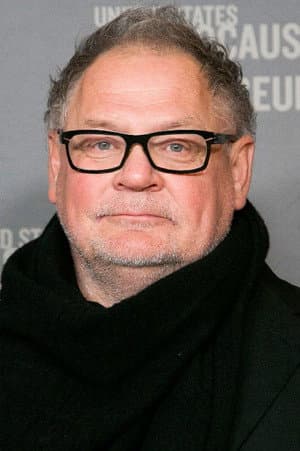
Janusz Kamiński, the Polish-born cinematographer whose collaborations with Steven Spielberg have produced some of the most visually arresting images in modern American cinema, will be honored with the Visionary in Cinematography Award from The Hollywood Reporter, the publication has announced. The recognition places Kamiński alongside a select group of craftspeople whose work has shaped the look of contemporary filmmaking, and it arrives at a moment when his career is being reassessed not only for its technical precision but for its emotional range.
Kamiński, 67, has long been one of the most decorated craftsmen in the industry. He won consecutive Academy Awards for Best Cinematography for "Schindler's List" in 1994 and "Saving Private Ryan" in 1999, and has been nominated several additional times, including for "Amistad," "The Diving Bell and the Butterfly," "War Horse," "Lincoln," and "West Side Story." Those honors represent only a fraction of his output. Over nearly four decades, he has shot more than fifty feature films, moving between large-scale studio productions and intimate character dramas with an ease that few of his peers can match.
The award from The Hollywood Reporter is the latest in a string of tributes that have come his way in recent years. Honors from cinematography guilds and film festivals have multiplied as critics and filmmakers have begun to speak of his body of work as a whole rather than picture by picture. What distinguishes Kamiński is not simply the polish of his images but the way his lighting and camera work serve the story. He has never been a showman for its own sake. His finest work tends to feel inevitable, as though the scene could not have been photographed any other way.
His partnership with Spielberg is among the most durable director-cinematographer relationships in Hollywood history. The two first worked together on "Schindler's List," and the black-and-white photography of that film, with its harsh contrasts and documentary-like immediacy, immediately established a visual language that would carry through much of their later work. That collaboration has continued across "The Lost World: Jurassic Park," "Amistad," "A.I. Artificial Intelligence," "Minority Report," "Catch Me If You Can," "The Terminal," "War of the Worlds," "Indiana Jones and the Kingdom of the Crystal Skull," "The Adventures of Tintin," "War Horse," "Lincoln," "Bridge of Spies," "The Post," "Ready Player One," "West Side Story," and "The Fabelmans."
The range within that list is remarkable. Kamiński has photographed the cold, blue-tinted future of "Minority Report," the warm, nostalgic grain of "The Fabelmans," the kinetic chaos of "Saving Private Ryan," and the sweeping romantic choreography of "West Side Story." Each looks like the work of a different artist, yet all bear his signature: an instinct for natural light, a willingness to let shadows do the storytelling, and a sensitivity to the human face.
Kamiński was born in Ziębice, Poland, in 1959, and emigrated to the United States as a young man. He studied at Columbia College Chicago and later at the American Film Institute, where his thesis film drew attention and helped launch his career. His early credits included work on smaller independent productions before he found his way to major studio pictures. That grounding in independent filmmaking is often cited as the source of his pragmatic, resourceful approach on set, a quality that has endeared him to directors who value speed as well as artistry.
Beyond his work with Spielberg, Kamiński has shot notable films for directors including Julian Schnabel ("The Diving Bell and the Butterfly"), Cameron Crowe ("Vanilla Sky"), and Jon Favreau ("The Jungle Book"). The Schnabel film in particular earned him widespread praise for its subjective, painterly approach to photographing a paralyzed protagonist's point of view.
The Hollywood Reporter's award adds another line to a résumé that is already among the most honored in the craft. For cinematographers, recognition of this kind carries particular weight because it comes from within the industry's own press, signaling that a career is being viewed as a legacy rather than a single achievement. Kamiński has spent decades shaping how American movies look, and the honor is a fitting acknowledgment of that contribution.
Source: The Hollywood Reporter