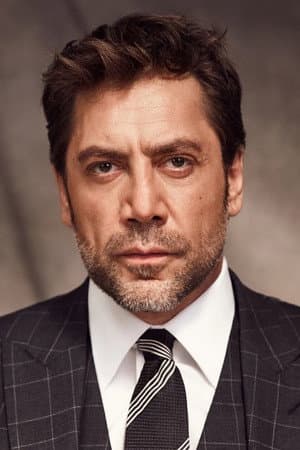
Javier Bardem has revealed that he turned down a role in "Skyfall" before the film went into production, and that the character he originally pitched to director Sam Mendes was far more provocative than what eventually appeared on screen.
The Spanish actor, who has built a career on playing menacing and unpredictable figures, said the idea he brought to Mendes centered on a specific question about the villain's motivation - one that pushed the character's obsession with James Bond into explicitly sexual territory.
"What if he wants to have sex with Mr. Bond?" Bardem recalled asking the director, according to remarks he made while discussing his career.
The line, delivered as Bardem tells it, was not a throwaway provocation but a genuine attempt to find a psychological angle for a Bond antagonist. Bardem has long been known for approaching his roles through behavioral detail rather than surface villainy, and his pitch to Mendes appears to have followed that instinct: locate what the character actually wants, then let that desire drive everything else.
A Role He Ultimately Passed On
Bardem did not end up appearing in "Skyfall." The actor's account makes clear that he declined the part rather than losing it, and that his conversations with Mendes took place while the project was still being shaped.
The specifics of what Bardem was offered have not been laid out in detail, and he has not indicated which character was discussed. What is clear is that the exchange with Mendes formed part of the early creative back-and-forth that precedes most major franchise productions, when directors and actors float ideas that may or may not survive into the finished film.
Bardem's recollection places the discussion at the conceptual stage, when the question of what a Bond villain wants - and how far a filmmaker is willing to go in showing it - is still open.
Why the Pitch Mattered
Bardem's question cuts to a long-standing tension in the Bond series. The franchise's antagonists have often been read as dark mirrors of Bond himself, sharing his appetites, his physical confidence and his taste for danger, but the films have traditionally kept that mirroring at a safe distance. A villain whose fixation on Bond is framed as sexual desire would push the dynamic much closer to the surface.
Bardem's suggestion was also a practical acting question. An antagonist needs a want that shapes every scene, and desire - whether for power, revenge or something more personal - is one of the most reliable engines for that. By proposing sexual obsession as the character's core, Bardem was proposing a throughline that would color every encounter with Bond rather than simply supplying another monologue about world domination.
Mendes, for his part, has spoken in the past about wanting "Skyfall" to feel psychologically grounded, treating Bond as a character with history and damage rather than an untouchable icon. A pitch like Bardem's would have fit that ambition, even if the final film traveled a different route.
An Actor Who Tests the Edges
The anecdote fits Bardem's reputation. He won an Academy Award for his portrayal of Anton Chigurh in "No Country for Old Men," a performance built almost entirely on stillness and implied threat, and he has repeatedly chosen roles that require him to find unsettling interior logic in characters who could easily become caricatures.
Working with Mendes would have paired him with a director known for drawing controlled, theatrical performances out of actors in both prestige dramas and large-scale studio films. The fact that the collaboration did not happen leaves the exchange as a piece of franchise lore rather than a documentable chapter in the series.
For audiences, the appeal of the story lies in the glimpse it offers of how blockbuster villainy gets built: not from a finished script handed to an actor, but from conversations in which actors ask blunt questions and directors decide how far they are willing to follow.
Whether Mendes ever seriously considered the idea, Bardem has not said. What he has offered is a reminder that the most memorable screen villains are usually the product of an argument about motivation - and that sometimes the most useful argument is the one nobody expected to hear.
Source: The Hollywood Reporter