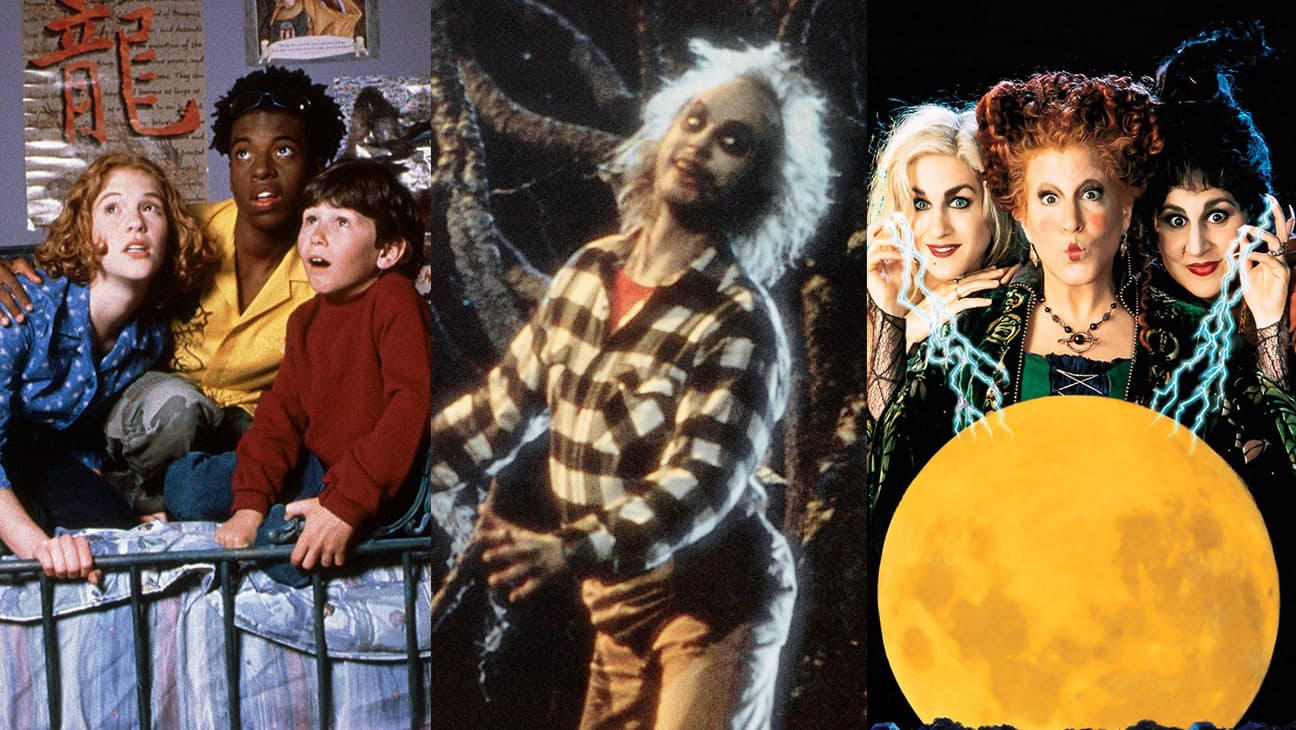
With Halloween approaching, households across the country are once again facing a familiar dilemma: how to introduce younger viewers to the thrill of a good scare without sending them to bed with the lights blazing. A new programming guide, "Family Frights: 40 Kid-Friendly Scary Films for Halloween," aims to help parents thread that needle, assembling a roster of titles designed to deliver goosebumps rather than nightmares. The collection arrives at a moment when the appetite for seasonal viewing keeps expanding, and when families are looking for shared rituals that work for viewers of wildly different ages and nerve thresholds.
The guide's premise is simple, if tricky to execute: fear, in small and well-managed doses, can be fun. The best children's horror doesn't rely on gore or sustained dread. It leans instead on atmosphere, humor, and the safe distance that a fantastical setting provides. A haunted mansion populated by friendly ghosts, a small town with a curious secret, a monster that turns out to be misunderstood - these are the building blocks of a genre that studios have mined for decades, often with more craft than they are given credit for.
Gateways, Not Nightmares
The most durable entries in the kid-friendly scary canon tend to be gateway experiences. They teach young viewers how suspense works, how a score can make a hallway feel longer than it is, and how a well-timed jump can be followed by a laugh of relief. Animated features have long been reliable in this regard, using hand-drawn or computer-generated worlds to soften the edges of genuinely eerie material. Stop-motion, with its slightly uncanny textures, has proven especially well suited to stories about the dead, the undead, and the simply odd.
Live-action family films from the 1980s and 1990s form another pillar of the list. That era produced a wave of movies that treated children as capable of handling real peril, provided the peril came wrapped in adventure and a hopeful ending. Many of those titles have aged into comfort viewing for the parents now doing the selecting, which adds a nostalgic dimension to the family movie night. Rewatching a film you loved at eight, alongside an actual eight-year-old, is its own kind of time travel.
The Anatomy of a Safe Scare
What separates a spooky delight from a traumatic memory? Child development specialists and veteran children's entertainers tend to converge on a few principles. Agency matters: kids handle fear better when the young characters on screen are active, resourceful, and ultimately in control. Tone matters: a story that signals early and often that it is playful gives viewers permission to enjoy the tension. And resolution matters: a satisfying, reassuring ending can retroactively reframe an entire hour of creeping dread.
That last point is where the guide's curation does much of its work. The included films generally avoid permanent loss, graphic violence, and the kind of ambiguous finales that leave adults arguing and children unsettled. Instead, they favor stories in which the monster is defeated, befriended, or revealed to have been lonely all along. The scare is real, but the safety net is visible.
A Season That Keeps Growing
Halloween has quietly become one of the most significant viewing windows on the calendar. Unlike the year-end holidays, which are dominated by a small handful of perennial titles, the Halloween season supports a broad and varied menu - horror for adults, thrillers for teens, and this growing middle shelf for families. Streaming services have noticed, rotating in seasonal collections each autumn that mix evergreen favorites with lesser-known picks. The result is that parents now have more options than ever, and also more decisions to make.
The rise of the family-friendly scare reflects a broader shift in how Halloween is celebrated. Trick-or-treating has been joined by trunk-or-treat events, costume parades, and décor that runs from whimsical to genuinely macabre. The holiday increasingly functions as a gateway itself - a low-stakes introduction to themes of mortality and mischief that cultures have long used stories to explore. A movie about a brave kid outwitting a ghost is, at heart, a rehearsal for facing the unknown.
How to Use a List Like This
A programming guide is only as useful as the household that applies it, and the practical advice is straightforward. Preview when you can; a parent's tolerance is not a child's tolerance, and vice versa. Watch together rather than sending kids off alone, so questions can be answered in real time and a scary moment can be paused. Keep the lights on if that helps, and never treat a frightened reaction as a failure - some viewers need to grow into the genre. Many of the films that become lifelong favorites are the ones that scared us just a little the first time.
For families building their own October traditions, a curated list of forty titles offers room to experiment without committing to a marathon of misfires. Start gentle. Follow the laughs. And remember that the goal is not to eliminate the shivers, but to make them something a family can share - then laugh about on the way to the kitchen for one more piece of candy.
Source: The Hollywood Reporter