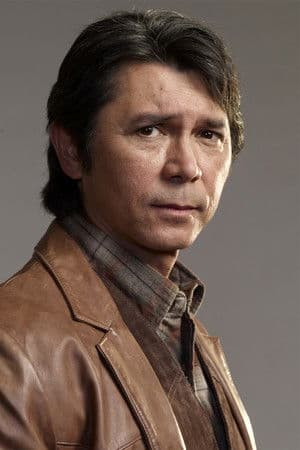
Lou Diamond Phillips will be honored with a lifetime achievement award from the Red Nation International Film Festival, the actor announced Tuesday, adding another distinction to a career that has stretched across more than four decades of film, television and stage work.
The recognition, announced by the festival and confirmed by Phillips in social media posts, celebrates a body of work that has long been intertwined with Native American storytelling on screen. Phillips, who is of Cherokee descent, has been a visible and outspoken presence in Hollywood since his breakout in the late 1980s, and the festival's honor places him alongside previous recipients who have been celebrated for both their artistic output and their advocacy.
"Lou Diamond Phillips has been a beacon of representation in our industry for decades," said a festival spokesperson in a statement announcing the award. "His commitment to telling stories that reflect our communities, both in front of and behind the camera, has paved the way for generations of Native artists."
The Red Nation International Film Festival, now in its third decade, has built its reputation as one of the premier showcases for Indigenous cinema in the United States. Each year, the festival programs a slate of narrative features, documentaries and shorts from Native filmmakers around the world, alongside panels, workshops and tributes to figures whose work has advanced Native representation in entertainment. The lifetime achievement award is typically presented during the festival's closing ceremonies, though details for this year's event have not yet been announced.
For Phillips, the honor arrives at a characteristically busy point in his career. He has remained one of the most prolific actors of his generation, moving fluidly between prestige drama, genre fare and network television. In recent years he has appeared in a string of series and films that have kept him in steady demand, while also maintaining a presence on stage and in the occasional directing role. It is a workload that reflects a career built less on a single defining performance than on sustained, varied output.
That career began in earnest with the 1987 film "La Bamba," in which Phillips played Ritchie Valens, the young rock-and-roll pioneer killed in a plane crash at 17. The performance established him as a leading man, and he followed it quickly with roles that would come to define his early reputation, including a memorable turn in the 1988 western "Young Guns" and his Oscar-nominated supporting role in 1989's "Stand and Deliver," in which he starred as a troubled student opposite Edward James Olmos. The nomination made him, at the time, one of the youngest actors recognized in that category and one of the few performers of Native descent to receive an Academy Award nomination.
What followed was a career defined by range rather than typecasting. Phillips has worked in westerns, thrillers, biopics and long-running television series, and he has been candid in interviews about the frustrations and opportunities of being a Native actor in an industry that has historically offered limited roles. That perspective has made him a frequent voice in conversations about representation, and it is central to why the Red Nation honor carries particular weight.
"Awards like this aren't just about a résumé," Phillips said in a statement. "They're about the community that made the work possible. I've been fortunate to work with so many Native artists, mentors and storytellers, and I share this with all of them."
A Festival With a Mission
The Red Nation International Film Festival was founded with the goal of amplifying Native voices in media and creating a space where Indigenous filmmakers could connect with audiences and industry decision-makers. Over the years, it has grown from a local showcase into an event with international reach, screening work from Native communities across the Americas and beyond. Its awards have become a meaningful marker of recognition within the Indigenous film community, and its tribute ceremonies are often among the most emotional moments of the festival calendar.
The decision to honor Phillips reflects that mission. His career offers a case study in navigating an industry that has only recently begun to widen its doors for Native performers, and his willingness to speak openly about those challenges has made him a mentor figure to younger artists.
What Comes Next
The festival has not yet announced the full schedule for this year's edition, including the date and venue for the tribute ceremony. Phillips, meanwhile, has several projects in various stages of production, though none have been formally announced in connection with the honor.
For now, the award stands as a recognition of a career that has rarely stood still, and of an actor who has spent decades insisting that Native stories belong at the center of American cinema, not at its margins.
Source: The Hollywood Reporter