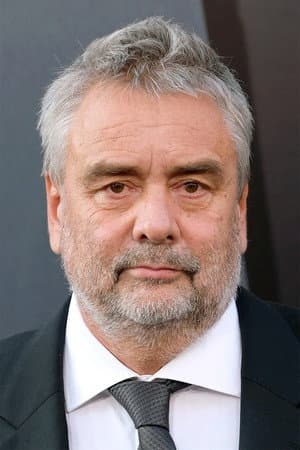
Luc Besson has never been shy about his fondness for big, muscular genre filmmaking, and this week he proved it again by joking that he would happily take a swing at the Terminator franchise - provided the material let the machines feel something. The veteran French director and producer made the remark in a lighthearted vein, framing his imaginary pitch around a surprisingly tender notion: that the killing machine at the center of the saga would have to sit down and confess that he missed his mother. The comment, delivered with the director's trademark deadpan wit, quickly traveled among film fans who relish the idea of a blockbuster hardened by sentiment rather than firepower.
Beneath the joke lies a serious point about what Besson values in storytelling. Across four decades he has built a career on action heroes who are defined as much by longing as by weaponry, from lonely assassins to reluctant guardians of extraordinary children. The notion of a Terminator pausing its mission to acknowledge a maternal ache fits comfortably within that tradition. Where most blockbuster franchises treat emotional beats as downtime between set pieces, Besson's imagined version would place the feeling at the center and let the explosions follow from it. It is the kind of inversion that has long appealed to him: take a figure built to be implacable and ask what happens when it is forced to be vulnerable.
A franchise built on stoicism meets a director drawn to sentiment
The Terminator series has always traded on the tension between machine coldness and human warmth. Its most enduring images involve steel skeletons stripped of feeling, yet its best-loved chapters succeed because the audience cares about the people caught in the machinery's path. Besson's quip playfully identifies that tension as the franchise's richest untapped vein. His version of the character would be less an engine of destruction than a patient in need of a conversation, and the humor in his remark comes from the gap between that image and the icon audiences know.
It also reflects a broader appetite among filmmakers for reimagining legacy properties through an emotional lens. Studios have spent years searching for ways to revive familiar franchises without merely repeating them, and the most discussed attempts are those that find an unexpected angle into well-worn material. Besson, speaking only in jest, gestured at one such angle without committing to anything. He has not suggested he is in talks for such a project, and no studio has indicated any interest in handing him the keys to the saga. The remark should be read as the musing of a filmmaker who enjoys thinking out loud about movies he loves.
A career defined by genre with a heart
Besson first came to international attention in the 1980s with visually striking, mood-driven thrillers that announced a distinctive voice. He consolidated that reputation in the 1990s with a string of stylish action pictures that became touchstones for a generation of moviegoers, and he has since moved between directing and producing, backing projects that range from intimate dramas to large-scale spectacle. His filmography is uneven by design - he has always favored ambition over safety - but certain preoccupations recur: outsiders seeking connection, violence as a language of grief, and stories in which tenderness survives inside harsh worlds.
That sensibility explains why the Terminator joke lands as more than a throwaway line. A director who has repeatedly built entire films around the bond between a hardened figure and a vulnerable one is, in effect, describing his own comfort zone. The humor is self-aware: Besson knows that audiences associate him with precisely the kind of emotional machinery he is proposing to install inside a franchise famous for its lack of it. The wink is part of the appeal.
What the joke says about franchise filmmaking
There is also a gently subversive edge to the remark. Contemporary franchise filmmaking is often criticized for sanding down idiosyncrasy in favor of proven formulas. By proposing a Terminator movie built around a heart-to-heart about family, Besson is teasing the machinery of modern blockbuster development, where creatives are routinely asked to justify familiar spectacles with fresh emotional hooks. His pitch, taken seriously for a moment, is both absurd and commercially legible - exactly the combination that makes his throwaway comments worth repeating.
For now, there is nothing concrete behind the quip: no deal, no script, no announcement. What remains is a memorable line from a filmmaker who has never stopped treating cinema as a place where the biggest machines can be made to cry. Whether any studio takes the hint is another matter, but Besson has at least planted an image that will linger - a Terminator, sitting quietly, admitting he misses his mom.
Source: Variety