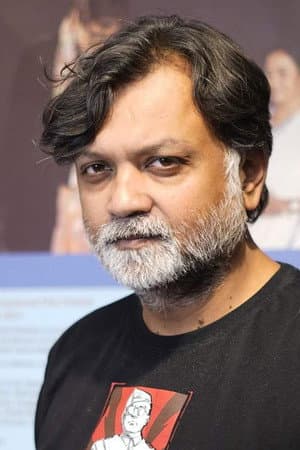
Maharaja Tomare Selam: Srijit Mukherji’s New Film News
Director
Srijit Mukherji
Advertisement
Latest updates on Maharaja Tomare Selam, Srijit Mukherji’s upcoming film. Read about cast, plot, release date, and more.
The legacy of Satyajit Ray’s beloved 1969 musical fantasy Goopy Gyne Bagha Byne is set to receive a fresh cinematic tribute, as filmmaker Srijit Mukherji prepares to chronicle the making of that iconic movie in a new project titled Maharaja Tomare Selam. The announcement, confirmed via standard industry metadata, places Mukherji both behind the camera and in front of it, with the director listed as the sole confirmed cast member for the film. Exactly when the project will arrive in theaters, however, remains undisclosed, as does its runtime and genre classification.
Mukherji, a prominent figure in contemporary Bengali cinema, is best known to audiences for his 2011 crime thriller Baishe Srabon, a film that earned significant critical acclaim for its dark narrative and sharp character studies. That reputation for balancing commercial appeal with artistic ambition suggests Maharaja Tomare Selam will approach its subject with a degree of reverence rather than mere nostalgia. The working title itself - a direct reference to a famous song and theme from Ray’s original - hints that the new film may explore not just the production logistics of the 1960s classic but also the cultural resonance it carried in its time and has maintained since.
Goopy Gyne Bagha Byne, adapted from a short story by Ray’s grandfather Upendrakishore Ray Chowdhury, tells the tale of two bumbling musicians - a singer and a drummer - who are granted three boons by the King of Ghosts, leading to a whimsical adventure involving a kingdom in peril and a fantastical war. The film was a landmark for Ray, who moved away from his usual realistic dramas to create a full-fledged children’s fantasy with songs, elaborate set pieces, and a progressive anti-war message. Its production was famously arduous, plagued by budget constraints, scheduling conflicts, and a large cast that included child actors and complex special effects for its time. For any filmmaker, chronicling that process would require access to archival materials, interviews with surviving crew members, and a deep understanding of Ray’s working methods.
Mukherji has long expressed admiration for Ray, and Maharaja Tomare Selam appears to be a passion project aimed at illuminating a lesser-known chapter of Indian cinema history. While the director’s role in front of the camera is intriguing - perhaps playing a period figure, a narrator, or even a fictionalized version of a crew member - the sparse details available suggest the project is still in its formative stages. No production start date has been provided, and no additional actors or technicians have been publicly attached. This lack of concrete information is not unusual for a film that may be in early pre-production, but it does leave considerable room for speculation about the narrative structure.
Will Maharaja Tomare Selam be a documentary-style reenactment, a mockumentary, or a fictionalized drama set against the backdrop of the original shoot? Given Mukherji’s track record with genre-blending - from psychological thrillers to biographical dramas - any of these approaches is plausible. The title’s use of the phrase “Maharaja Tomare Selam” (“Salute to You, O King”) is a direct lyrical nod to the original film’s most memorable number, suggesting that the film will likely re-stage or reference key moments from Goopy Gyne Bagha Byne. This could prove technically ambitious, as it would involve recreating the visual style of Ray’s cinematographer Soumendu Roy and the film’s distinctive score by Satinath Mukherjee.
For American audiences unfamiliar with Bengali cinema, the significance of Goopy Gyne Bagha Byne extends far beyond its home territory. Ray’s film is widely considered a masterpiece of world cinema, frequently cited by international critics for its ingenuity and charm. It won the National Film Award for Best Feature Film in Bengali and was screened at the 1970 Cannes Film Festival. A modern film about that film’s making could serve as a valuable entry point for cinephiles looking to understand how a low-budget, studio-bound production in Calcutta achieved such lasting global resonance. Mukherji’s project, therefore, carries a dual responsibility: to honor Ray’s legacy while also presenting a compelling story that stands on its own.
The choice of Mukherji as director is logical given his fluency in Bengali culture and his established relationship with the state’s film industry. His previous works have often dealt with complex male protagonists and moral ambiguity, but Maharaja Tomare Selam will likely require a lighter touch, blending humor with behind-the-scenes drama. The casting of Mukherji himself is unconventional, and it remains to be seen if he will pull double duty as actor and director, a demanding task that has historically yielded mixed results. Some directors thrive in that dual role, while others find it detrimental to their focus on set.
As of now, there is no distribution deal, streaming agreement, or festival premiere attached to the project. The TMDb listing shows a rating of n/a, which is expected for an unreleased film with no public screenings. The absence of a release date suggests that audiences may be waiting well into 2027 or later to see the finished product. For now, the announcement serves as a tantalizing hint of what could be a significant contribution to the growing catalog of films about filmmaking. If Mukherji can capture the chaotic, joyful, and exhausting atmosphere of Ray’s shoot - while also paying tribute to the enduring power of the original - Maharaja Tomare Selam may well become as beloved as the work it celebrates.
Source: Variety
Advertisement
Advertisement