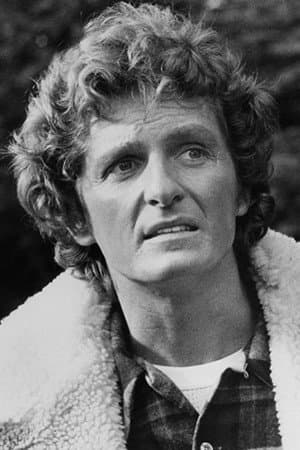
Marjoe Gortner, who spent his childhood as a headline-grabbing Pentecostal revivalist before reinventing himself as a screen actor in films such as "Earthquake" and the long-running television drama "Falcon Crest," has died at the age of 82. News of his death was confirmed on Sunday, though no cause or location was immediately disclosed.
Gortner's life traced one of the more unusual arcs in American entertainment - a man who began his public career preaching salvation to packed tents and ended it performing fictional versions of the same kind of spectacle in Hollywood.
A Childhood Spent in the Pulpit
Born in Long Beach, California, in January 1944, Gortner was thrust into the ministry almost from infancy. His parents, both ordained ministers in the Pentecostal tradition, put him on stage as a small boy, and by the time he was a preschooler he was delivering sermons, laying hands on the sick and working crowds into states of ecstatic fervor.
He was billed as a child evangelist, and the pitch worked. Gortner crisscrossed the country with his parents, drawing large audiences to tent revivals where the sight of a boy in a suit thundering about sin and redemption proved irresistible to reporters and worshippers alike. He later recounted that he was preaching some twenty sermons a week at the peak of that period, often collapsing from exhaustion afterward.
Over time, however, he came to see the operation as a performance rather than a calling. By his teenage years he had grown disillusioned, convinced that the emotional machinery of the revivals was engineered to loosen the wallets of the faithful. He walked away from preaching as a young man and, in one of the era's more striking acts of self-exposure, allowed a documentary crew to film him returning to the revival circuit one last time in order to reveal how the business worked from the inside.
That 1972 documentary, "Marjoe," won the Academy Award for best documentary feature and introduced Gortner to a new audience - not as a preacher, but as a candid, unsentimental observer of his own past. His willingness to turn the camera on a world he had been raised inside made him a durable cultural curiosity.
From the Pulpit to the Soundstage
Hollywood came calling soon after. Gortner's on-screen presence carried an echo of the pulpit - he had a performer's instinct for timing and a voice that could fill a room - and he began landing roles in the 1970s.
He appeared opposite Burt Reynolds in "The Longest Yard," playing a prison guard in the 1974 football drama. A string of parts followed across the decade, including the science-fiction thriller "Food of the Gods" and the disaster picture "Earthquake," the 1974 Universal production that used elaborate practical effects to dramatize a catastrophic temblor in Los Angeles. Gortner appeared among the film's large ensemble, sharing the screen with a roster of established stars.
In 1979 he headlined "When You Comin' Back, Red Ryder?," a tense character study adapted from a stage play. Quirky genre projects also beckoned, among them "Starcrash," a science-fiction adventure that became a staple of late-night television and midnight screenings.
A Long Run on "Falcon Crest"
Gortner's steadiest mainstream success arrived on television. In the 1980s he joined the cast of "Falcon Crest," the CBS primetime serial set in Northern California wine country that became one of the defining soap operas of its era. He played a recurring role as a figure entangled in the show's ceaseless battles over land, money and family loyalty, and his tenure kept him in living rooms week after week.
The part suited him. Gortner was by then a physical, forceful screen presence, and the overheated intrigues of a nighttime drama gave him room to work in a register familiar to anyone who had watched him hold a tent full of believers in his grip decades earlier.
He also worked steadily in genre television and independent film, and in later years kept a lower profile, surfacing occasionally at retrospectives and in interviews about his revivalist upbringing. He returned to the themes of his early life repeatedly, describing the ministry as a business and himself as, in effect, a trained professional entertainer long before he ever read a screenplay.
A Complicated Legacy
Gortner leaves behind a body of work that resists easy summary. He was, in the space of a single lifetime, a child prodigy of the pulpit, an informant against the institution that made him, and a working actor whose credits ranged from blockbuster disaster movies to cult science fiction to one of the most-watched dramas on television.
That he understood performance as a tool of persuasion - whether the audience was seeking salvation or merely a night's entertainment - was something he never pretended otherwise. "I was a good preacher," he once said of his early years, a line that doubled as a show-business credential.
Survivors and funeral arrangements were not immediately announced.
Source: The Hollywood Reporter