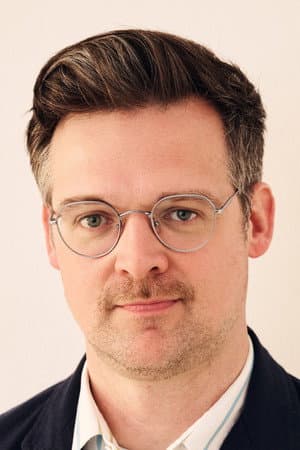
Matthew Rankin has spent his career turning the strange corners of Canadian identity into cinema, and his latest creative impulse appears to have taken that project somewhere considerably more surreal. The Winnipeg-born filmmaker has described experiencing what he characterizes as a fever dream about Canadian history, an idea he has discussed publicly as a creative provocation rather than as a conventional finished work. No film has been matched to the concept in verified records, leaving the project in the realm of an artistic notion rather than an announced production. That ambiguity has done little to dampen interest among admirers of Rankin's singular body of work.
A Filmmaker Drawn to the Weird Edges of the National Story
Rankin is not the sort of director who approaches Canada's past with reverence. His most widely seen feature, "The Twentieth Century," reimagined the early political career of William Lyon Mackenzie King as a fantastical, deliberately artificial spectacle, complete with dream logic, miniature sets and a tone pitched somewhere between satire and nightmare. The film drew international attention on the festival circuit and cemented Rankin's reputation as one of the country's most idiosyncratic auteurs.
That sensibility makes the fever-dream framing feel less like a stray remark and more like a natural extension of his interests. Canadian history, in Rankin's hands, tends to arrive distorted: bureaucratic, absurd, melancholy and oddly beautiful all at once. He has consistently treated the nation's founding myths not as sacred texts but as raw material for exaggeration and reinvention.
His later work, "Universal Language," pushed further into a kind of parallel-world Canada, blending Persian and French, restaging Winnipeg landmarks and building a country that exists nowhere and everywhere. Critics responded warmly to its deadpan humanism, and it reinforced the sense that Rankin is less interested in documenting Canada than in dreaming it.
What a Fever Dream Offers That a Documentary Cannot
The appeal of the fever-dream conceit is that it liberates the material from the burden of accuracy. A conventional historical film must answer to timelines, figures and archives. A dream answers to none of them. Images can collide without explanation; symbols can carry the weight that exposition normally would.
For a filmmaker whose visual grammar already leans on stylization, that freedom is potent. Rankin has spoken in interviews about his attraction to artifice, to visible seams, to sets that announce themselves as sets. A history rendered through the logic of illness and sleep would permit him to intensify those instincts rather than restrain them.
There is also something thematically apt about the approach. Canadian history is often taught as a story of compromise, restraint and incremental accommodation. A fever dream is the opposite of all three: unruly, embarrassing, revealing. Filtering the national narrative through that lens suggests an interest in what official accounts suppress.
Why the Industry Is Watching
Rankin occupies an unusual position. He is art-house in temperament but has found audiences beyond the festival circuit, and his name carries weight with programmers and critics who track Canadian cinema closely. Any new concept from him tends to circulate quickly, even before scripts or financing are in place.
That is particularly true at a moment when Canadian filmmakers are grappling with how to tell national stories without lapsing into heritage-pageant blandness. Rankin's willingness to treat history as dream material rather than monument material marks him as a useful counterweight, and younger directors have cited his example when describing their own interest in formal experimentation.
The absence of a confirmed film attached to the concept should be read cautiously. It may indicate an idea in development, a sequence within a larger project, or simply an image the director is working through in public. Rankin has never been especially forthcoming about his plans, and he tends to let finished work speak rather than preview it.
A Career Built on Productive Ambiguity
What the fever-dream remark underscores is a career-long commitment to ambiguity as a creative strategy. Rankin does not resolve contradictions in his films; he stacks them. English and French, realism and artifice, reverence and mockery, home and elsewhere all coexist in his work without being reconciled.
That makes any attempt to pin down his next move somewhat futile. It also makes the prospect of a history-as-fever-dream project intriguing, whatever form it eventually takes. If Rankin does turn the idea into a film, audiences can expect something that treats the past less as a record to be preserved than as a hallucination worth surrendering to. For now, the notion itself is enough to keep the conversation going, which is often exactly how Rankin prefers it.
Source: The Hollywood Reporter