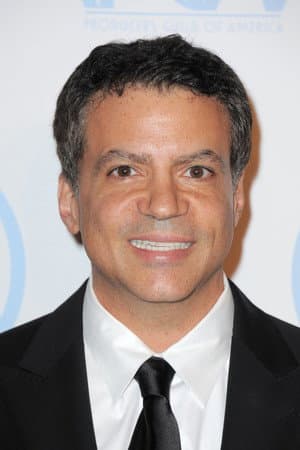
Michael De Luca and Pamela Abdy are out at Warner Bros. Pictures, ending a co-leadership arrangement that put two of Hollywood's most respected film executives atop the studio's flagship motion picture operation. The departure, confirmed by the studio on Friday, brings an abrupt close to a tenure defined by a demanding mandate: restore Warner Bros.' standing as the industry's premier home for filmmaker-driven theatrical movies during one of the most turbulent periods in the business's modern history.
Their exit comes as Warner Bros. Discovery continues to reshape its corporate structure under chief executive David Zaslav, who has spent years recalibrating the company's film, television and streaming assets. Insiders describe the move as part of a broader strategic review rather than a referendum on the pair's creative instincts, though the timing - arriving with no immediate successor named - leaves the studio's film division in a state of uncertainty heading into the next development cycle.
De Luca and Abdy were appointed to run Warner Bros. Pictures in 2022, a pairing unusual for a major studio. De Luca arrived with a producer's pedigree and prior executive stints at New Line and MGM; Abdy came from a long run at MGM, where she helped guide the rejuvenated studio and oversaw the James Bond franchise's final Daniel Craig chapter. The idea, according to people familiar with the appointment, was to combine De Luca's taste for bold, auteur-driven swings with Abdy's production discipline and relationships across the creative community.
For a time, the arrangement appeared to deliver. Warner Bros. mounted a string of critical and commercial successes that kept the studio competitive in a marketplace increasingly tilted toward franchise IP and streaming volume. The pair cultivated a reputation for courting directors who might otherwise have taken their projects elsewhere, and they publicly championed the theatrical experience at a moment when many of their peers were questioning its durability.
But the job also carried structural tensions that no creative executive could entirely resolve. Warner Bros. Discovery's debt obligations pushed leadership toward cost discipline even as filmmakers expected lavish support. The studio's decision to shelve completed films for tax purposes - including the controversial scrapping of "Coyote vs. Acme" - became a flashpoint that frustrated talent and rankled the creative community, complicating the executives' relationships with the very filmmakers they were hired to attract.
There was also the perennial friction between film and streaming strategy. Warner Bros. Discovery's leadership has repeatedly signaled that HBO Max and its successor platform are central to the company's future, which inevitably raises questions about the theatrical window and how aggressively the studio should invest in mid-budget original films. De Luca and Abdy's mandate leaned theatrical; the corporate calculus has often leaned elsewhere.
News of their departure lands during an anxious stretch for the film industry. Studios are navigating a post-strike production slowdown, streaming economics that have yet to stabilize, and an awards-season landscape that increasingly rewards specialty labels rather than the majors. Finding executives willing to absorb that pressure - and willing to do so under a corporate parent with a well-documented appetite for restructuring - narrows the candidate pool considerably.
Attention now turns to who inherits the job. Warner Bros. Discovery could look internally to executives already familiar with the company's television and franchise operations, or it could recruit a producer or filmmaker-adjacent figure in the mold of the departing duo. Some observers speculate the studio may consolidate film oversight under a single executive rather than repeat the co-chairman model, which requires a rare degree of trust and temperamental alignment to function.
For De Luca and Abdy, the exit is unlikely to end their careers in the business. Both remain well-regarded in creative circles, and producers of their stature have historically cycled between studio roles and independent ventures. De Luca in particular has long been known for championing risky material, and his next move will be watched closely by filmmakers who value executives willing to take those risks.
For Warner Bros., the stakes are immediate. The studio has a slate in motion, projects in development and a creative community that will be reading the tea leaves of this transition. The next leadership announcement will signal, in unmistakable terms, what kind of studio Warner Bros. intends to be - one that bets on filmmakers and the theatrical experience, or one that subordinates film to the demands of a conglomerate's balance sheet.
That question has shadowed the studio since the merger that created Warner Bros. Discovery. The departure of De Luca and Abdy does not answer it. It simply resets the clock.
Source: The Hollywood Reporter