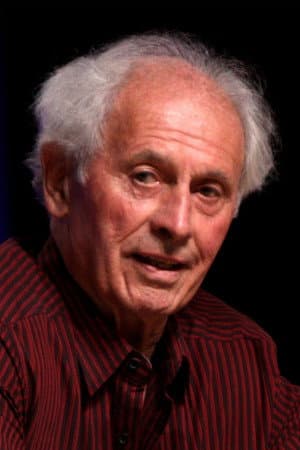
Veteran character actor Michael Forest, whose rugged features and resonant voice made him a durable presence across six decades of film and television, died Saturday at his home in Los Angeles. He was 97.
Forest passed away of natural causes, according to a family statement. The actor had remained active in the industry well into his eighties, long after the B-movie era that launched his career had faded into Hollywood lore.
Born Gerald Michael Charlebois on April 17, 1929, in Harvey, North Dakota, Forest grew up in a working-class household before heading west in his early twenties. He broke into the business in the mid-1950s, a time when independent studios churned out genre pictures on shoestring budgets and needed actors who could deliver on camera without fuss. Forest fit that bill.
A Fixture in Roger Corman's Repertory
It was his association with producer-director Roger Corman that gave Forest some of his earliest and most memorable screen roles. Corman, the self-styled king of the B-movies, cast Forest in a string of low-budget pictures throughout the late 1950s and early 1960s, projects that were shot fast and released faster.
Forest's work for Corman placed him in the same informal company of young performers who would go on to far greater fame - names like Jack Nicholson and Dennis Hopper, both of whom passed through the Corman factory in the same years. Forest never chased that kind of stardom. Instead, he built a career as a reliable supporting player, the kind of actor directors called when they needed a convincing authority figure or a menacing heavy.
Among the Corman productions that featured Forest was The Saga of the Viking Women and Their Voyage to the Waters of the Great Sea Serpent, a 1957 adventure that typified the era's appetite for exotic spectacle on a dime. Forest appeared in that film alongside a cast of Corman regulars, playing one of the Viking warriors. He also lent his talents to The Cry Baby Killer, the 1958 crime drama that marked Nicholson's screen debut.
From Corman Sets to the Final Frontier
Forest's most widely seen television credit came in 1968, when he guest-starred on Star Trek during the original series' third season. He played Apollo, a powerful, god-like being who claims to be the Greek deity of old and demands the Enterprise crew worship him. The episode, titled "Who Mourns for Adonais?", became a fan favorite and gave Forest one of his most indelible moments on screen.
The role required Forest to project both grandeur and vulnerability, and his performance - part despot, part abandoned child - has endured among Star Trek devotees for over half a century. It remains the part for which he is most often recognized.
"A lot of people think that's the only thing I ever did," Forest once told an interviewer, reflecting on the longevity of the Star Trek episode. He took the attention in stride, treating it as one more job in a long and varied career.
A Long Run in Film and Television
Beyond Corman and Star Trek, Forest's résumé stretched across dozens of television appearances and feature films. He worked in Westerns, science fiction, adventure serials, and crime dramas, often in guest roles that required him to make an impression quickly.
In the 1960s, he played a recurring role on the daytime serial The Edge of Night, and he appeared in episodes of such series as Maverick, The Rifleman, Death Valley Days, and The Outer Limits. His film work included the 1961 adventure Atlas, in which he starred as the titular Greek strongman, and the 1963 Western The Raiders.
Later in his career, Forest moved into voice acting, finding steady work in animated television and films. He voiced characters in projects ranging from The Lion King franchise to Avatar: The Last Airbender, a second act that introduced him to a new generation of viewers who had no idea their favorite cartoon villain had once traded barbs with Captain Kirk.
Tributes and Survivors
News of Forest's death prompted an outpouring from fans and colleagues. On social media, admirers recalled his Star Trek performance as one of the show's most memorable guest turns, while film historians noted his place in the Corman stable that helped shape American independent cinema.
Forest is survived by his wife, former actress and producer Susanne Charlebois, whom he married in 1978, and by his children and grandchildren. Funeral arrangements were not immediately announced.
For an actor who never sought the spotlight, Michael Forest leaves behind a body of work that spanned the scrappy B-pictures of the 1950s, the golden age of episodic television, and the modern animation boom. He was, in the truest sense, a working actor - and he worked for more than half a century.
Source: The Hollywood Reporter