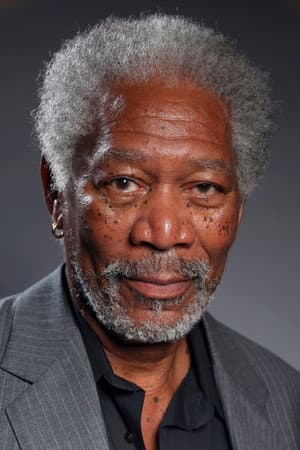
Morgan Freeman: Pay Can Justify Mediocre Scripts
Legendary actor Morgan Freeman admits a big paycheck can make him overlook a weak script, revealing his pragmatic take on Hollywood roles.
Advertisement
Legendary actor Morgan Freeman admits a big paycheck can make him overlook a weak script, revealing his pragmatic take on Hollywood roles.
Morgan Freeman, the Oscar-winning actor behind iconic roles in films like Se7en, has offered a candid take on how performers sometimes weigh the quality of a screenplay against the size of a paycheck. In a recent interview, the 89-year-old actor acknowledged that a less-than-stellar script can become far more tolerable when the compensation makes it worth his while.
Freeman’s remarks center on a pragmatic reality of the acting profession: not every project arrives with a masterpiece attached. When asked about how he chooses roles, he didn’t mince words about the calculus involved. “You can overlook a mediocre script if they’re going to pay you enough money,” he said, framing the decision as a straightforward trade-off between artistic merit and financial reward. The statement cuts through the usual Hollywood rhetoric about passion projects and creative integrity, offering a blunt admission that for many working actors - even those at the top of their field - the bottom line often plays a decisive role.
The comment carries added weight coming from Freeman, whose career spans decades and includes collaborations with some of cinema’s most celebrated directors. From his breakout in Driving Miss Daisy to his chilling performance as Detective Somerset in David Fincher’s Se7en, Freeman has built a reputation for elevating material through sheer presence. His willingness to admit that a generous offer can soften his standards suggests a level of comfort with his own legacy - one that no longer requires him to pretend every project is a labor of love.
The Economics of A-List Acting
Freeman’s perspective reflects a broader industry truth that’s often discussed behind closed doors but rarely stated so plainly. For actors with established names, the decision-making process frequently involves a complex mix of factors: the director attached, the shooting schedule, the potential for awards buzz, and - critically - the offer on the table. A weak script might be forgiven if the production promises a quick shoot, a glamorous location, or a fee that secures the actor’s financial future for years.
That approach isn’t unique to Freeman, of course. Many performers have publicly admitted to taking roles for reasons other than the screenplay’s brilliance. The key difference here is that Freeman framed the trade-off as entirely reasonable, even routine, rather than something to be ashamed of. He didn’t describe a scenario where he was hoodwinked into a bad movie; he described a voluntary exchange where the compensation effectively neutralizes the creative shortfall.
The actor’s comments also arrive at a moment when the entertainment industry is grappling with how to value talent amid streaming-era budgets and shrinking theatrical windows. With studios more cautious about green-lighting risky projects, actors sometimes find themselves choosing between fewer, higher-quality roles or a steady stream of commercial work that pays handsomely. Freeman’s blunt assessment suggests he sees no conflict in taking the latter when the numbers align.
A Career Built on Versatility
Freeman’s filmography offers plenty of examples that fit his own description. Alongside towering dramas and prestige pictures, he has appeared in big-budget tentpoles and mid-tier thrillers that critics might have dismissed as formulaic. His performances in those films rarely suffered - a testament to his ability to find nuance even in thin material. That skill may explain why he feels comfortable acknowledging the role money plays in his selections: he’s rarely the reason a movie fails, and he often provides a reason to watch it succeed.
The Se7en connection is notable in this context. That film, directed by David Fincher, was a dark, thematically rich thriller that allowed Freeman considerable room to work. It stands as a reminder that when he does get a strong script, he can deliver career-defining work. But the fact that he’s now openly discussing the economic realities of the job doesn’t diminish that legacy - it humanizes it.
Freeman stopped short of naming specific projects he might consider mediocre, and he didn’t offer a threshold for what “enough money” might mean. That vagueness keeps the comment safely anecdotal, but it doesn’t blunt its impact. For younger actors entering the industry, his words might serve as a corrective to the idealized notion that every role must be a work of art. The craft, as he’s practiced it, involves making the most of what’s in front of you - whether that’s a screenplay full of subtext or one that requires a bit of imagination to elevate.
In an industry where actors often speak in careful platitudes about loving every character they play, Freeman’s candor stands out. It’s a reminder that, for all the glamour, acting remains a job - and like any job, there are days you show up for the paycheck rather than the passion. That sentiment, delivered by a man who has little left to prove, feels less like a confession and more like a simple statement of fact. Whether fans agree or wince, his honesty is refreshing in a business that too often hides behind euphemism.
Source: Variety
Advertisement
Advertisement