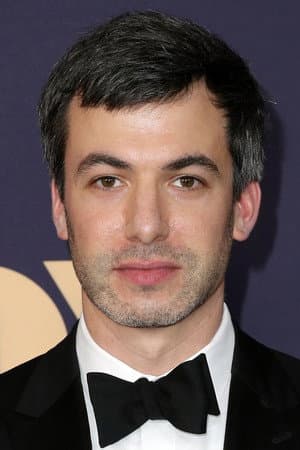
The New York Film Festival is not typically a place where audiences gasp, hoot, and argue out loud. That changed this week, when Nathan Fielder brought his Elizabeth Holmes documentary to Lincoln Center and turned a stately premiere into something closer to a group therapy session with a laugh track.
The film, whose existence had been rumored for months, was unveiled as a surprise addition to the NYFF slate. Fielder introduced it in characteristically deadpan fashion, saying almost nothing of substance before the lights went down. What followed was a portrait of the disgraced Theranos founder that kept the Alice Tully Hall crowd shifting between disbelief, amusement, and genuine unease.
A Subject Who Refuses to Explain Herself
Fielder's approach is not the standard takedown. The documentary does not rehash the well-worn timeline of Holmes's rise and fall in a conventional way, and it does not lean on the greatest hits of the trial coverage that dominated headlines for years. Instead, it sits with Holmes in a way that is frequently uncomfortable and occasionally hilarious, letting silences stretch and giving its subject room to contradict herself.
That structure produced some of the evening's most memorable moments. Audience members audibly reacted when Holmes, in one extended sequence, described her own motivations in language that seemed designed to be unfalsifiable. The room laughed, then went quiet, as if everyone remembered at the same time that real patients had been harmed.
What makes the documentary distinctive is the way Fielder uses his own presence. He is not a neutral interviewer, and the film does not pretend otherwise. His questions are often flat, almost baiting, and Holmes's responses suggest she believes she is steering the conversation even when she plainly is not. The result is a cat-and-mouse dynamic that plays differently than the more solemn documentaries and scripted adaptations that have already covered the same ground.
An Audience That Would Not Stay Silent
The screening itself became part of the story. NYFF crowds are famously attentive, but this one broke form repeatedly. There were laughs at moments that may not have been intended as jokes, and there were murmurs of disapproval at others. At least one exchange drew a sharp, involuntary reaction from a large section of the hall.
The most striking disruption came during a quieter stretch, when a viewer shouted a question at the screen, as though Holmes could hear it. The room erupted. Fielder, seated near the back, reportedly offered no correction.
That kind of chaos might read as disrespect in another context. Here it felt consistent with the film's apparent thesis: that the Holmes saga has become a kind of cultural Rorschach test, and that audiences bring as much to it as the subject does. The documentary seems aware that viewers already have opinions, and it deliberately refuses to resolve them.
Fielder's Unlikely Career Turn
Fielder has spent years building a reputation for comedy that unsettles as much as it amuses, from his early prank-driven television work to the more elaborate, emotionally raw series that followed. Moving into documentary territory about a figure as loaded as Holmes is a genuine swerve, but not an inexplicable one. His signature is putting real people in situations where the social contract starts to fray, and Holmes, who spent years insisting on a reality of her own making, is arguably the ultimate subject for that instinct.
The film does not appear to be a straightforward journalism project. It offers no new whistleblower testimonies and no previously unseen financial records. Its value, if the NYFF reaction is any guide, lies in the interview itself, and in the strange, charged atmosphere Fielder creates around it. Whether that constitutes a serious contribution to the historical record or an elaborate provocation is a question the festival crowd could not settle, and did not try to.
What Happens Next
The documentary now heads into a crowded field. Multiple scripted and unscripted projects about Holmes have already been released or are in the works, and audiences may feel they have heard the story enough times. The difference here is tone. Where other treatments have aimed for outrage or tragedy, this one seems content to let the absurdity sit there, uncommented upon.
Distributors and streamers are said to be circling, though no release plans have been confirmed. What is clear is that the film lands differently in a room full of people than it likely will on a couch. The NYFF screening was not a passive viewing experience, and that may be the point. Fielder has built a movie that seems to want an audience to talk back, and for one night in New York, it got exactly that.
Source: The Hollywood Reporter