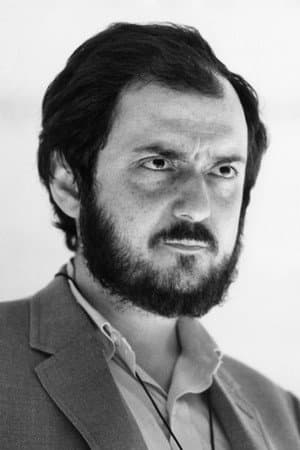
A new box set devoted to Stanley Kubrick is on the way, giving collectors a fresh way to revisit the work of a filmmaker whose perfectionism and genre-hopping remain a benchmark in cinema. The announcement centers on a single well-established fact: Kubrick, one of the most studied and imitated directors of the postwar era, is the subject of a newly packaged collection. Details of the set's contents have not been verified, so the appeal rests on the enduring pull of Kubrick's name and the small, obsessive body of work attached to it.
Kubrick's reputation rests on a filmography that is short by the standards of most long careers but unusually varied. He moved from the hard-boiled crime of "Killer's Kiss" and "The Killing" into the antiwar statement of "Paths of Glory," then into the historical spectacle of "Spartacus," a film he took over from Anthony Mann and later described with characteristic ambivalence. From there came "Lolita," "Dr. Strangelove," "2001: A Space Odyssey," "A Clockwork Orange," "Barry Lyndon," "The Shining," "Full Metal Jacket" and finally "Eyes Wide Shut." Few directors have shifted registers so completely between projects, and fewer still have left such a distinct imprint on each one.
A Career Built on Control
What unites the films is not subject matter but method. Kubrick was famous for research so extensive it verged on the academic, for repeated takes, for a refusal to explain his intentions, and for a working style that kept collaborators at a distance. He relocated to England in the early 1960s and largely stayed there, building a production base outside London that allowed him to work at his own pace, away from the studio system's daily pressures. That independence came at a cost: his films grew slower to arrive, and the gaps between them widened.
The results, though, were rarely less than striking. "2001" redefined what science fiction could look like on screen, while "A Clock Orange" provoked a moral panic in Britain that led Kubrick himself to withdraw the film from circulation there. "The Shining" turned a Stephen King novel into something colder and stranger than its source, a transformation King publicly disliked and audiences never stopped arguing about. "Barry Lyndon" pushed period photography toward painterly stillness, lit largely by candlelight. Each film seemed designed to frustrate the expectations set by the one before it.
The Set as an Object of Study
Box sets have become a familiar format for studios looking to re-present catalog titles, and Kubrick's work is an obvious candidate. His films reward repeated viewing, and the archive around them - production records, correspondence, unused material - has long been of interest to scholars and enthusiasts alike. A collection framed around him also fits a wider pattern in home entertainment: packaging an auteur's name as a brand in its own right, separate from any single title.
There is a certain irony in the framing. Kubrick was the ultimate outside-the-box director, a filmmaker who resisted easy categorization and seemed to treat convention as a problem to be solved rather than a template to follow. Putting his work in a box, however elegantly designed, is a mild contradiction - though one his admirers are likely to welcome. The set offers a chance to trace the through-lines: the fascination with systems and their failure, the cold wit, the attention to faces in extreme close-up, the recurring interest in characters who believe they are in control of situations that are quietly escaping them.
What Remains Open
For now, the announcement leaves the practical questions unanswered. Which titles will be included, how they will be presented, and whether new restoration work or supplementary material accompanies them have not been confirmed. Buyers considering the set would be wise to wait for the full specification before committing.
What is not in doubt is the continued appetite for Kubrick as a subject. Books, documentaries and retrospectives keep returning to him, in part because his films resist resolution. They end on notes of ambiguity - the star child, the frozen stare, the corridor of blood, the mask on the floor - that invite another look. A new collection is, in that sense, less a conclusion than an invitation to start again. Whether it becomes a definitive edition or simply one more shelf-worthy object, the films themselves will do the arguing, as they have for decades.
USA Film News will follow the set's details as they are confirmed.
Source: The Hollywood Reporter