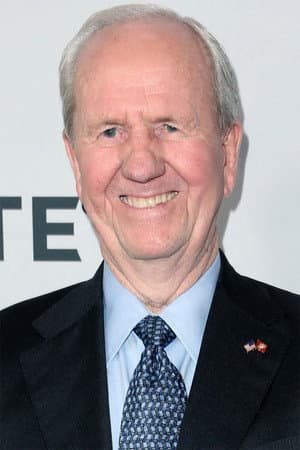
Gerald R. Molen, the veteran producer who shared a best picture Oscar for "Schindler's List" and spent decades as one of Hollywood's most trusted behind-the-scenes collaborators, has died at 91. News of his passing circulated widely on Friday, prompting tributes from peers and admirers who credited him with helping bring some of the most enduring films of the late twentieth century to the screen.
Molen's career was defined less by household-name fame than by the remarkable company he kept. He worked repeatedly alongside Steven Spielberg and served as a founding production partner of Amblin Entertainment, the company that became a defining force in popular cinema from the 1980s onward. His name appears in the credits of "E.T. the Extra-Terrestrial," where he served as production manager, and he later produced or executive produced a string of high-profile releases, among them "Hook," "Jurassic Park," "The Lost World: Jurassic Park," "Twister," "Minority Report," and "The Terminal."
An Oscar for a Film That Endured
The professional high point, by most accounts, was "Schindler's List," Spielberg's 1993 drama about a German industrialist who saved more than a thousand Jewish lives during the Holocaust. Molen produced the film with Spielberg and Branko Lustig, and the trio accepted the Academy Award for best picture. The movie won seven Oscars in all, including best director for Spielberg. Its place in film history has only deepened over the decades, and Molen often spoke of the production as a responsibility rather than simply a job.
The earlier blockbuster "Jurassic Park," released the same year, demonstrated the commercial range of the Spielberg-Molen partnership. For a period in the early 1990s, Molen's name sat atop the credits of the year's most acclaimed drama and its most successful spectacle almost simultaneously, an unusual pairing that spoke to the breadth of his instincts as a producer.
A Career That Began in the Background
Molen's path to producing ran through the less glamorous corners of production. The son of a Dutch-born father, he grew up in Southern California and came of age around the movie business, eventually working his way up through the ranks as an assistant director and unit production manager. Those roles put him in daily contact with logistics, scheduling, budgets, and the countless small decisions that keep a film on track, and he carried that grounding into his producing work.
His credits beyond the Spielberg orbit included "Days of Thunder," "The Bucket List," and "Rain Man," on which he served as a production manager. He was also the producer behind "The Other Side of Heaven" and later helped bring smaller, faith-oriented projects to audiences. His son, Steve Molen, who is also active in the industry, survives him, along with other family members; further details on survivors and memorial arrangements were not immediately available.
Colleagues remembered Molen as a steady presence on set, a producer who favored preparation over drama and who believed firmly that the job was to serve the director's vision and protect the crew. That reputation made him a natural fit for Spielberg, whose productions often involve enormous technical demands and tight schedules. The partnership stretched across more than two decades and roughly a dozen films.
A Quiet Legacy
While Molen rarely sought the spotlight, his imprint on the movies of his era is difficult to overstate. "Schindler's List" remains a standard reference point in discussions of film's capacity to reckon with history, and "Jurassic Park" reshaped the modern blockbuster. Between them, they represent two poles of what a producer can help accomplish. For all the awards and box-office success attached to his name, those who worked with him tended to describe his contribution in simpler terms: he made ambitious films possible by keeping everything around them working.
His death closes a long chapter in the Amblin story, and tributes from across the industry are expected to continue in the days ahead as colleagues and collaborators reflect on a career that spanned the studio-system remnants of his early years and the franchise-driven era he helped usher in.
Source: Variety