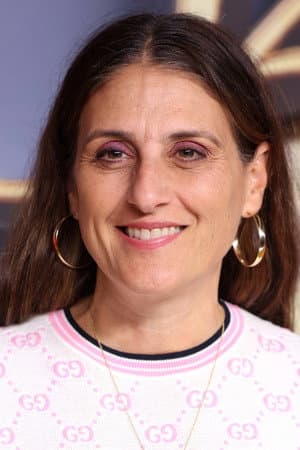
Pamela Abdy did not come to the WIF Honors stage to deliver a polished thank-you. The film executive used her moment in the spotlight to vent what she described as "pure, unadulterated rage," and to ask a question that hung over the room long after she left the podium: "What business are we leaving?"
The speech, delivered at the Women in Film honors ceremony, marked a sharp departure from the customary tone of such events. Rather than tracing a career arc or saluting mentors, Abdy trained her remarks on the state of the industry itself - and on what she sees as a failure to confront the conditions under which the next generation will have to work. Her anger, as she framed it, was not personal grievance but a response to systemic problems she believes have gone unaddressed for too long.
Abdy's rhetoric landed with particular force because of where she stands in the business. As one of the highest-ranking executives in Hollywood, she is not an outside critic lobbing complaints from the sidelines; she is someone with a seat at the table and a view of how decisions get made. That vantage point gave her question its weight. The "we" in "What business are we leaving?" was not abstract. It was aimed at the people in the room - producers, executives, agents, filmmakers - who shape which projects get made, who gets hired, and what kinds of careers are possible.
The phrase itself carries a double meaning. On one level, it asks what kind of industry will endure once its current leaders step away: whether it will be more equitable, more sustainable, or simply more of the same. On another, it asks what the business is actually doing - what it is putting into the world, what it is choosing to value, and what it is willing to sacrifice. Abdy's decision to pose the question rather than answer it suggested she believes the honest response is not yet clear, and that the people with the power to change course have not been held to account.
A Speech That Broke the Mold
Awards-season speeches at women's industry events tend to strike a note of celebration tempered by calls for continued progress. Abdy's remarks cut against that template. By naming her anger directly, she signaled that gratitude and optimism were not the only appropriate responses to the moment - and that frustration, openly expressed, might be more useful than platitudes.
That choice is notable in an industry where senior executives are often careful to project composure. Abdy's willingness to speak in blunt emotional terms reflects a broader shift in how Hollywood figures talk about their own business, particularly at events centered on gender equity. The honorees at such ceremonies are typically asked to reflect on how far the industry has come; Abdy instead directed attention to how far it still has to go, and to who bears responsibility for closing the gap.
The reaction in the room, according to accounts of the evening, was one of surprise and recognition. Her words resonated because they named a tension many in attendance likely feel but rarely voice from a stage: that individual success within the system does not necessarily translate into changing it, and that reaching the top can just as easily produce accommodation as it does confrontation.
Why the Question Matters
Abdy's challenge arrives at a moment when Hollywood is navigating structural upheaval - consolidation, shifting distribution models, and persistent questions about who gets to greenlight and sustain the stories that reach audiences. In that environment, the question of legacy is not merely rhetorical. The decisions made now about hiring, development, and which voices are supported will determine the shape of the industry for years to come.
For women in particular, the stakes are pointed. The WIF Honors exist precisely because the industry's power structure has historically excluded women from its upper ranks, and while progress has been made, the pace has been uneven. Abdy's speech implicitly asked whether the gains of recent years are durable or reversible - and whether the people who benefited from those gains have an obligation to protect them for others.
By framing her remarks around rage rather than hope, Abdy also pushed back against the expectation that women in leadership should serve as reassuring figures. Her message seemed to be that anger can be a form of clarity, and that the most useful thing a powerful person can do with a microphone is sometimes to refuse to smooth things over.
A Challenge to the Room
The speech ultimately functioned as a challenge less to the industry at large than to the individuals seated before her. Abdy did not offer a policy prescription or a list of demands. She offered a question, and left it to her audience to decide whether they were comfortable with the answer.
That approach places the burden of reflection on those who hold influence - and it leaves open the possibility that the question will be answered not in a speech but in the choices made in the months and years that follow. For an industry accustomed to celebrating its own progress, Abdy's words served as a reminder that the most important question is often the one no one wants to answer out loud.
Whether her remarks will change anything remains to be seen. But on a night built around honoring women's contributions to film, Pamela Abdy used her platform to insist that recognition without accountability is not enough - and that the business everyone is building together is the one they will have to answer for.
Source: The Hollywood Reporter