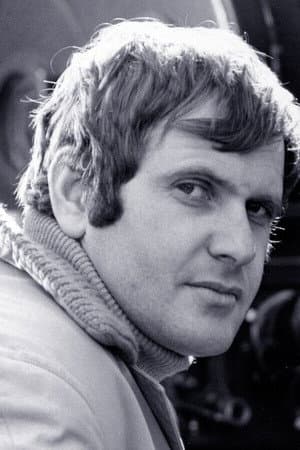
Peter Medak, the Hungarian-born filmmaker whose wildly varied career ranged from the biting British satire "The Ruling Class" to the chilling haunted-house classic "The Changeling," has died at 88. News of his death emerged Tuesday, drawing tributes from actors, critics and fellow directors who remembered him as a stylist of uncommon range and a survivor of a life that reads like one of his own movies. No cause of death was immediately disclosed.
For a director whose name rarely topped a marquee, Medak left behind an unusually durable body of work. He worked steadily for six decades across Britain, Hollywood and continental Europe, slipping between prestige drama, horror, comedy and television with a chameleon's ease. If there was a thread running through it all, it was his fascination with outsiders, impostors and men who are not quite what they seem.
A Start in Wartime Hungary and a Breakthrough in Britain
Medak was born in Budapest in 1937 and was a child when the Second World War upended his family. He fled Hungary after the 1956 uprising against Soviet rule, arriving in England as a teenager with little more than a fierce appetite for film. He broke into the industry as an assistant editor and then a second-unit and television director, learning the craft at speed on British series before graduating to features.
His international breakthrough came in 1972 with "The Ruling Class," an adaptation of Peter Barnes's play that starred Peter O'Toole as a paranoid schizophrenic aristocrat convinced he is God. The film's blend of black comedy and savage class critique was unlike anything else in British cinema at the time, and O'Toole's performance earned an Academy Award nomination. Medak's willingness to let the material careen between farce and tragedy announced a director unafraid of tonal risk.
"The Changeling" and a Masterclass in Dread
If "The Ruling Class" showed Medak's comic instincts, 1980's "The Changeling" proved he could scare an audience witless. George C. Scott starred as a grieving composer who moves into a cavernous Seattle mansion and finds himself haunted by the spirit of a dead child. Medak built the horror out of silence, long corridors and the slow accumulation of unease rather than jump scares, and the film became a touchstone for later haunted-house pictures. Its famous seance sequence and the bouncing rubber ball on the staircase remain embedded in the memories of a generation of viewers.
The two films, made less than a decade apart, became the twin poles of his reputation: a satirist with a scalpel and a genre director with a gift for atmosphere.
A Nomadic Career Across Genres
Medak never settled into a single lane. He directed the crime drama "The Krays," about the notorious London gangster brothers, and the offbeat comedy "Species" follow-up "Species II," alongside studio assignments such as "Romeo Is Bleeding" and "Pontiac Moon." His television work was prolific and critically admired; he won an Emmy for directing an episode of "The Wire," a late-career triumph that introduced him to a new generation of viewers and critics.
Colleagues described him as a filmmaker who thrived on collaboration and treated crews with warmth. Actors who worked with him often spoke of his patience and his European eye for composition. He was, by many accounts, a raconteur who could hold a room with stories of postwar London and the chaos of low-budget shoots.
A Legacy of Range
Medak's death comes as the film world continues to reassess the directors who bridged the classical studio era and modern independent cinema. His filmography resists tidy summary, and that may be its point: few directors of his generation moved so freely between the arthouse and the grindhouse, between prestige television and cult horror, without losing their voice.
He is survived by his family and by a body of work that will keep finding audiences. For a man who once said that making movies was the only thing that ever made sense to him, the films themselves are a fitting monument: strange, restless and impossible to pigeonhole.
Source: The Hollywood Reporter