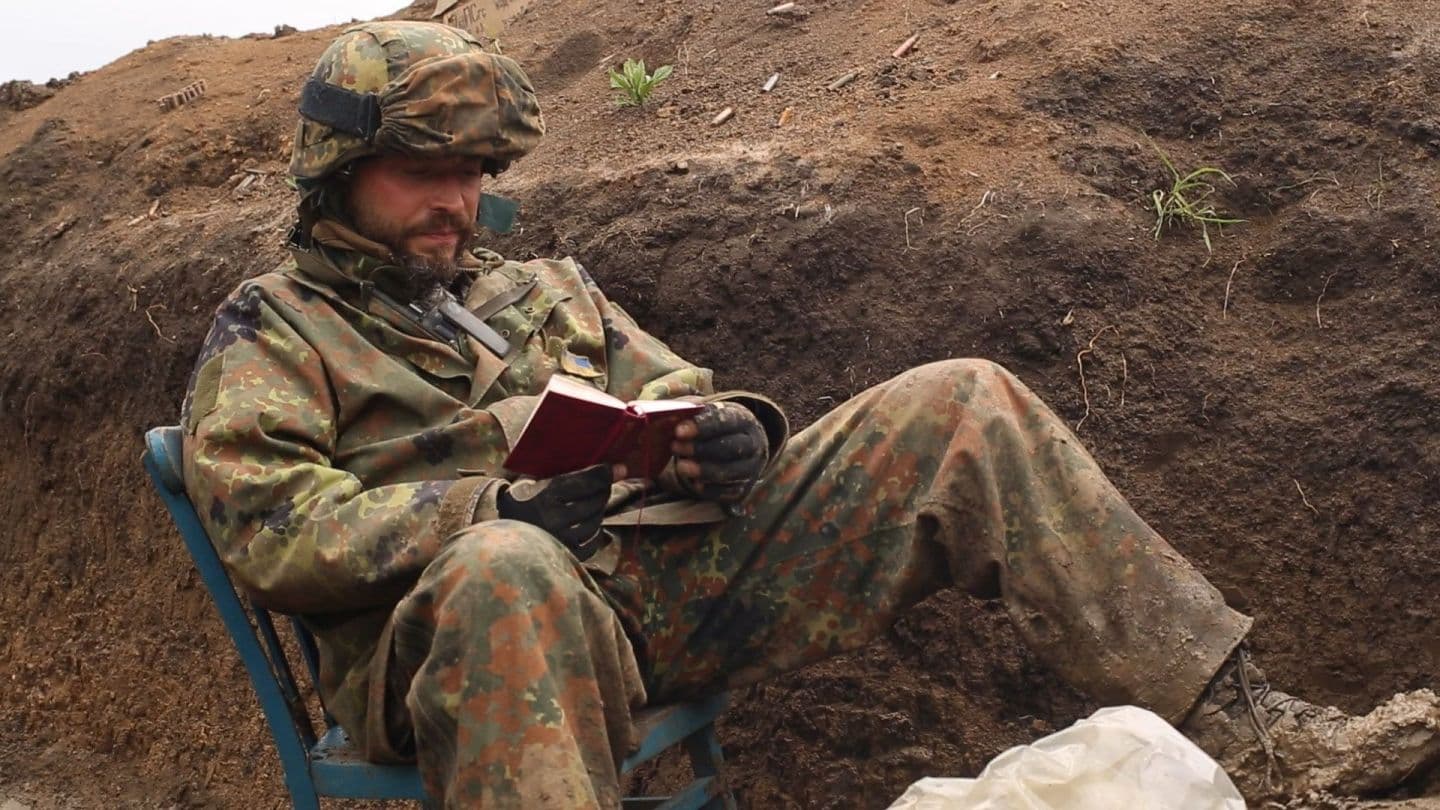
The Black Nights Film Festival in Tallinn has turned its spotlight toward Ukrainian cinema, using this year's edition to showcase filmmakers who have kept working through the war and, in many cases, because of it. The program, gathered under the banner "PÖFF Stands With Ukraine," brings together features and documentaries made under conditions that most festival circuits never have to consider - productions interrupted by air raids, shoots relocated across borders, and stories shaped by the urgency of documenting a country at war.
The initiative reflects a broader shift in how European festivals have approached Ukrainian film since the full-scale invasion. What began as gestures of solidarity - screenings, fundraising, dedicated sidebars - has evolved into something closer to sustained curation. Tallinn's positioning is notable given its geography and its long-running ties to filmmakers across the region. For PÖFF, standing with Ukraine is less a one-off statement than an extension of its existing programming instincts, which have consistently reserved space for cinemas from Eastern Europe and the post-Soviet space.
Documentaries as First Drafts of History
A significant portion of the Ukrainian selections leans toward nonfiction, which is unsurprising given the circumstances. Documentary filmmaking has proved uniquely adaptable during the war: crews can work in smaller units, production timelines compress, and the material itself carries an immediacy that fiction often struggles to match in real time. Several of the works in the program follow this pattern, built from footage captured in the moment rather than reconstructed afterward.
These films perform a dual function. For international audiences, they serve as testimony - a way of encountering the war through individual lives rather than headlines. For Ukrainian viewers, they function as a record, an archive assembled while events are still unfolding. Festival programmers have increasingly spoken of these documentaries not simply as art but as documents that will outlast the conflict itself, and the Tallinn lineup reflects that framing.
Fiction Made Under Pressure
The fiction offerings in the Ukrainian strand tell a different kind of story - one about persistence. Shooting a narrative feature during wartime involves logistical hurdles that reshape the film at the script level: locations become unavailable, actors may be serving or displaced, funding channels shift. Directors have described rewriting scenes to match what could actually be filmed, and leaning on co-productions with European partners to keep projects alive.
What emerges from these constraints is not necessarily a cinema of compromise. Festival audiences have noted that Ukrainian fiction produced since 2022 often carries a formal restlessness, a willingness to blend genres and modes that reflects the instability of the conditions behind the camera. The Tallinn program places these titles alongside documentary work, encouraging viewers to read them as connected parts of a single national film culture responding to crisis.
A Festival Circuit Finding Its Role
The "Stands With Ukraine" banner also raises questions about what festivals can realistically do. Screenings do not stop wars, and cultural programming risks becoming symbolic rather than substantive. PÖFF's approach appears to lean toward the practical: giving Ukrainian filmmakers a platform in a neighboring country, connecting them with industry guests, and keeping their work visible at a moment when international attention is divided among many crises.
Tallinn's proximity to the region gives the festival a particular credibility here. The city has long functioned as a meeting point for filmmakers from the Baltic states, the Caucasus, and Eastern Europe, and its industry sidebar has become a launchpad for projects from countries with limited production infrastructure. Adding Ukrainian voices to that ecosystem is a natural step, though the festival has been careful to frame the program as a showcase rather than a charity gesture - the films are selected on their merits, and the accompanying discussions treat the filmmakers as artists first.
What Comes Next
For audiences outside the region, the Tallinn program offers a concentrated look at a cinema that has transformed in less than half a decade. Ukrainian filmmaking before the full-scale invasion was already gaining international traction, with a rising generation of directors earning attention at major festivals. The war did not create that momentum, but it has redirected it - toward documentary urgency, toward co-production strategies, and toward stories that might otherwise have waited years to be told.
Whether this attention translates into lasting distribution and funding commitments remains an open question. Festival slots are one thing; theatrical releases, streaming deals, and production support are another. PÖFF's Ukrainian strand, by assembling both finished films and works in progress, positions itself as part of that longer conversation. At minimum, it ensures that the films made despite the war - and, in some cases, because of it - continue to find audiences willing to watch.
Source: The Hollywood Reporter