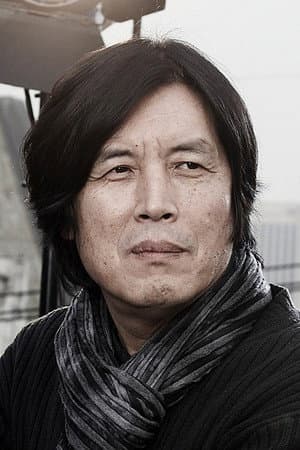
South Korean cinema’s most celebrated chronicler of human longing is back. Lee Chang-dong, the director behind some of the most profound and emotionally bruising films of the past quarter-century, has re-emerged with a new work titled Possible Love. Early reviews are treating it less like a simple comeback and more like a masterclass in patient, devastating storytelling.
The film, which has been described by critics as a “beautifully mature, quietly colossal relationship drama,” arrives after a notable silence from the filmmaker. Lee, who has not directed a feature since the international prestige hit Burning in 2018, built his reputation on an unflinching but tender examination of the human condition. His new project appears to continue that obsession, but with a tonal shift that suggests a filmmaker in a reflective, rather than combative, mood.
In initial assessments, Possible Love is being framed as a work of considerable restraint. The common thread among early reactions is the film’s paradoxical scale. On the surface, it deals with the intimate, private turbulence of a relationship. Yet, the emotional stakes feel enormous, reminiscent of the sweeping, internalized grief found in classical literature. Reviewers are noting that Lee has crafted a narrative that avoids melodrama in favor of a slow-burn realism, forcing the audience to sit with uncomfortable silences and unspoken truths.
The praise centers on Lee’s directorial maturity. He is not interested in quick catharsis or tidy resolutions. Instead, the film reportedly unfolds at its own deliberate pace, allowing the central connection between its characters to fray and mend in real time. This is a signature of his style, a way of working that has drawn comparisons to other global masters of melancholy like Ingmar Bergman or the late Edward Yang. Where a lesser director might push for dramatic confrontation, Lee is said to hold his camera steady, letting the weight of a glance or a misplaced gesture carry the narrative load.
For cinephiles, the return of Lee Chang-dong is a significant cultural event. His filmography is a short but staggeringly consistent body of work. From the searing social critique of Peppermint Candy to the moral complexity of Secret Sunshine and the haunting ambiguities of Poetry, he has consistently explored how ordinary people navigate cruelty, faith, and the failure of language. Burning, his loose adaptation of a Haruki Murakami short story, cemented his status as a generational talent, landing him on countless best-of-the-decade lists.
Possible Love seems to enter this canon not as a departure, but as a natural evolution. The early critical language suggests a filmmaker who has stripped away even the faintest traces of narrative trickery, leaving only pure, unadorned cinema. The phrase “quietly colossal” is particularly telling; it hints at a film that does not announce its power but rather accumulates it through a series of devastatingly authentic moments. It is a drama about the space between people, and the difficulty of crossing it.
As of today, a theatrical release date for Possible Love in the United States has not been officially confirmed to the public, and details regarding the cast remain under lock and key. However, given the historic track record of Lee’s previous pictures on the festival circuit - having premiered at Cannes and Venice - industry insiders anticipate a major festival bow in the coming months. The film is expected to be a major awards-season player, should it arrive in time for the 2027 ceremonies.
The reaction to Possible Love signals that Lee Chang-dong has not lost his ability to disturb and move his audience in equal measure. The term “relationship drama” often connotes a certain smallness, but in Lee’s hands, it is elevated to a philosophical inquiry. The film reportedly asks profound questions about whether love is an action or a feeling, and whether it is possible to truly know another person without losing oneself in the process.
This is the essential tension that has defined Lee’s career: the idea that empathy is both a salvation and a burden. Early word indicates that Possible Love carries this weight effortlessly, presenting a story that is at once intensely specific and universally resonant. For viewers who have been waiting for a film that treats emotion with the seriousness it deserves, this return promises to be one of the most rewarding theatrical experiences of the year.
The wait for a new Lee Chang-dong film is always a test of patience, but if the early reviews are any indication, that patience has been rewarded with a work of substantial grace. Possible Love looks poised to remind audiences why the Korean auteur remains a singular voice in world cinema - one who understands that the biggest stories are often those told in the quietest voices.
Source: Variety