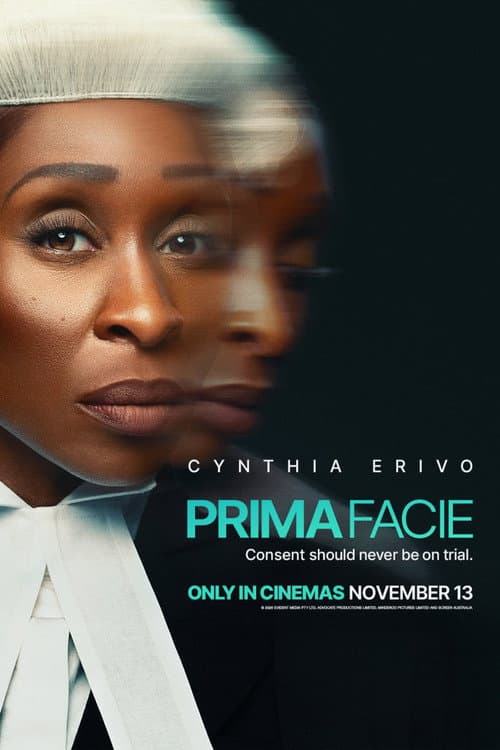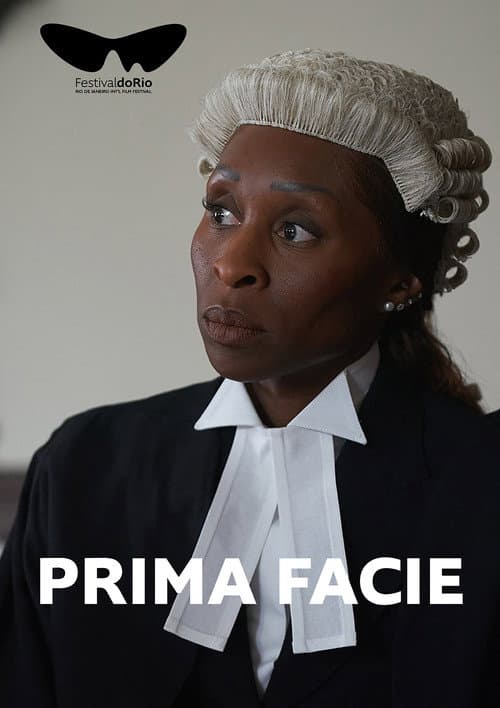
Cynthia Erivo wants audiences to leave "Prima Facie" arguing - not about whether a crime occurred, but about how stories of assault are heard, believed and dismissed. The film, which arrives in theaters on November 13, casts the Oscar-nominated actress as Tessa Ensler, a razor-sharp London defense barrister whose professional certainty collapses after she is assaulted by a colleague from a powerful legal family.
The drama, running 109 minutes, is directed by Susanna White and backed by a Hollywood production. It marks a notable shift for Erivo, who has moved between stage, television and film with a career defined by transformation and defiance.
A Character Built to Cross-Examine - and Then to Be Cross-Examined
Tessa is described as fierce, witty and self-made, a woman who has climbed to the top of London's brutal courtrooms by defending men accused of sexual violence. She knows the system's rhythms and its cruelties because she has wielded them on behalf of clients. That expertise becomes a weapon turned against her after the assault.
According to the film's official synopsis, "the system she trusted turns against her," forcing Tessa to confront the same tactics she once deployed in court. Once in command, she is left exposed and disbelieved, fighting to reclaim her voice and her sense of self.
It is the kind of role that demands an actor carry both authority and vulnerability in the same frame - a balance Erivo has built a reputation on. In "Harriet," she played a woman who refused to be owned. In "Wicked," she played a woman who refused to be silenced. Tessa Ensler is a woman who discovers, too late, that the law's promise of fairness is conditional.
Erivo's Hope: A Debate About How Consent Is Received
Erivo's central ambition for the project, according to the film's promotional framing, is to spark a conversation about how a lack of consent is received - not merely whether it is legally recognized. The distinction is pointed. A courtroom can define consent in statutes and burdens of proof, but the broader public often decides whose "no" is legible, whose testimony is credible and whose reputation is worth protecting.
That question sits at the heart of "Prima Facie." The story does not simply depict an assault and its aftermath; it examines the machinery that processes both. Tessa has spent years persuading juries to doubt accusers. When she becomes one, she learns how efficiently that same machinery can be used against her.
A Supporting Cast of Legal Insiders and Complicated Allies
Daniel Ings plays Julian, the colleague whose assault shatters Tessa's world. Elizabeth Dulau appears as Alice Sommers, with Noma Dumezweni also in the cast. Toheeb Jimoh plays Johnny, Harry Treadaway is on board, and the ensemble includes Sarah Junillon as Phoebe and Elliot Levey as Thomas Buckley.
White directs from a screenplay adapted from the stage play that has become a global phenomenon. The film's genre is listed as drama, and its release is positioned as a serious awards-season contender given Erivo's track record.
The project's TMDb rating currently stands at 0/10, reflecting no audience votes yet - a standard placeholder before a film's release rather than any indication of its reception.
Why the Film Arrives at a Particular Moment
"Prima Facie" lands in a cultural landscape where conversations about consent, institutional failure and the credibility of survivors have become both louder and more polarized. The film does not appear interested in easy resolutions. Its logline maps a trajectory from control to exposure to reclamation - a recovery that is never guaranteed in real life or in court.
Erivo's stated hope is that the movie moves audiences past verdicts and into debate. That is a harder ask than it sounds. A debate about consent requires acknowledging that consent is not always a moment but a context - shaped by power, by history, by who gets to speak and who gets believed.
"Prima Facie" opens in theaters on November 13.
Source: The Hollywood Reporter