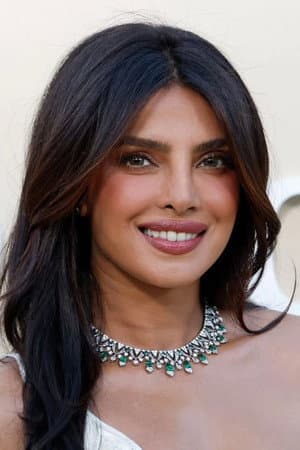
Priyanka Chopra Jonas has built a career on playing characters who are rarely short of a weapon, a plan, or a sharp line under pressure. In her upcoming project "Bluefly," she suggests the arsenal is finally being put aside - and she sounds entirely at peace with that. The actor's remark that she looks good with a weapon in her hand has become the framing device for a wider conversation about what happens when a performer known for action and intrigue chooses words as her primary instrument.
"I look good with a weapon in my hand," Chopra Jonas says of her screen history, a line that lands somewhere between self-aware humor and genuine affection for the work that made her a global name. The shift she describes for "Bluefly" is less a reinvention than a recalibration, an actress deliberately trading the physical vocabulary of combat for the verbal precision of dialogue-driven drama.
A Career Defined by Characters Who Fight Back
Few contemporary stars have moved as fluidly across industries and genres as Chopra Jonas. She became a fixture of Indian cinema in the 2000s, won a National Film Award, and then crossed into American television with a lead role on the thriller series "Quantico," which made her the first South Asian actor to headline an American network drama. That part required firearms training, hand-to-hand combat, and the kind of physical stamina that becomes a job requirement rather than a novelty. From there came "Baywatch," the "Matrix" sequel "Resurrections," and the romantic drama "The Sky Is Pink," a film that reminded audiences she could carry a story with almost nothing but dialogue and grief.
The throughline in that résumé is a performer who has always been comfortable in motion. What makes her comments about "Bluefly" notable is that she is not dismissing the action work that built her reputation; she is redefining what strength looks like on screen.
Words as the Weapon of Choice
The headline quote places the emphasis squarely on language. In "Bluefly," according to Chopra Jonas's framing, the confrontation happens in conversation rather than choreography. That is a meaningful pivot for an actor whose most recognizable roles have often been resolved with a well-timed punch or a pulled trigger.
There is a particular discipline to dialogue-led performance. It strips away the safety net of movement and forces an actor to hold an audience through rhythm, subtext, and silence. For someone who has spent years training for fight sequences, stepping into a space where the script is the only ammunition represents a deliberate test of craft. Chopra Jonas speaks about it not as a sacrifice but as a trade she was ready to make.
The quote itself carries a knowing wink. By acknowledging that she looks good with a weapon, she also signals that she knows exactly what audiences expect from her, and that "Bluefly" intends to give them something else.
Why the Pivot Matters Beyond One Role
Chopra Jonas's career has always carried a representational weight, whether she has asked for it or not. Her move from Indian films to American television opened doors that had previously been bolted shut, and her subsequent work as a producer - through her company Purple Pebble Pictures - has extended that reach behind the camera. A role that privileges words over weapons fits naturally into that larger arc: a star using her platform to complicate the image of the South Asian woman on screen, moving her from fighter to strategist, from target to voice.
It also reflects a broader appetite among audiences for thrillers and dramas that generate tension through writing rather than spectacle. Actors of her stature choosing dialogue-forward material is one signal of where that appetite is heading.
What "Bluefly" Represents
Details around "Bluefly" remain deliberately under wraps, and Chopra Jonas's comments are best read as an artistic statement rather than a marketing reveal. What is clear is that she sees the project as a chance to work a different set of muscles - the ones that carry a scene through language alone.
For an actor who has spent two decades proving she can hold her own in any arena, the most interesting statement here is not about what she is leaving behind. It is about the confidence required to say that a script, a voice, and a well-placed line can be just as formidable as anything she has ever held in her hand.
Source: The Hollywood Reporter