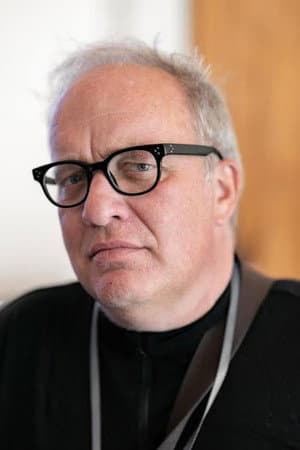
Mark Tildesley, the British production designer whose meticulous eye shaped the look of James Bond’s final Daniel Craig outing and a string of Danny Boyle films, has died at 63. News of his death was confirmed by his family, though no cause was immediately released. Over a career spanning more than three decades, Tildesley built a reputation as one of the industry’s most versatile visual architects, equally at home constructing a dystopian London, a Mexican Day of the Dead parade, or the postwar streets of 1960s Liverpool.
Tildesley’s death comes as he was preparing for one of the most ambitious projects of his career: the quartet of Beatles biopics being directed by Sam Mendes, which are set to dramatize the lives of each member of the Fab Four. His involvement in those films had been announced earlier, and his loss is likely to be felt keenly by the production, which has been assembling a large-scale re-creation of mid-century Britain. Colleagues described him as a designer who approached every script as a research project, insisting that fantasy and period detail alike be grounded in something real.
From Boyle’s Apocalypse to Bond’s Spectacle
Tildesley’s partnership with Danny Boyle produced some of the most distinctive British films of the past three decades. He served as production designer on 28 Days Later, the 2002 post-apocalyptic thriller that turned an empty, early-morning London into one of cinema’s most enduring images of urban desolation. The film’s vision of a deserted capital, achieved with a small crew and inventive use of real locations, became a touchstone for a generation of genre filmmakers working with modest budgets.
The collaboration with Boyle continued across a range of tones and settings, from the slums of Mumbai in Slumdog Millionaire to the psychological intensity of 127 Hours and the surreal black comedy of The Beach. Each project demanded a different visual grammar, and Tildesley’s willingness to adapt became his signature. He was equally comfortable with the grimy realism of a low-budget thriller and the polished demands of a major studio franchise.
That range was on full display in No Time to Die, the 2021 Bond film that marked Craig’s farewell to the role. Tildesley oversaw a globe-spanning production that moved from the cliffs of Norway to the streets of Matera, Italy, and the Cuban capital, culminating in a climactic sequence on a fortified island. The film’s extended production schedule and pandemic delays made it one of the most logistically complex projects of his career, yet the finished film drew praise for its tactile, location-rich aesthetic at a time when many blockbusters leaned heavily on digital environments.
A Craftsman Who Built Worlds on Location
Tildesley’s filmography reads like a survey of modern British cinema’s most interesting directors. Beyond Boyle, he worked with Michael Winterbottom, and his credits include The Constant Gardener, The Lovely Bones, and The Two Popes, in which he recreated the interiors of the Vatican with a precision that earned him an Academy Award nomination. That nomination, for Best Production Design, acknowledged a career that had quietly become one of the most influential in the craft.
His approach was rooted in the belief that a set is not merely a backdrop but an active participant in storytelling. He favored real locations and practical construction over digital extension whenever possible, arguing that actors respond differently when they can touch the walls around them. On No Time to Die, that philosophy led to the construction of sprawling sets in multiple countries and a commitment to shooting in environments that felt lived-in rather than airbrushed.
Tributes began circulating shortly after the news broke, with collaborators recalling a designer who was generous with younger crew members and obsessive about the smallest detail. One longtime colleague described him as a man who would spend days researching the correct shade of paint for a single wall, then happily abandon the plan if an actor found a better way to move through a room.
A Career Still Ascending
What makes Tildesley’s death particularly painful for the industry is that his most visible work may have been ahead of him. The Beatles biopics represent a rare kind of project - a large-scale, culturally freighted undertaking that requires both historical accuracy and cinematic imagination. Recreating the Cavern Club, the rooftop concert, and the shifting styles of four men across two decades is precisely the sort of challenge that suited his talents.
No details about how the production will proceed have been announced, and it is not yet clear who, if anyone, will step into the role. For now, the film community is left to mourn a craftsman whose name rarely appeared above the title but whose work shaped some of the most memorable images in contemporary cinema. Tildesley is survived by his family and a body of work that will continue to be studied by designers for years to come.
Source: Variety