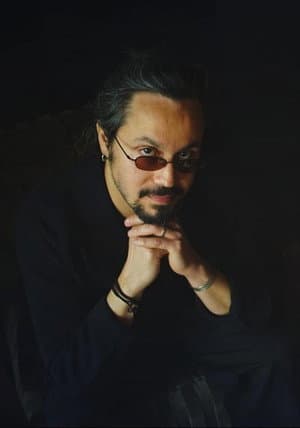
Palestinian filmmaker Rakan Mayasi has built a reputation for turning his camera toward lives that rarely make it to the screen. In a conversation about his working philosophy, Mayasi said his creative drive comes from a simple but persistent question: which stories are still untold, and why? His answer, in short, is that the most rewarding material tends to sit far from the familiar narratives that dominate festivals and streaming catalogues. Mayasi describes himself as a filmmaker in search of unconventional stories, and he has repeatedly framed his work around portraying "communities that have not been on film before."
That phrase has become something of a mission statement for the director, whose short films have traveled the international festival circuit. Rather than building stories around broadly recognizable social types, Mayasi tends to start with people whose daily reality has been overlooked, misrepresented or flattened by outside observers. His interest lies in the texture of ordinary life: the small negotiations, private rituals and unglamorous routines that rarely survive the journey from reality to screen. For Mayasi, authenticity is not a marketing label but a method, one that requires patience, close listening and a willingness to let subjects shape the story rather than merely illustrate it.
A Cinema of Overlooked Lives
Mayasi's approach places him within a broader generation of filmmakers from the region who have moved away from grand historical statements in favor of intimate, character-driven work. Where earlier eras of Palestinian cinema often centered on collective trauma, displacement and national struggle, Mayasi's films tend to zoom in on individuals whose lives intersect with those larger forces without being reducible to them. The political is present, but it arrives through the everyday, through bodies, spaces and gestures rather than declarations.
This emphasis on the specific carries practical consequences. Mayasi has spoken about the research and relationship-building that precede a shoot, the time spent gaining trust in places where cameras are unfamiliar or unwelcome. Casting often draws on people with little or no acting experience, a choice that brings a documentary-like charge to fictional material. The result is a body of work that feels both observed and composed, hovering between reportage and invention.
The Short Film as a Testing Ground
Much of Mayasi's reputation rests on short-form work, a format he has treated not as a stepping stone but as a legitimate artistic space. Short films, in his view, permit formal experimentation and allow a filmmaker to follow a single idea to its limit without padding. They also suit stories that resist feature-length expansion, the kind of compressed, emotionally dense situations in which a character's entire world can be glimpsed in twenty minutes.
His shorts have screened at major international festivals, earning attention for their visual restraint and their refusal to explain themselves too readily. Mayasi tends to favor long takes, sparse dialogue and environments that carry as much narrative weight as the performances. Viewers are asked to read space and silence rather than wait for exposition, a demand that has won him admirers among programmers looking for distinctive voices.
Representation as Responsibility
For Mayasi, the phrase "communities that have not been on film before" carries an ethical dimension. Being filmed for the first time can be an act of recognition, but it can also be an act of extraction if handled carelessly. He has argued that filmmakers working with underrepresented groups must think carefully about who benefits from the image, who controls it, and what happens to the people depicted once the credits roll. His preferred model is collaborative: subjects are consulted, context is preserved, and the camera does not linger where it has not been invited.
This outlook has made him a frequent voice in discussions about representation in contemporary cinema, particularly regarding the Middle East. Mayasi resists the expectation that filmmakers from the region serve as guides to conflict or as spokespeople for a cause. He has suggested that such expectations narrow the range of stories told and reduce characters to symbols. The alternative he proposes is more demanding and more interesting: films that trust audiences to meet people on their own terms.
What Comes Next
Mayasi continues to develop projects that move between fiction and documentary registers, with an eye toward subjects that have escaped cinematic attention. Details of his upcoming work remain under wraps, but his stated priorities suggest continuity rather than reinvention: locating unfamiliar milieus, building relationships over time, and resisting the pull of familiar narratives.
In an industry that often rewards speed and recognizability, Mayasi's patience stands out. His career so far is a case study in the value of looking sideways rather than toward the center, of asking who has been left out of the frame and then handing them the camera's attention. For audiences, the payoff is a cinema that feels newly discovered, even when the places it depicts have existed all along.
Source: Variety