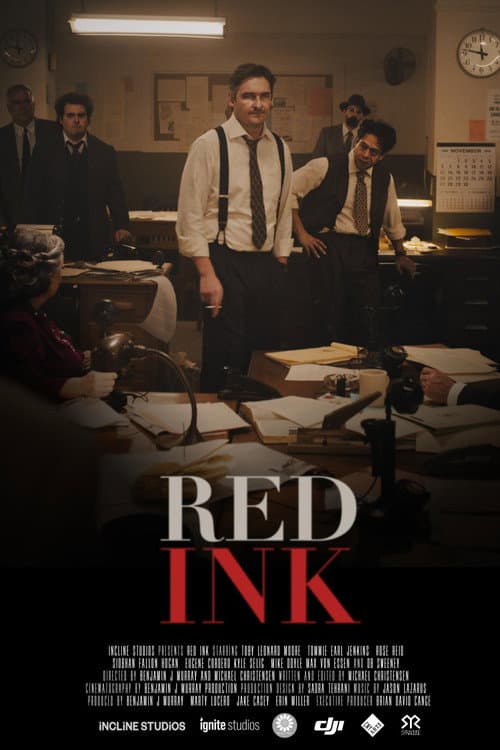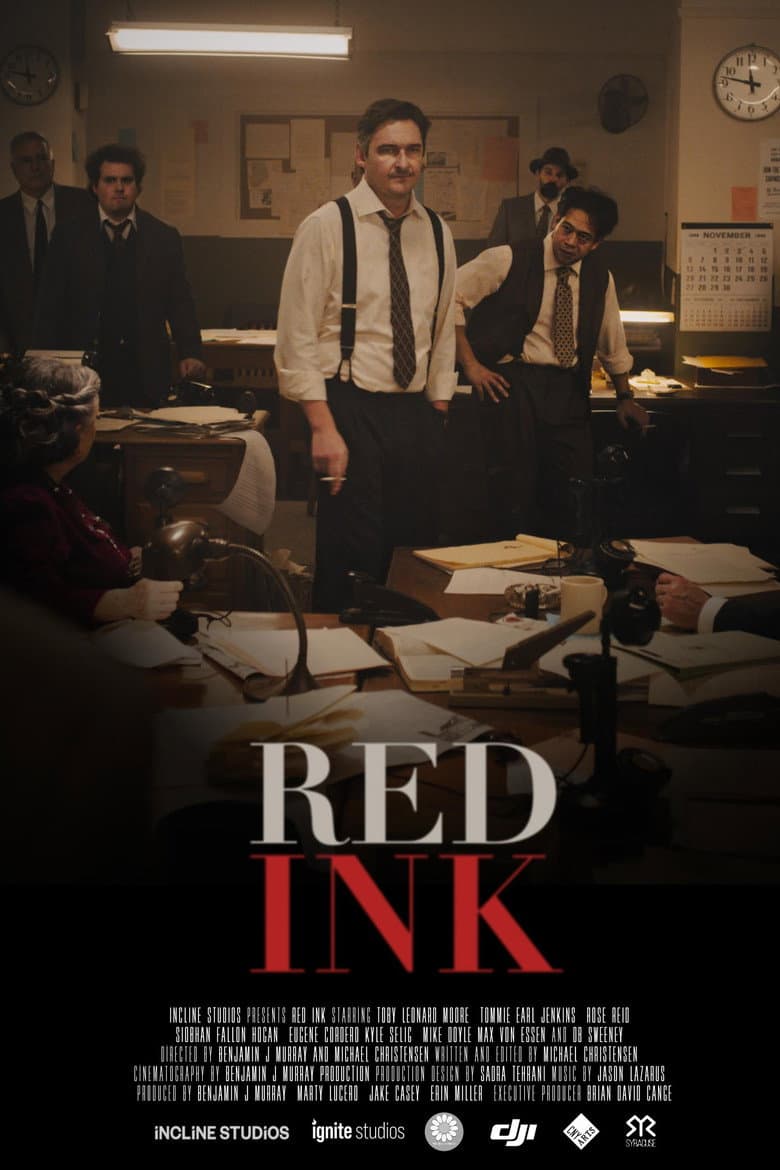
The technical wager at the heart of "Red Ink" was simple to describe and punishing to execute: shoot an entire 1940s newsroom thriller in one unbroken take. Director Benjamin J. Murray's film, which opened in theaters on November 7, 2026, follows a cluster of reporters and power brokers in post-WWII New York as media propaganda, institutional leverage and human exploitation collide against the backdrop of a mysterious global virus.
The film's cast is led by Toby Leonard Moore as Bob Hoover, with Siobhan Fallon Hogan, Tommie Earl Jenkins, Eugene Cordero, Rose Reid, Kyle Selig and D. B. Sweeney rounding out the ensemble. Mike Doyle plays Senator Conrad, while Sweeney appears as Walter Nash. The picture is classified as a drama and a thriller, runs in English and arrives under the Hollywood banner, though its release has not been accompanied by a disclosed runtime.
A single-take structure places unusual demands on every department, and in a period newsroom the obstacles multiply. Sets must connect without visible seams, lighting has to be adjusted without stopping, and the actors carry the continuity of time and place themselves. Murray's approach turns the newsroom into a pressure chamber: the camera cannot cut away when a conversation turns ugly, and the audience cannot be granted the relief of a reset.
A Period Setting That Refuses Nostalgia
The film's postwar New York is not staged as a decorative backdrop. According to the official synopsis, "Red Ink" interrogates how propaganda moves through newsrooms, how institutions protect themselves, and who bears the cost of exploitation - all while the threat of an unidentified virus hangs over the story. Those themes sit naturally inside a drama-thriller frame, but the single-take format gives them a different texture. Rather than letting the film's ideas breathe between scenes, the continuous camera keeps the argument running, forcing viewers to sit inside the same room as the people making convenient compromises.
Moore's Bob Hoover occupies the center of that moral machinery. Around him, the cast builds a newsroom ecology of editors, political operators and figures whose motives sharpen as the take proceeds. Doyle's Senator Conrad and Sweeney's Walter Nash suggest the film is as interested in the corridors of influence as it is in the press room floor.
What the Production Has and Has Not Revealed
"Red Ink" arrives with a deliberately narrow public footprint. No runtime has been released, and the film currently holds a 0/10 rating on TMDb - a figure that reflects an absence of audience votes rather than a verdict on the movie. That scarcity of data is consistent with a release that has prioritized atmosphere over explanation; the marketing has leaned on the premise and the format rather than granular detail.
The absence of a stated runtime is itself notable for a movie sold on a formal gimmick. A single-take feature can run anywhere from a taut ninety minutes to something far longer, and the decision to withhold that number keeps the question of endurance in play. It also keeps attention on the craft: whether the illusion holds, where the hidden cuts (if any) sit, and how much of the film's tension comes from the knowledge that the camera has nowhere to hide.
Hollywood Betting on Formal Risk
For a Hollywood production, "Red Ink" represents a calculated gamble on form over franchise familiarity. Period pieces are expensive; unbroken takes are logistically fragile; and a movie that asks audiences to track institutional power and a viral threat simultaneously is asking for sustained concentration. Murray's bet is that the constraints generate their own momentum - that a camera that cannot blink makes the compromises on screen feel immediate rather than historical.
"Red Ink" is now playing in theaters following its November 7 release.
Source: The Hollywood Reporter