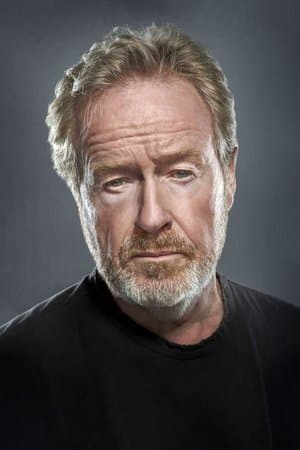
Ridley Scott has spent more than four decades building worlds, wrangling enormous productions, and outlasting just about every piece of conventional wisdom Hollywood has thrown at him. So when the 88-year-old filmmaker sat down with Jimmy Chin, the Oscar-winning documentarian and mountaineer-turned-director, the younger man came with questions. Scott's answer, according to the exchange, was refreshingly blunt: don't listen to anybody.
The advice captures a career philosophy Scott has never really abandoned. From "Alien" in 1979 through "Gladiator," "The Martian," and his recent historical epics, he has tended to trust his own instincts and his own eye over the noise of committees, test screenings, and unsolicited counsel. Chin, who co-directed the climbing documentary "Free Solo" with Elizabeth Chai Vasarhelyi and has since moved into narrative filmmaking, represents a different generation and a different tradition, one rooted in small crews and extreme locations. That contrast is part of what makes the conversation notable.
A veteran's case for ignoring the noise
Scott's counsel lands differently coming from someone who has operated at nearly every scale the industry allows. He has made small, contained thrillers and sprawling productions with hundreds of crew members. He has weathered flops and delivered hits. Through all of it, his working method has remained consistent: decide what the film is, then protect that vision.
"Don't listen to anybody" is not an argument for arrogance so much as an argument for clarity. Directors on large productions are surrounded by voices. Studio executives, producers, marketing departments, and even well-meaning crew members all have opinions about what a film should be. Scott's point, as relayed in the exchange, is that a director who tries to satisfy every voice ends up satisfying none.
There is also a practical dimension. Scott is known for moving fast, shooting with multiple cameras, and refusing to let perfectionism stall a production. That efficiency depends on decisiveness. A director who is constantly polling the room cannot shoot at that pace, and Scott has long treated momentum as a creative tool in its own right.
Why the exchange with Chin matters
Chin's career has been defined by a different kind of risk. He has filmed climbs on Everest and in Antarctica, often in conditions where the margin for error is essentially zero. His transition into directing features has brought him into contact with the machinery of narrative filmmaking, which operates on timelines, budgets, and hierarchies that bear little resemblance to a documentary expedition.
That makes the pairing of the two directors more than a photo opportunity. Chin has spoken in the past about the value of learning from filmmakers who have navigated the studio system for decades. Scott, for his part, has shown a willingness to engage with younger directors, treating craft as something passed down rather than guarded.
The advice also echoes something Scott has said in various forms over the years: that a director's job is to hold the line on the story. In an era when films are reshaped by data, focus groups, and endless notes, that position has become almost countercultural. Scott is not known for agonizing over such things publicly. He tends to make his films, release them, and move on to the next one, sometimes with remarkable speed.
The larger takeaway
For all the specificity of the exchange, its value lies in the general principle. Directors at every level face pressure to defer, to compromise, to hedge. Scott's message to Chin was that the work itself is the argument, and that second-guessing too early can drain a film of whatever made it worth making.
None of this means a director should ignore collaborators or refuse to hear a good idea. Scott has worked with the same key crew members for years, and those relationships clearly matter to how his films get made. But the decision-making remains his. That is the distinction the advice is drawing: gather information, then own the choice.
Chin, for his part, has built a career on calculated risk and listening to the right people in the right moments. What he takes from Scott's counsel will likely show up not as imitation but as a sharper sense of when to stop asking and start shooting. For a filmmaker who once trusted his life to a rope and a partner, that lesson about trusting yourself may not be entirely foreign.
Source: The Hollywood Reporter