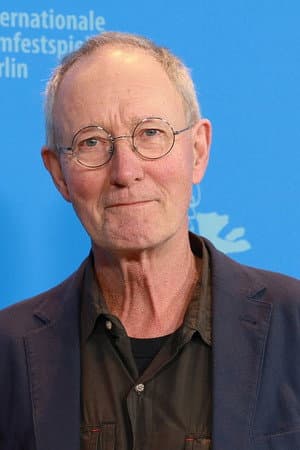
Veteran Australian filmmaker Rolf de Heer has been appointed jury president for the Tokyo International Film Festival, organizers announced, placing one of world cinema's most restlessly inventive directors at the helm of the event's main competition.
De Heer, whose career spans more than three decades and a strikingly wide range of genres and subjects, will lead the panel that decides the festival's top prize. The appointment signals Tokyo's continued appetite for jury leaders with genuine international standing and a body of work that resists easy categorization.
A Career Built on Defying Expectations
De Heer first broke through on the international stage with "Bad Boy Bubby" in 1993, a film whose confrontational style announced a filmmaker uninterested in conventional storytelling. The movie became a fixture of festival circuits and art-house cinemas, earning him a reputation as an uncompromising original.
He has since built one of the more unusual filmographies in contemporary cinema. "The Quiet Room," which competed for the Palme d'Or at Cannes, offered a restrained, child's-eye view of a domestic breakup. "Dance Me to My Song," made with a lead performer with cerebral palsy, explored disability and desire with rare candor. "Alexandra's Project" turned an intimate chamber drama into a meditation on revenge and power.
A Landmark Collaboration and Continued Evolution
Perhaps his most celebrated achievement remains "Ten Canoes," released in 2006. The film, made in close collaboration with the Yolngu people of Arnhem Land, told a story within a story in the Aboriginal language of its setting and won the Un Certain Regard special jury prize at Cannes. It was also Australia's submission for the Academy Award for Best International Feature Film. The project demonstrated de Heer's willingness to cede creative authority to the communities whose stories he tells, an approach that has since influenced discussions about collaboration and authorship in world cinema.
He followed that success with "The Tracker," a frontier Western starring David Gulpilil that confronted racial violence head-on, and "Charlie's Country," which reunited him with Gulpilil in a performance that won the actor the best actor prize at Cannes. More recently, de Heer has continued working at a steady pace, alternating between intimate dramas and more experimental projects.
What the Role Entails
As jury president, de Heer will chair deliberations over the festival's main competition slate, guiding a panel of fellow filmmakers, critics, and industry professionals toward consensus on the top award. The role carries weight beyond logistics: a jury president sets the tone for how seriously the competition is received and how much attention its selections draw from the international press.
Tokyo has long positioned itself as Asia's most prominent A-list festival, and its choice of jury president is read as a statement about the kind of cinema it wants to champion. Selecting a director known for formal risk-taking and cross-cultural collaboration suggests a preference for adventurous work over prestige conventionality.
A Festival With Something to Prove
The Tokyo International Film Festival has weathered its share of challenges over the years, including shifting industry economics and the broader disruption the pandemic brought to global festival calendars. Like many major festivals, it has worked to redefine its identity in a crowded landscape where streaming platforms, regional competitors, and the sheer volume of content compete for attention.
Bringing in a figure like de Heer gives the festival a recognizable artistic anchor. His name carries credibility with critics and cinephiles, and his demonstrated commitment to stories from marginalized communities aligns with the internationalism that Tokyo has traditionally promoted.
What Comes Next
Details about the rest of the jury and the competition lineup are expected to be announced closer to the festival. De Heer's involvement will likely draw additional media attention to the selection, particularly from Australian and European outlets that have followed his career closely.
For de Heer himself, the appointment represents a different kind of role than he has occupied before. After decades of making the decisions that shape his own films, he will now help shape the trajectory of other filmmakers' work at a pivotal moment in their careers. Whether that means rewarding established names or elevating newcomers remains to be seen, but the choice of a director who has spent a career taking creative risks suggests the jury's deliberations will be anything but predictable.
Source: The Hollywood Reporter