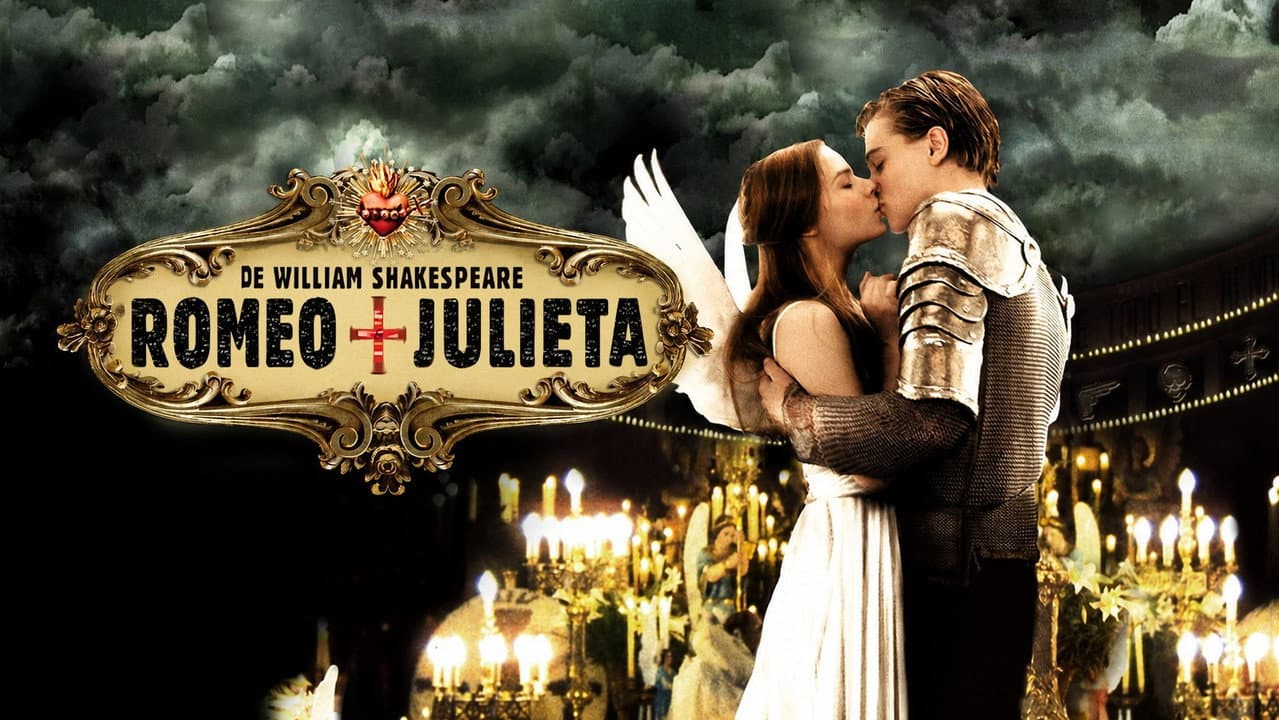
Three decades after it first hit theaters, Baz Luhrmann's Romeo + Juliet remains one of the strangest, boldest studio gambles of the 1990s. Released on November 1, 1996, the film dropped Shakespeare's star-crossed lovers into the sun-blasted fictional suburb of Verona Beach, kept the original Elizabethan dialogue intact, and dressed its young lead in an open Hawaiian shirt that became as recognizable as any line of iambic pentameter. The movie runs 120 minutes, carries a TMDb rating of 6.778/10, and still divides audiences in exactly the way Luhrmann intended.
A Shakespeare Adaptation That Refused to Look Like One
The premise sounds like a pitch-meeting disaster: take William Shakespeare's classic tragedy, move the Montague-Capulet feud to a sweltering modern beach town, arm the rival families with engraved pistols instead of swords, and let the characters speak the Bard's words without alteration. Luhrmann did precisely that. The film is visually modern even as its language stays centuries old, a collision that gave the material a jolt most screen adaptations had long stopped attempting.
Leonardo DiCaprio played Romeo opposite Claire Danes as Juliet. The supporting cast was packed with distinctive faces: John Leguizamo as Tybalt, Harold Perrineau as Mercutio, Miriam Margolyes as the Nurse, Brian Dennehy as Ted Montague, Vondie Curtis-Hall as Captain Prince, and Jesse Bradford as Balthasar. For a Hollywood production trading on a 400-year-old text, the ensemble skewed young, theatrical, and unafraid of heightened emotion.
The Hawaiian Shirt as a Career Turning Point
It is hard to overstate what that shirt did for DiCaprio's trajectory. Romeo, wandering the sun-bleached streets in a floral button-down, became an image that outlived the film's box office run and migrated onto bedroom walls, T-shirts, and Halloween costumes for years afterward. The costume worked because it was never trying to be subtle. Luhrmann's Verona Beach is a place of religious iconography, neon, and gun-metal brandishing, and Romeo's beachwear signals exactly who this character is: a wealthy, restless kid treating a blood feud like a backdrop to his own feelings.
Danes, meanwhile, gave Juliet a groundedness that kept the film from tipping into pure spectacle. Her performance anchored the balcony scene and the final act in something recognizably human, which mattered enormously in a movie whose production design constantly threatened to swallow its performers whole.
Style Over Substance, or Substance Through Style?
The critical conversation around Romeo + Juliet has barely changed since 1996. Detractors argued that Luhrmann's maximalism - the whip-pans, the zoom lenses, the radio-friendly soundtrack, the deliberately anachronistic sets - overwhelmed the poetry. Supporters countered that the film's chaos was the point: it made a classroom staple feel urgent to teenagers who had never connected with Shakespeare on the page.
What is harder to dispute is the film's influence. The marriage of contemporary music-video grammar to classical text became a template that later adaptations of literary material would borrow from, sometimes clumsily. And the movie confirmed that a director with a strong enough visual signature could sell a major Hollywood studio on a project that, on paper, had no obvious commercial logic. The genres listed for the film - Drama and Romance - undersell how aggressively it straddles tone, veering from slapstick to bloodshed within single scenes.
Why It Still Gets Watched
The reason Romeo + Juliet endures has less to do with nostalgia than with accessibility. It is a Shakespeare film that never asks permission to be fun. Students encountering the play for the first time can follow the stakes because the movie makes them physical: the feud is loud, the guns are visible, the heat is palpable, and the lovers' recklessness reads as teenage behavior rather than archaic convention.
DiCaprio and Danes both went on to substantial careers, but this remains the project that introduced a generation to the idea that classic texts could be remixed without being ruined. Margolyes, Perrineau, and Leggimazamo each turned in performances that fans still quote, and Perrineau's Mercutio in particular is often cited as the film's emotional engine before the story's inevitable pivot into tragedy.
Thirty years on, the Hawaiian shirt is still the shorthand. But the film's real legacy is a gamble that paid off: a Hollywood studio, released on November 1, 1996, betting that audiences would accept Shakespeare verbatim if the world around him looked like their own.
Source: The Hollywood Reporter