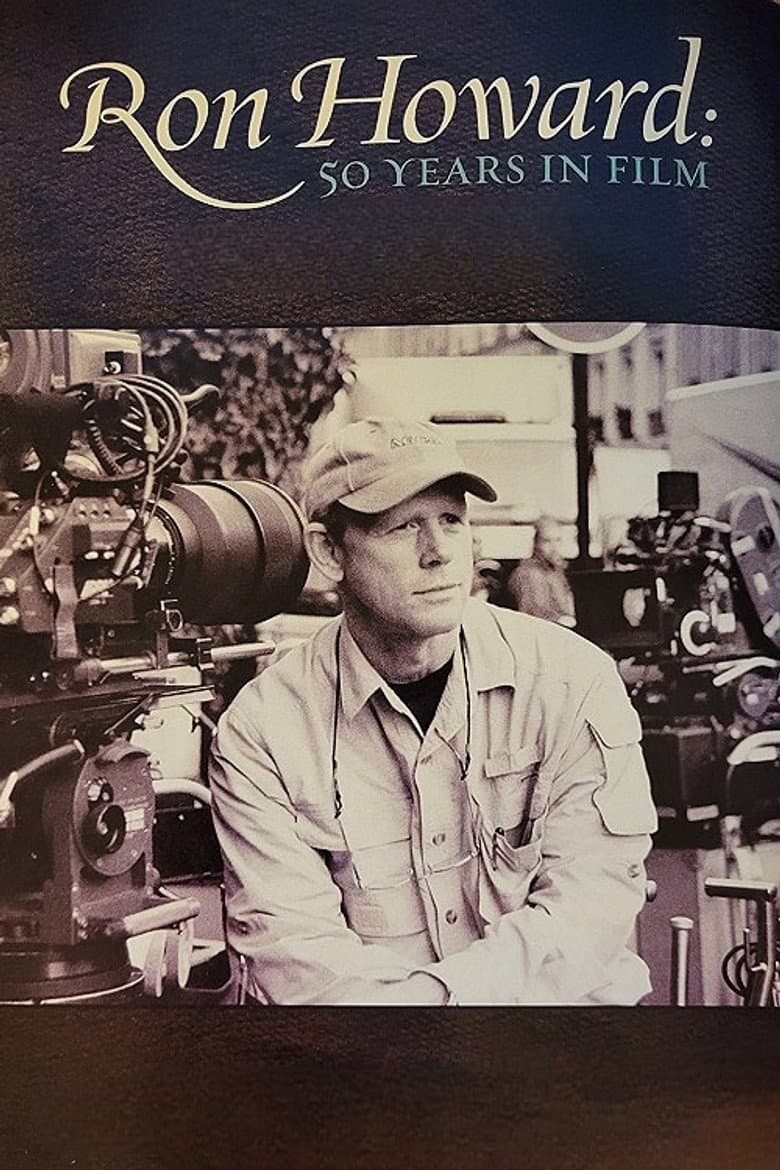
Ron Howard will be the subject of a career tribute at the 2026 Critics Choice Documentary Awards, an honor that recognizes a body of work stretching from child stardom in front of the camera to four decades of directing that includes a substantial and sometimes underappreciated documentary portfolio. The announcement places Howard alongside a select group of filmmakers whose nonfiction output has been singled out by the Critics Choice Association, and it signals that the organization intends to spotlight a side of his career that mass audiences often overlook.
Howard is, of course, best known for narrative features - "A Beautiful Mind," "Apollo 13," "Frost/Nixon," "Rush," and "The Da Vinci Code" among them - and for a run of mainstream hits that began with "Night Shift" in 1982 and continued through this year's "Eden." The documentary work has run in parallel. He directed "The Beatles: Eight Days a Week - The Touring Years," a 2016 film that chronicled the band's concert years with a mixture of archival footage and new interviews. He also directed "Pavarotti," a 2019 portrait of the Italian tenor that combined performance footage with candid conversations with family and collaborators. Both films were released theatrically and found sizable audiences for nonfiction titles, a rarity in a market that increasingly treats documentaries as streaming inventory.
A Career That Moves Between Two Worlds
What makes Howard's case unusual is the ease of the crossing. Many fiction directors treat documentaries as a sideline or a palate cleanser. Howard has treated them as first-class projects, applying the same production values and narrative instincts he brings to scripted work. "The Beatles: Eight Days a Week" was made with the cooperation of surviving band members and featured restored concert footage; "Pavarotti" drew on a trove of material assembled with the singer's family. Neither feels like a cable special. Both were built for the big screen, and both benefited from Howard's instinct for pacing - a skill he honed in the studio system and which translates naturally to the editing room in nonfiction.
Howard's path to this point is itself a story of reinvention. He spent the 1960s and 1970s as a television and film actor, most famously as Opie Taylor on "The Andy Griffith Show" and Richie Cunningham on "Happy Days." He moved behind the camera with "Grand Theft Auto" in 1977, a low-budget comedy that he also starred in, and then partnered with producer Brian Grazer to found Imagine Entertainment. The company became one of Hollywood's most durable independent production outfits, backing films and television across genres. Howard's directing credits include "Splash," "Parenthood," "Backdraft," "The Paper," "Ransom," "How the Grinch Stole Christmas," "Cinderella Man," and "Solo: A Star Wars Story." He won the Academy Award for Best Director for "A Beautiful Mind" and shared the Best Picture prize with Grazer.
The documentary awards show has become a fixture on the nonfiction calendar, honoring work in categories that range from historical and biographical films to nature and social-issue documentaries. A career tribute to Howard fits the event's pattern of recognizing filmmakers whose contributions extend beyond a single title. The Critics Choice Association has previously used its documentary ceremonies to spotlight directors known primarily for scripted work, drawing attention to the breadth of their filmographies.
What the Honor Signals
For Howard, the tribute arrives at a moment when his nonfiction work is arguably more visible than ever. Streaming platforms have made "The Beatles: Eight Days a Week" and "Pavarotti" widely available, and the appetite for music documentaries has only grown since their releases. A new generation of viewers has encountered Howard as a documentarian first, a shift that the Critics Choice honor will likely accelerate. The award also draws attention to Imagine Entertainment's documentary division, which has produced or financed nonfiction projects alongside the company's scripted slate.
Howard has spoken in interviews about the appeal of documentary work, describing it as a chance to build a story from material that cannot be rewritten. That constraint, he has suggested, forces a different kind of discipline than fiction filmmaking, where every beat can be adjusted in the edit or on the page. The process, in his telling, is less about control than about discovery - finding the narrative inside hundreds of hours of footage and trusting the audience to follow.
The 2026 ceremony will place Howard in the company of documentarians whose work is often measured in years rather than months, and whose subjects range from political movements to natural phenomena. That context matters. A career tribute at a documentary awards show is not simply a lifetime-achievement plaque; it is an argument about where a filmmaker belongs. In Howard's case, the argument is that the director of "Apollo 13" and the director of "Pavarotti" are the same filmmaker, and that the nonfiction work deserves the same attention as the blockbusters.
Further details about the ceremony, including the date and venue, are expected to be announced by the Critics Choice Association in the coming weeks. Howard is currently in post-production on several projects, and it remains unclear whether he will attend in person. For an industry that often files directors into single categories, the tribute offers a reminder that the most interesting careers are the ones that refuse to stay in one lane.
Source: The Hollywood Reporter